

How to Make Sugar-Free Snacks with Plant Protein
A blood-sugar-friendly snack is simple: build it with plant protein + fiber + fat, and skip added sugar. If I want a homemade snack that keeps me full, I keep my target simple: 5–10g protein...

If you have PCOS, pea protein may help by making blood sugar spikes, hunger, and meal timing easier to control. Since up to 80% of women with PCOS deal with insulin resistance, steadier meals can matter a lot.
Here’s the short version:
One data point stands out: in one trial, taking 30 grams of pea protein before a carb-heavy meal lowered the post-meal glucose rise from 1.89 mmol/L to 0.46 mmol/L. That doesn’t mean pea protein fixes PCOS. But it does show why protein can be part of a smart food routine.
If I had to sum it up in one line, it would be this: pea protein is a simple plant-based way to support steadier energy, fewer crashes, and better protein intake when living with PCOS.
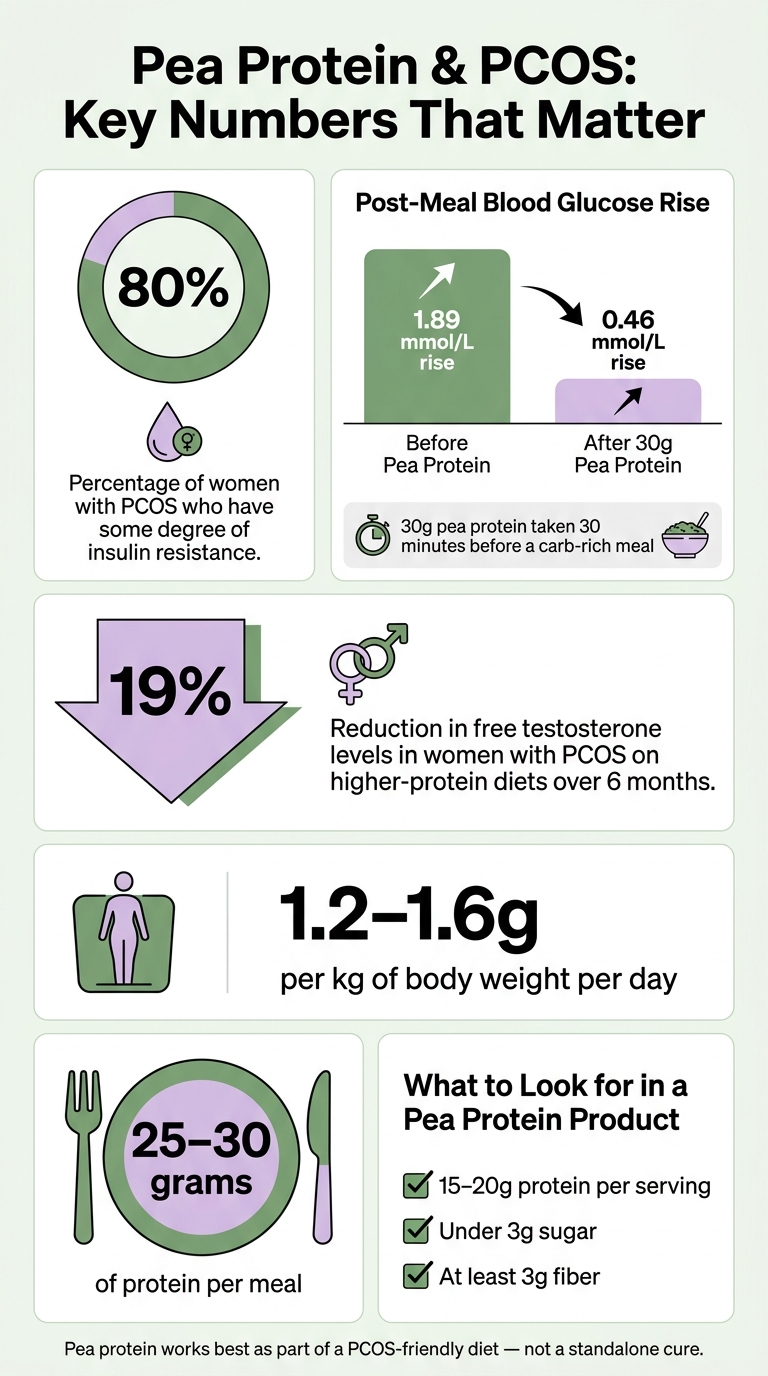
Pea Protein & PCOS: Key Numbers That Matter
One of the main reasons pea protein gets attention in PCOS is what happens after you eat. Blood sugar swings can be hard to deal with, and for many women with PCOS, this is not a small issue. Up to 80% of women with PCOS have some degree of insulin resistance, so keeping post-meal blood sugar in check often becomes part of daily life.
Pea protein may help slow carbohydrate digestion and improve insulin response after meals. In one trial, 30 g of pea protein taken 30 minutes before a carb-rich meal cut the post-meal glucose rise from 1.89 mmol/L to 0.46 mmol/L. That's a big drop, and it helps show why timing protein before a meal can matter.
Pea protein tends to work even better when the meal also includes fiber-rich foods. Fiber slows gastric emptying, which means food leaves the stomach more slowly. As a result, blood sugar rises at a slower pace.
For PCOS, that matters because a sharp insulin surge can help drive androgen excess. A steadier response can make meals feel less like a roller coaster and more like a slow, even burn. That's also why this kind of meal pattern often fits well with managing PCOS through diet.
More stable blood sugar can also help with appetite. When blood sugar drops fast after a meal, cravings often hit hard, and they're usually aimed at sugar or refined carbs. It's the classic crash-and-snack cycle.
Protein helps you stay full longer than refined carbs. In day-to-day terms, that can mean fewer energy dips, less random snacking, and fewer moments where hunger starts calling the shots. For someone managing PCOS, that kind of steady rhythm can make eating feel a lot more doable.
Those blood sugar effects matter for another reason: insulin also influences androgen levels. Pea protein doesn't directly shift hormone levels. But it can help support steadier insulin and blood sugar patterns, which may create better conditions for hormone balance over time.
The main connection here is insulin. When insulin stays high for long periods, it signals the ovaries to make more androgens. That can feed symptoms like acne, unwanted hair growth, and irregular periods.
Lower insulin may also help support SHBG, which keeps more testosterone bound and less active. Research suggests that higher-protein diets reduced free testosterone levels by 19% in women with PCOS over six months.
Pea protein also works well with fiber-rich foods like chia seeds, leafy greens, and berries for a steadier insulin response.
That makes pea protein an easy fit for everyday meals and snacks.
Once pea protein starts helping with blood sugar, the next step is simple: use it on a regular basis throughout the day.
A good place to start is breakfast. Aim for 25–30 grams of protein in the morning. A pea protein smoothie with spinach, chia seeds, and almond butter is an easy way to hit that mark. The same idea works for lunch, snacks, and post-workout recovery too.
After exercise, a pea protein shake within 30–60 minutes can help support muscle recovery.
Later in the day, a pea protein snack can help close the gap between lunch and dinner. That can make those mid-afternoon energy dips less likely.
A daily goal of 1.2 to 1.6 grams of protein per kilogram of body weight can help keep intake steady. It also helps to spread protein across meals and snacks instead of packing most of it into one meal. That approach may help keep energy steadier across the day.
For PCOS, the product itself matters just as much as the protein amount.
Look for options with:
It also makes sense to avoid sugar alcohols like maltitol and sorbitol. The same goes for artificial sweeteners such as sucralose, aspartame, and acesulfame-K. In many cases, shorter ingredient lists with familiar whole-food ingredients are a better pick.
Some days, making a smoothie or shake just isn't happening. That's where a grab-and-go bar can make life easier.
Resist Nutrition bars are a convenient vegan option made with plant protein, prebiotic fiber, and no sugar alcohols, gluten, soy, or added sugar. Each bar delivers 12 grams of protein, 14 grams of fiber, 4 grams of net carbs, and 1–2 grams of sugar. That makes them a practical PCOS-friendly snack to keep nearby.
Pea protein is best used as a steady support tool, not a cure. It may help with PCOS by supporting steadier blood sugar and making a higher-protein, higher-fiber way of eating easier to stick with.
It tends to work best when it’s part of the bigger picture: fiber, healthy fats, regular movement, solid sleep, and care from a healthcare provider who knows PCOS.
Try to use it consistently in meals and snacks, and look for products with simple ingredient lists.
Pea protein won’t manage PCOS on its own, but it can still be a helpful part of the plan.
For PCOS management, put protein front and center at breakfast. That can help set a steadier insulin tone for the rest of the day.
A good target is 25 to 30 grams of protein per meal. Try to spread that across three to four meals instead of piling most of your protein into dinner.
You can also add pea protein to meals or snacks to help steady blood sugar and curb cravings. If you need something easy between meals, Resist Nutrition protein bars are a convenient pick.
Yes. Pea protein may help manage PCOS-related cravings because it supports steady blood sugar and helps you feel full longer. That can reduce the dips that often lead to cravings for refined carbs.
It may also help by lowering ghrelin, the hunger hormone, while increasing fullness signals like peptide YY. Resist Nutrition’s doctor-formulated bars with pea protein offer a satisfying, fiber-rich snack made to support blood sugar and hormone health.
Choose a clean, high-quality formula that helps support steady blood sugar and hormone health. A good option should offer a complete amino acid profile, often by blending in other plant proteins, while keeping added sugar low and leaving out sugar alcohols, soy, and gluten.
Prebiotic fiber and healthy fats may help slow digestion and blunt glucose spikes. It also makes sense to put natural, non-toxic ingredients near the top of your list.

