We're reformulating our bars with an even better recipe. Sign up for early access and get an exclusive re-launch discount.
Go-To Snacks for PCOS and Insulin Resistance
By Drew Lederman
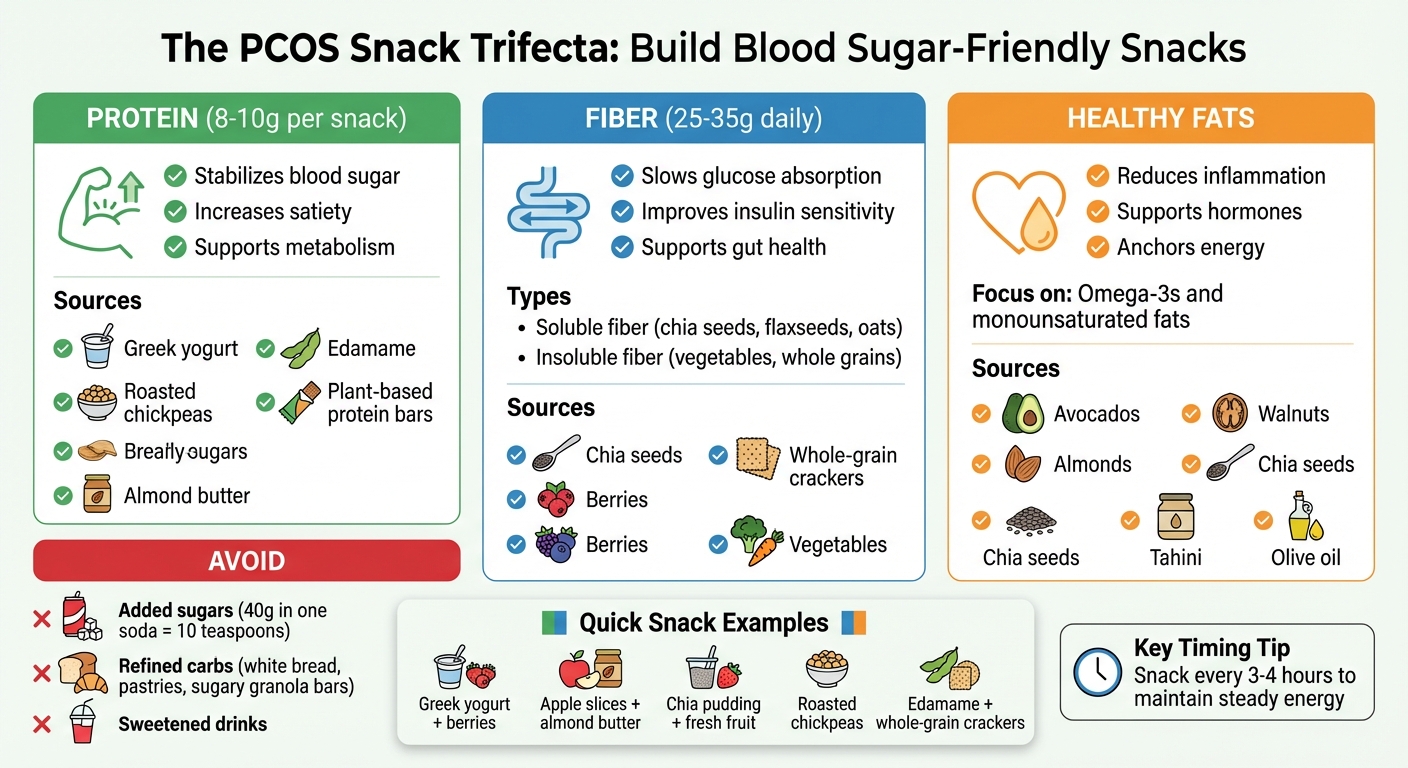
When managing PCOS and insulin resistance, snacks are more than just a way to curb hunger - they can help stabilize blood sugar, balance hormones, and maintain energy. The key? Focus on snacks that combine protein, fiber, and healthy fats to avoid blood sugar spikes and crashes. Here’s what you need to know:
Protein: Aim for 8–10 grams per snack to support satiety and steady energy.
Fiber: Choose snacks with soluble and insoluble fiber (25–35 grams daily) to improve insulin sensitivity.
Healthy Fats: Include sources like avocados, nuts, or seeds to reduce inflammation and support hormones.
Avoid Added Sugars: Skip refined carbs and sugary snacks to prevent insulin surges.
Snacking every 3–4 hours can help maintain steady energy, reduce cravings, and support hormonal health. Small, consistent changes to your snack routine can make managing PCOS and insulin resistance easier.
PCOS-Friendly Snack Components: Protein, Fiber, and Healthy Fats Guide
Nutritional Guidelines for PCOS-Friendly Snacks
When managing PCOS through diet, the right snacks can make a big difference. Combining protein, fiber, and healthy fats helps slow digestion, prevents insulin spikes, and promotes hormone balance. This "power trio" ensures glucose enters your bloodstream gradually, keeping energy levels steady.
Focus on Protein and Fiber
Protein is key to stabilizing blood sugar. Adding protein to your snacks slows the release of glucose into your bloodstream and keeps you feeling full for longer. Aim for 8 to 10 grams of protein per snack to support your metabolism and avoid the cycle of constant snacking that happens when you rely on carbs alone.
"Protein blunts post-meal glucose, supports steady energy, and improves satiety so you're not chasing snacks all afternoon." - Emilia Morelli, Nutritionist
Fiber is another essential component. Soluble fiber (found in foods like chia seeds, flaxseeds, and oats) forms a gel in your gut, slowing carbohydrate absorption, while insoluble fiber supports digestive health. A good daily goal is 25 to 35 grams of fiber, which can improve insulin sensitivity. If you're increasing your fiber intake, be sure to drink extra water to prevent digestive issues. Snack ideas? Try Greek yogurt with berries, edamame paired with whole-grain crackers, or apple slices with almond butter. To round out your snack, don’t forget to add healthy fats and nutrient-packed superfoods.
Include Healthy Fats and Superfoods
Healthy fats are a great addition to PCOS-friendly snacks. They stabilize blood sugar, support hormone production, and reduce inflammation. Monounsaturated fats (from sources like avocados and olive oil) and omega-3s (found in walnuts, chia seeds, and flaxseeds) help your body respond better to insulin and manage inflammation, which is often linked to PCOS. Think of fats as the "anchor" that keeps your energy steady.
Superfoods can give your snacks an extra boost. Ingredients like turmeric, cinnamon, and goji berries are packed with antioxidants and polyphenols that may help regulate blood sugar. For example, pumpkin seeds are rich in zinc and magnesium, two minerals that support hormone health. Pairing these nutrient-dense foods with a protein and fiber base is key. Try celery sticks with tahini, walnuts with berries, or a protein bar that combines prebiotic fiber and superfoods like almonds and chia seeds. Resist Nutrition's bars, which include plant protein and goji berries, are a good example. The final step? Avoid added sugars and refined carbs to keep your snack balanced.
Skip Added Sugars and Refined Carbs
Refined carbs and added sugars can wreak havoc on blood sugar levels. Foods like white bread, pastries, sugary granola bars, and sweetened drinks cause glucose spikes, which lead to excess insulin production. For context, a single can of soda contains about 40 grams of sugar - roughly 10 teaspoons - far exceeding the American Heart Association's recommended daily limit.
"If you're insulin resistant, your goal should be eating foods that require less insulin for processing. It's about giving your body a better chance to do what it needs to do." - Beth Czerwony, RD, LD, Cleveland Clinic
The solution? Swap refined carbs for whole-grain alternatives and always pair carbs with protein or fat. For instance, replace instant oatmeal with steel-cut oats topped with almond butter, or trade white crackers for whole-grain ones served with hummus. When buying store-bought snacks, look for options with at least 10 grams of protein and minimal added sugars. Be cautious with "healthy" snacks like flavored yogurt, granola, or bottled smoothies - they often contain as much sugar as candy but lack the fiber found in whole fruits.
sbb-itb-40fb9b7
Plant-Based Snack Categories for PCOS and Insulin Resistance
Building on earlier nutritional goals, these plant-based snack ideas are designed to help manage PCOS and insulin resistance. Each one focuses on the "trifecta" of protein, fiber, and healthy fats, which work together to keep blood sugar levels steady throughout the day.
High-Protein Snacks
Protein is a must for preventing insulin spikes and keeping hunger in check. Plant-based options like edamame, roasted chickpeas, and pea protein bars are excellent choices. For example, half a cup of edamame provides around 9 grams of protein, while a quarter-cup of roasted chickpeas offers about 6 grams.
For a snack specifically designed for PCOS, check out Resist Nutrition bars. Each bar delivers 12 grams of plant-based protein, 14 grams of fiber, and only 3–4 grams of net carbs. These bars are clinically proven to help maintain stable blood sugar for over three hours, and they’re priced at approximately $3.33 per bar ($39.95 for a 12-pack). They’re also widely recommended, with over 1,971 clinicians suggesting them to support metabolic health.
"As someone with PCOS/insulin resistance, finding quick snacks with enough fiber and protein but low sugar is hard for me. I love these protein bars for when I need a filling and healthy snack that won't spike my blood sugar!" - Kara C., Individual with Insulin Resistant PCOS
High-Fiber Snacks
Fiber is another key player, as it helps slow glucose absorption and supports gut health - both critical for improving insulin sensitivity. A great example is chia seed pudding, made by combining 3 tablespoons of chia seeds with coconut milk and letting it sit overnight. Add some berries for extra flavor and nutrients.
Other fiber-rich options include flaxseed crackers with hummus or veggie sticks paired with tahini. These snacks provide a mix of soluble and insoluble fiber, keeping you satisfied longer. Some snacks, like Resist bars, even include prebiotic fiber, which feeds beneficial gut bacteria and further supports blood sugar balance. For variety, pair these with low-glycemic fruits and nuts to create a well-rounded snack.
Low-Glycemic Fruits and Nuts
Low-glycemic fruits and nuts are perfect for managing hormone balance while reducing insulin spikes. For instance, pairing a half-cup of berries with 1 ounce of almonds or walnuts creates a satisfying, blood sugar-friendly snack.
Berries - such as blueberries, goji berries, and cherries - are loaded with antioxidants like vitamins A, C, and E, which help combat oxidative stress. Almonds are rich in magnesium, a mineral shown to improve insulin function and metabolic control. Walnuts add omega-3 fatty acids, which can help reduce inflammation often linked to PCOS. For convenience, try sprouted nut mixes that skip inflammatory seed oils and refined sugars. Always pair fruits with a source of protein or fat to avoid blood sugar spikes.
Snack Ideas for PCOS and Insulin Resistance
Here are some plant-based snack ideas you can make at home, grab from the store, or take on the go to help balance blood sugar and fit into a busy lifestyle.
Homemade Snack Recipes
Making snacks at home gives you full control over the ingredients. A great starting point is a PCOS-friendly trail mix. Combine 1/4 cup of raw mixed nuts (like walnuts, almonds, and Brazil nuts), 1 tablespoon of pumpkin seeds, 1 tablespoon of unsweetened coconut flakes, and 1 teaspoon of cacao nibs. To enhance flavor and support blood sugar regulation, roast the nuts and seeds at temperatures below 170°F and sprinkle with cinnamon or nutmeg. Be cautious of common additives like yogurt-covered nuts, candy, or sweetened dried fruits, as these can lead to insulin spikes.
Another easy homemade option is overnight chia pudding. Just mix 3 tablespoons of chia seeds with almond milk, refrigerate overnight, and top with fresh berries in the morning. For something more filling, try no-bake energy balls made with oats, almond butter, protein powder, and chia seeds. These can be prepped in batches and stored in the freezer for up to a week.
If you’re pressed for time, there are plenty of store-bought options that align with these goals.
Convenient Store-Bought Options
For store-bought snacks, Resist Nutrition protein bars are an excellent choice. Designed specifically for PCOS and insulin resistance, each bar provides 12 grams of plant-based protein, 14 grams of prebiotic fiber, and only 3–4 grams of net carbs with no added sugar. Available in flavors like Cinnamon Chocolate Chip, Goji Cherry Chocolate Chip, and Peanut Butter Turmeric, these bars are priced at $39.95 per box and have received a 4.8/5 rating from 66 reviews. Plus, they are packaged in BPA-free wrappers to avoid hormone-disrupting chemicals.
Other convenient options include seed crackers paired with hummus or pre-portioned nut mixes that avoid inflammatory seed oils. Be sure to check labels for sugar alcohols like erythritol or maltitol, as these can also impact blood sugar levels.
Portable Snacks for Travel
Traveling doesn’t mean you have to sacrifice balanced snacks. Pre-portion your snacks into single servings using airtight containers for easy access. Raw vegetables like carrots or bell pepper strips are a simple, fiber-packed option that stays fresh on the go. Roasted pumpkin seeds seasoned with cinnamon are another shelf-stable, nutrient-rich snack that supports hormone health.
And don’t forget, Resist Nutrition bars are perfect for travel - they’re shelf-stable, require no refrigeration, and fit easily into any bag.
How to Make Healthy Snacking a Habit
Prepare and Portion Your Snacks
Taking time to prepare snacks in advance can help you avoid those tempting, high-sugar options when hunger strikes. For example, spend a bit of your weekend washing and cutting fruits and veggies, then store them in individual, portion-sized containers. This small effort can make a big difference in steering clear of impulsive choices that might spike your blood sugar.
When it comes to portioning, aim for snacks with about 20 grams of carbohydrates or less. This helps manage your glycemic load. The key is balance - combine hormone-balancing foods like protein, healthy fats, and fiber in your snacks. This mix slows glucose absorption and keeps insulin levels steady. Plus, pre-portioning eliminates the guesswork, so you’re less likely to overeat, even with healthier options. Developing a habit of prepping and portioning your snacks sets you up for smoother blood sugar management every day.
When and How Often to Snack
Timing matters when it comes to snacking and managing blood sugar. How often you snack depends on your main meals and how your energy levels hold up throughout the day. Angela Grassi, MS, RDN, LDN from the PCOS Nutrition Center, suggests eating every 3 to 5 hours. This can help reduce cravings, prevent overeating, and maintain steady energy. If more than 3–4 hours pass without food, a balanced snack can help curb cravings and keep your energy on track.
"If a snack wouldn't keep you full for at least 2–3 hours, it's likely not balanced enough for PCOS." – Cheshire Nutrition
Pay attention to your body’s signals. Feeling shaky, dizzy, or irritable between meals is a sign you might need a snack to avoid reactive hypoglycemia. On the other hand, if your meals are keeping you satisfied and your energy levels are stable, you might not need to snack as often.
Fit Snacks into Your Overall Diet
Snacks should work alongside your meals, not replace them. Plan ahead by including specific snack combinations in your meal prep and grocery shopping. This helps you avoid reaching for sugary, processed foods when hunger hits. For balanced snacking, pair a protein or healthy fat - such as nuts, eggs, or cheese - with a fiber-rich carbohydrate like fruit or whole-grain crackers. This pairing slows glucose absorption and keeps you fueled.
Think of snacks as part of your overall strategy. Keep a stash of non-perishable options, like nuts or Resist Nutrition bars, for quick energy boosts. By focusing on balanced snacking, you can respond to true hunger rather than eating out of habit, which can lead to digestive issues and blood sugar swings. Incorporating these thoughtful snacking habits supports steady blood sugar levels and helps maintain hormonal balance over time.
Conclusion: Managing PCOS Through Better Snacking
Navigating PCOS involves more than willpower - it’s about having a thoughtful snacking plan. As Madison Lawrie, Registered Dietitian, explains:
"Snacking with PCOS isn't about willpower – it's about strategy."
The key is pairing protein or healthy fats with fiber-rich carbs to keep blood sugar steady. This approach helps curb cravings and supports hormonal balance. For example, snacks like roasted chickpeas paired with veggies or chia pudding topped with berries can regulate insulin levels and reduce androgen production - two factors tied to PCOS symptoms.
Why does this matter? Between 30% and 70% of women with PCOS experience insulin resistance. Smart snacking can improve insulin sensitivity, which may help restore ovulation and lower androgen levels, even without weight loss. Aiming for snacks with 8–10 grams of protein and daily fiber intake between 25–35 grams can stabilize metabolism and support hormonal health.
Think of snacks as "metabolic bridges" that keep blood sugar stable throughout the day. Eating every 3–5 hours can prevent the energy dips and irritability associated with reactive hypoglycemia. It also helps avoid the cycle of restriction followed by overeating, which can worsen insulin resistance. Whether it’s a handful of walnuts and an apple or a convenient Resist Nutrition bar for a busy day, these choices make a difference.
Plant-based snacks provide an added benefit: they target the chronic inflammation linked to many PCOS challenges, such as hair loss and weight gain. Foods like walnuts, chia seeds, and berries - rich in omega-3 fatty acids and polyphenols - help reduce inflammation and improve insulin signaling. Over time, this anti-inflammatory effect supports both blood sugar levels and overall metabolic health.
The power lies in small, consistent choices. By listening to your body’s hunger signals and choosing whole-food snacks that combine protein, healthy fats, and fiber, you’re building habits that align with your body’s needs. While it’s not an overnight solution, smart snacking offers a sustainable way to manage PCOS symptoms and regain control of your health. Every snack is a step toward lasting hormonal balance and improved metabolic well-being.
FAQs
How do I pick a PCOS-friendly snack at the grocery store?
When selecting snacks, aim for ones that can help maintain stable blood sugar levels and promote hormone balance. Choose options that are low in sugar, high in fiber, and include a good source of healthy fats or protein. Prioritize snacks made with natural ingredients, minimal added sugars, and a balanced mix of macronutrients. Taking the time to read labels and opting for whole, minimally processed foods can make a big difference in aligning your snack choices with PCOS management goals.
What should I do if higher-fiber snacks upset my stomach?
If high-fiber snacks leave your stomach feeling uneasy, try starting with smaller portions and slowly increasing your fiber intake. This gives your digestive system time to adapt. Combining fiber-rich foods with protein or healthy fats can also make them easier to digest. Go for simple, unprocessed choices like fruits, vegetables, seeds, and legumes. If the discomfort doesn’t go away, consider cutting back on fiber for a while and talk to a healthcare professional to tailor your diet to your needs.
Can I snack less often if my meals keep me full?
If your meals are satisfying and keep you full, you might not feel the need to snack as often. The key is to pay attention to your body's hunger signals and opt for balanced snacks when necessary. This approach can help regulate blood sugar levels, which is particularly important for individuals managing PCOS or insulin resistance. Maintaining steady energy levels and supporting hormone balance starts with listening to your body and making thoughtful snack choices.