We're reformulating our bars with an even better recipe. Sign up for early access and get an exclusive re-launch discount.
Best Prebiotic Fiber for Blood Sugar Balance
By Drew Lederman
Looking to stabilize your blood sugar and improve gut health? Prebiotic fibers can help. These fibers bypass digestion, feed beneficial gut bacteria, and support metabolic health. Whether you're managing diabetes, insulin sensitivity, or simply aiming for better glucose control, incorporating the right prebiotic fiber into your diet can make a difference.
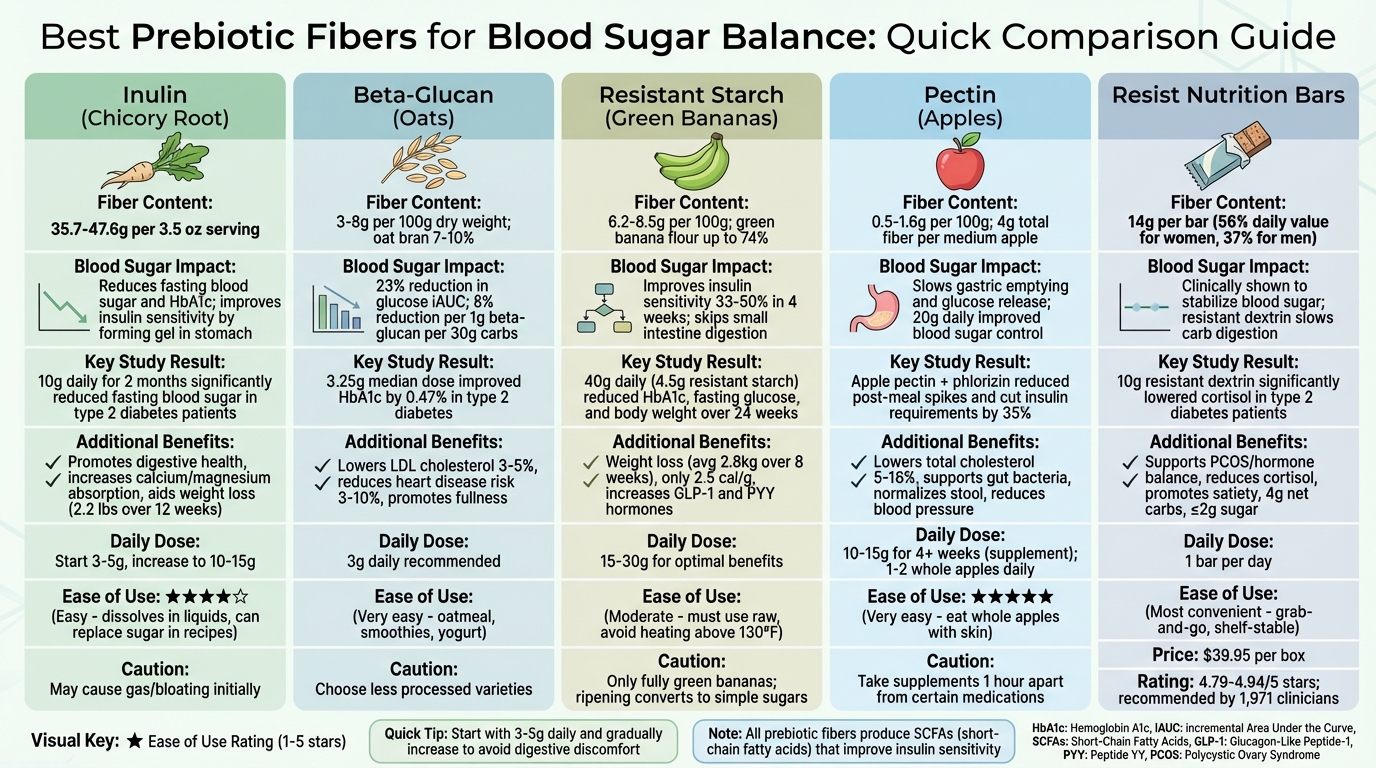
Here’s a quick rundown of five top prebiotic fibers and their benefits:
Inulin (Chicory Root): Slows digestion, improves insulin sensitivity, and reduces blood sugar spikes. Found in chicory root and supplements.
Beta-Glucan (Oats): Forms a gel in your stomach, slowing glucose absorption and lowering cholesterol. Perfect for oatmeal lovers.
Resistant Starch (Green Bananas): Boosts insulin sensitivity and promotes colon health. Best used raw in smoothies or as flour.
Pectin (Apples): Slows sugar absorption and supports gut health. Found in whole apples, especially with the skin.
Resist Nutrition Bars: Convenient snack with 14 grams of fiber per bar, combining resistant dextrin and inulin to stabilize blood sugar.
Each option offers unique benefits, but the right choice depends on your health goals and lifestyle. Keep reading for detailed insights into these fibers and how to incorporate them into your diet.
Comparison of 5 Best Prebiotic Fibers for Blood Sugar Control
1. Inulin from Chicory Root
Fiber Content
Chicory root stands out as one of the richest natural sources of inulin. Fresh chicory contains about 20% inulin by wet weight, which increases to 68–80% when dried. A 3.5-ounce serving provides between 35.7 and 47.6 grams of inulin - far exceeding other sources like Jerusalem artichokes (16–20 grams) or garlic (9–16 grams) . This makes chicory root the leading commercial source of inulin, even though this prebiotic fiber is present in approximately 36,000 plant species.
Blood Sugar Impact
Inulin plays a key role in stabilizing blood sugar levels through various mechanisms. It forms a gel-like substance in the stomach, slowing down digestion and delaying glucose absorption. Once it reaches the colon, it ferments and produces short-chain fatty acids (SCFAs), which enhance insulin sensitivity and stimulate GLP-1 release. Together, these processes help regulate blood sugar and improve overall metabolic health. Additionally, chicory root contains chicoric and chlorogenic acids, which directly boost insulin sensitivity.
Research backs these benefits. In one study involving 49 women with type 2 diabetes, consuming just 10 grams of inulin daily for two months significantly reduced fasting blood sugar and hemoglobin A1c levels. Another trial in 2025 found that individuals at risk for type 2 diabetes who consumed chicory root fiber saw improved whole-body insulin sensitivity (p = 0.032) and lower triglycerides (p = 0.049) over 12 weeks. With only 1.5 calories per gram - about a quarter of the calories in white sugar - inulin offers these metabolic advantages without adding many extra calories.
Additional Health Benefits
Inulin offers more than just blood sugar control. It promotes digestive health by increasing fecal biomass and water content, which can help alleviate constipation . By stimulating bowel movements, it supports overall gut health.
It also aids in mineral absorption, particularly calcium and magnesium, which helps strengthen bones and may reduce the risk of osteoporosis . In another study, consuming 21 grams of chicory-derived oligofructose daily lowered ghrelin levels, leading to an average weight loss of 2.2 pounds over 12 weeks.
Ease of Incorporation
Chicory root inulin is incredibly versatile. It’s colorless, odorless, and dissolves easily in hot water, making it simple to mix into coffee, tea, smoothies, or oatmeal. It can also replace sugar or fat in recipes, as it’s about 10% as sweet as sucrose and adds a creamy texture to baked goods . Start with 3–5 grams per day to avoid digestive discomfort, gradually increasing to 10–15 grams for general health benefits or up to 30 grams for specific effects. Be sure to stay hydrated when adding inulin to your diet .
Next, we’ll look at beta-glucan from oats and how it contributes to blood sugar management.
sbb-itb-40fb9b7
2. Beta-Glucan from Oats
Fiber Content
Oats stand out as a rich source of beta-glucan, providing about 3–8 g per 100 g of dry weight, with approximately 82% of it being water-soluble. Oat bran offers an even higher concentration, containing 7–10% beta-glucan. When compared to other grains, oats surpass wheat (0.5–1.0 g) and rye (1.3–2.7 g) in beta-glucan content. Barley, however, can range from 2–20 g per 100 g. For those seeking even higher concentrations, commercial products like PromOat deliver up to 32.2% beta-glucan and 40% total fiber.
Blood Sugar Impact
Beta-glucan from oats plays a crucial role in stabilizing blood sugar levels through several mechanisms. It forms a gel-like substance in the stomach, which slows down both gastric emptying and glucose absorption [20, 21, 23]. Additionally, research has found that beta-glucan can inhibit enzymes like alpha-glucosidase, which breaks down starches into glucose, and SGLT1, a key glucose transporter in the small intestine.
The effects are measurable: consuming oat beta-glucan has been shown to reduce the glucose incremental area-under-the-curve (iAUC) by 23% and the incremental peak-rise (iPeak) by 28% [25, 27]. There’s also a clear dose-response effect - every 1 g of oat beta-glucan per 30 g of available carbohydrates leads to an 8% reduction in glucose iAUC. For those managing type 2 diabetes, a median dose of 3.25 g has been linked to improvements in HbA1c by 0.47% and fasting glucose levels by 0.75 mmol/L.
Additional Health Benefits
The benefits of oat beta-glucan go beyond blood sugar management. It’s widely recognized for its positive effects on heart health, particularly in lowering cholesterol. A daily intake of at least 3 g can reduce LDL cholesterol by 3–5%, which could lower the risk of heart disease by 3–10%. Beta-glucan also contributes to a feeling of fullness by slowing digestion, offering potential support for weight management [23, 28, 29].
As a fermentable fiber, beta-glucan feeds beneficial gut bacteria, promoting the production of short-chain fatty acids like butyrate. These fatty acids help maintain gut barrier integrity and may even improve insulin sensitivity [21, 22].
Ease of Incorporation
Incorporating oat beta-glucan into your diet is simple and versatile. Opt for less processed options like steel-cut oats or pearl barley, as they retain more beta-glucan than heavily processed varieties. It’s easy to add to everyday meals - stir it into smoothies, mix it with yogurt, or use it in soups and sauces. Nutrition bars containing oat fiber are another convenient option.
To avoid any digestive discomfort, gradually increase your fiber intake and drink plenty of water. When shopping, look for products that provide at least 0.75 g of beta-glucan per serving to help you reach the recommended 3 g daily intake.
This look at oat beta-glucan paves the way for discussing resistant starch from green bananas, another noteworthy fiber for blood sugar management.
3. Resistant Starch from Green Bananas
Fiber Content
Green bananas are packed with starch, making up 70–80% of their weight when unripe, most of which remains undigested. The exact amount of resistant starch depends on the variety. For instance, plantains provide 7.4–10.4 g of resistant starch per 100 g, while green bananas typically offer 6.2–8.5 g per 100 g.
Green banana flour takes this to another level, with up to 74% of its content being resistant starch. Products like NuBanaRS65 are specifically formulated to include at least 65% RS2. Just one tablespoon of green banana flour delivers about 5 g of resistant starch, which is significantly higher than a cup of cooked pinto beans (3.6 g) or black beans (2 g).
Blood Sugar Impact
Resistant starch has a unique advantage: it skips digestion in the small intestine, avoiding rapid blood sugar spikes. Instead, it makes its way to the colon, where it’s fermented by gut bacteria into short-chain fatty acids (SCFAs) like acetate, propionate, and butyrate. Acetate, in particular, plays a role in reducing free fatty acids in the bloodstream, which can improve insulin sensitivity.
The BIOMEL Study, conducted at the Universidade Federal de São Paulo, looked at 113 participants with pre-diabetes or type 2 diabetes. Over 24 weeks, they consumed 40 g of green banana biomass daily (providing about 4.5 g of resistant starch). Results showed significant reductions in HbA1c (P=0.0001), fasting glucose (P=0.021), and body weight (P=0.002). Other research suggests that consuming 15 to 30 g of resistant starch daily can improve insulin sensitivity by 33% to 50% within just four weeks.
"Since we don't digest resistant starch, a food's glucose isn't rapidly released into the bloodstream, and we don't see a significant blood sugar spike." – Ashley Welch, Health Writer
Beyond blood sugar regulation, resistant starch offers other metabolic perks.
Additional Health Benefits
Resistant starch can also help with weight management and appetite control. At just 2.5 calories per gram - compared to the 4 calories per gram in most carbohydrates - it’s a lower-calorie option. A study published in Nature Metabolism in February 2024 found that participants who consumed resistant starch over eight weeks lost an average of 2.8 kg (around 6.2 lbs).
Additionally, it promotes the release of hormones like GLP-1 and PYY, which signal fullness and help regulate appetite while also supporting blood sugar stability [33,39].
Ease of Incorporation
Adding green banana flour to your diet is simple. Mix it into cold or room-temperature foods like smoothies, yogurt, or overnight oats. However, avoid heating it above 130°F (54°C), as heat destroys its resistant starch content.
Start with small amounts - 1 teaspoon to 1 tablespoon daily - to help your body adjust and minimize bloating [33,39]. Be sure to use only fully green bananas, as ripening turns their resistant starch into simple sugars, reducing their prebiotic benefits.
4. Pectin from Apples
Fiber Content
Apples are a solid source of pectin, offering 15–20% pectin in their pulp. A medium apple with its skin provides about 4 grams of total fiber, with pectin levels ranging from 0.5 to 1.6 grams per 100 grams of fresh fruit. While this is less than the pectin content in citrus fruits like orange peels (which provide 3.5–5.5 grams per 100 grams), apples are an easy, everyday option to boost fiber intake.
Among apple varieties, Granny Smith apples stand out for their higher pectin content. To get the most fiber, including pectin, it’s best to eat apples whole with the skin intact, as much of the fiber is located in the peel and cell walls.
Blood Sugar Impact
Pectin’s gel-like properties in the digestive system slow down gastric emptying, which helps regulate the release of glucose into the bloodstream. This slower digestion leads to steadier blood sugar levels after meals, avoiding the sharp spikes that can occur otherwise.
In one study involving 12 individuals with type 2 diabetes, consuming 20 grams of apple pectin daily for four weeks significantly improved blood sugar control. Another trial found that an apple pectin product enhanced with phlorizin reduced post-meal blood sugar spikes and even cut insulin requirements by 35% in insulin-dependent participants.
As a prebiotic, pectin ferments in the colon, producing short-chain fatty acids (SCFAs) that help reduce inflammation and may improve insulin sensitivity. Some studies even suggest that pectin works well alongside traditional diabetes medications.
Additional Health Benefits
Pectin isn’t just helpful for blood sugar control; it also supports heart health. By binding to bile acids in the small intestine, it prompts the liver to use more cholesterol to produce bile, which can lower cholesterol levels. Research shows that pectin can reduce total cholesterol by 5–16%, and one study of nearly 3,000 adults found it lowered LDL cholesterol without affecting HDL cholesterol.
For gut health, pectin acts as food for beneficial bacteria like Bifidobacteria, while also suppressing harmful strains. Its gel-like nature helps normalize stool consistency, making it effective for managing both constipation and diarrhea. Additionally, consuming 9 grams of pectin daily for seven weeks has been associated with lower blood pressure, particularly in individuals with hypertension.
Ease of Incorporation
The simplest way to increase your pectin intake is by eating whole apples with the skin. Having an apple before a meal can also help reduce post-meal blood sugar and insulin levels. If you prefer supplements, studies suggest that 10 to 15 grams per day for at least four weeks is effective.
Pectin is available in powder or capsule form, and you can even make it at home by boiling unpeeled apples with lemon juice for about 45 minutes, then straining and refrigerating the liquid. Keep in mind that fiber can interfere with the absorption of certain medications, so take pectin supplements at least one hour apart from drugs like levothyroxine or lovastatin. Start with small amounts to avoid digestive discomfort.
With its ability to form gels and moderate blood sugar, pectin is a practical addition to a fiber-rich diet. It’s an easy way to support glucose stability while exploring other fiber options, like Resist Nutrition Bars.
Resist Nutrition Bars pack 14 grams of fiber per bar, which covers about 56% of the daily fiber recommendation for women (25 g) and 37% for men (38 g). This impressive fiber content comes from resistant dextrin and inulin, two prebiotic fibers that bypass digestion in the upper gastrointestinal tract to feed beneficial gut bacteria. Unlike sugar alcohols or gums, this fiber blend supports gut health without causing bloating or discomfort. With only 4 grams of net carbs and 2 grams or less of sugar per bar, they provide a portable, clean way to boost your prebiotic intake. This combination not only helps meet daily fiber needs but also promotes stable blood sugar levels.
Blood Sugar Impact
These bars are clinically shown to help stabilize blood sugar levels, thanks to their mix of plant protein, healthy fats, and prebiotic fiber. Resistant dextrin slows down the digestion of carbs and the absorption of sugar, reducing the risk of energy crashes caused by glucose spikes. For individuals with Type 1 Diabetes, the bars have proven to be a reliable snack option:
"As a type one diabetic I can say Resist bars don't affect my blood glucose and are satisfying. These are an excellent choice for type one diabetics!" – Danielle M., Type One Diabetic
Additionally, a 2019 study found that consuming 10 grams of resistant dextrin significantly lowered cortisol levels in women with Type 2 Diabetes, hinting at broader metabolic benefits beyond blood sugar control. The bars can also be used strategically - eat one 15 minutes before a high-glycemic meal to help reduce a sugar spike, or have one before coffee to counteract a post-caffeine glucose surge.
Additional Health Benefits
Resist Bars go beyond just managing blood sugar. Their prebiotic fibers also support hormone balance, making them beneficial for people with PCOS. Research suggests that resistant dextrin can help regulate metabolic markers and androgen levels, potentially improving symptoms like irregular menstrual cycles. The bars are enriched with superfoods like turmeric, goji berries, and chia seeds, which contribute anti-inflammatory properties and hormone support. Plus, the 14 grams of fiber help with satiety, which may assist in weight management. When fermented, these fibers produce short-chain fatty acids that can enhance insulin sensitivity.
Ease of Incorporation
With these metabolic and hormonal benefits, Resist Bars are an easy way to add prebiotic fiber to your diet. They’re designed for convenience, making them ideal for breakfast, a mid-afternoon snack, or post-workout energy. Available in flavors like Cinnamon Chocolate Chip, Goji Cherry Chocolate Chip, and Peanut Butter Turmeric, they’re priced at $39.95 per box. Each bar is shelf-stable and pre-portioned, fitting seamlessly into busy lifestyles. If you're new to high-fiber foods, it’s best to stick to one bar per day to avoid digestive discomfort. Notably, 1,971 clinicians recommend these bars through FrontrowMD, and they’ve received stellar reviews, with ratings ranging from 4.79 to 4.94 out of 5 based on verified customer feedback.
How Does Oatmeal Help with Blood Sugars?
Comparison: Advantages and Disadvantages
Each type of prebiotic fiber has its own strengths and drawbacks. For example, inulin from chicory root is known for increasing beneficial Bifidobacteria, but it may lead to gas and bloating for some people when they first start using it. On the other hand, beta-glucan from oats is a breakfast-friendly option that supports heart health and helps regulate blood sugar. However, it requires preparation, and a typical serving (half a cup of oats) provides about 3–5 grams of fiber.
Resistant starch from green bananas is excellent for producing short-chain fatty acids (SCFAs), which promote colon health. However, it’s most effective when consumed raw, such as in smoothies or energy bites, as cooking destroys its resistant starch content. For cooked-and-cooled starches, proper handling is key - refrigerating for 24 hours and avoiding reheating above 130°F (55°C) ensures the benefits are retained. Meanwhile, pectin from apples is an easy, no-prep option. Eating whole apples with the skin provides a moderate amount of fiber while also slowing sugar absorption and supporting gut health.
To simplify these comparisons, here’s a table summarizing the key differences:
Prebiotic Source
Fiber Content (Approx.)
Blood Sugar Effect
Key Health Benefits
Ease of Use
Inulin (Chicory)
High (as supplement)
Lowers glucose spikes
Increases Bifidobacteria; improves regularity
Easy to use as powder, but may cause gas
Beta-Glucan (Oats)
Moderate
Regulates blood sugar
Lowers LDL cholesterol; supports heart health
Simple (oatmeal, overnight oats)
Resistant Starch (Green Banana)
High (as flour)
Improves insulin sensitivity
Promotes SCFA production; benefits colon health
Best raw in smoothies or bites
Pectin (Apples)
Moderate
Slows sugar absorption
Strengthens gut barrier; binds cholesterol
Very easy (eat whole fruit with skin)
Resist Nutrition Bars
14g per bar
Stabilizes blood sugar
Reduces cortisol; supports fat metabolism and PCOS
Most convenient; grab-and-go snack
When it comes to convenience, Resist Nutrition Bars stand out. Each bar provides about 14 grams of fiber, covering 56% of the daily fiber needs for women and 37% for men, all in a single serving. Their pre-portioned and shelf-stable design makes them a practical choice for busy individuals. Plus, their fiber blend supports SCFA production without causing digestive discomfort. Clinical studies also highlight their ability to reduce cortisol levels, aid fat metabolism, and support managing PCOS through diet. At $39.95 per box, these bars offer a reliable, time-saving option for meeting fiber goals while delivering blood sugar benefits backed by research.
Conclusion
Finding the right prebiotic fiber to help balance blood sugar starts with understanding your health goals and daily habits. Research shows that resistant starch, when consumed at 40 grams per day, can boost insulin sensitivity by 19% over 12 weeks. Meanwhile, chicory root inulin, at just 10 grams daily, has been shown to lower fasting blood sugar and HbA1c levels effectively.
Each type of fiber comes with its own set of benefits, but how your body tolerates it is just as important as its effectiveness. For instance, inulin is highly effective at stimulating beneficial gut bacteria but is a high-FODMAP fiber, which may cause gas and bloating for some. Resistant starch, on the other hand, is low-FODMAP and ferments more slowly, making it a better option for individuals with IBS . If you're looking for a compromise, beta-glucan from oats slows sugar absorption and supports heart health, making it a great breakfast choice.
Convenience also plays a big role in maintaining a fiber-rich diet. Natural food sources like "cooked and cooled" potatoes or rice require preparation, while green banana flour can be easily added raw to smoothies. For a no-fuss option, Resist Nutrition Bars provide 14 grams of resistant dextrin fiber per bar, meeting 56% of the daily fiber needs for women and 37% for men. Unlike IMOs, which the FDA no longer classifies as dietary fiber, resistant dextrin in these bars has been clinically proven to improve liver insulin resistance and lower cortisol levels .
"Resistant starch types are literal gladiators with respect to their impact on satiety, digestion, blood sugar, the microbiome, and other chronic diseases."
– Kent MacLeod, Clinical Pharmacist
To get started, begin with 3–5 grams of prebiotic fiber daily and gradually work up to 5–20 grams, giving your digestive system time to adjust. Whether you choose whole foods like apples and oats or functional snacks like Resist Nutrition Bars, even small steps can lead to improved blood sugar stability and overall metabolic health. The right prebiotic fiber doesn’t just balance blood sugar - it supports a healthier you.
FAQs
What is the best prebiotic fiber for blood sugar goals?
Resistant dextrin tapioca fiber is a great prebiotic option that helps maintain stable blood sugar levels while contributing to overall well-being. Its specific characteristics make it especially useful for supporting balance in the body, along with offering other health perks.
How much prebiotic fiber should I start with each day?
To help maintain balanced blood sugar levels, start with 10–20 grams of prebiotic fiber per day. As your body adapts, you can slowly increase the amount based on your tolerance.
Can prebiotic fiber affect medications or digestion?
Prebiotic fiber helps digestion by encouraging the growth of healthy gut bacteria and improving how the body processes glucose, which could assist in managing blood sugar levels. However, it may also affect how medications work by changing gut bacteria and metabolic responses. If you're on any medications, it's a good idea to talk to your healthcare provider to make sure prebiotic fiber won’t impact their effectiveness.