We're reformulating our bars with an even better recipe. Sign up for early access and get an exclusive re-launch discount.
Why Sugar Alcohols May Disrupt Blood Sugar Balance
By Drew Lederman
Sugar alcohols like erythritol, xylitol, and maltitol are often used in "sugar-free" or "low-carb" foods. While they provide fewer calories than regular sugar and have a lower glycemic index, they aren't entirely neutral when it comes to blood sugar levels. Some, like maltitol, can still cause noticeable blood sugar spikes. Additionally, these sweeteners may lead to digestive issues, such as bloating and diarrhea, and emerging research links certain sugar alcohols, like erythritol, to potential cardiovascular risks, including increased blood clotting.
Key Takeaways:
Sugar alcohols vary in their impact on blood sugar; erythritol has the least effect, while maltitol can cause significant spikes.
They aren't fully absorbed in the small intestine, leading to fermentation in the colon, which may cause digestive discomfort.
Recent studies raise concerns about the connection between erythritol and heart health risks.
To avoid these issues, check nutrition labels carefully, subtract sugar alcohols like erythritol from total carbs to estimate net carbs, and opt for products sweetened with alternatives like monk fruit or allulose.
Effects of Sugar Alcohol on Blood Glucose
sbb-itb-40fb9b7
How Sugar Alcohols Affect Blood Sugar
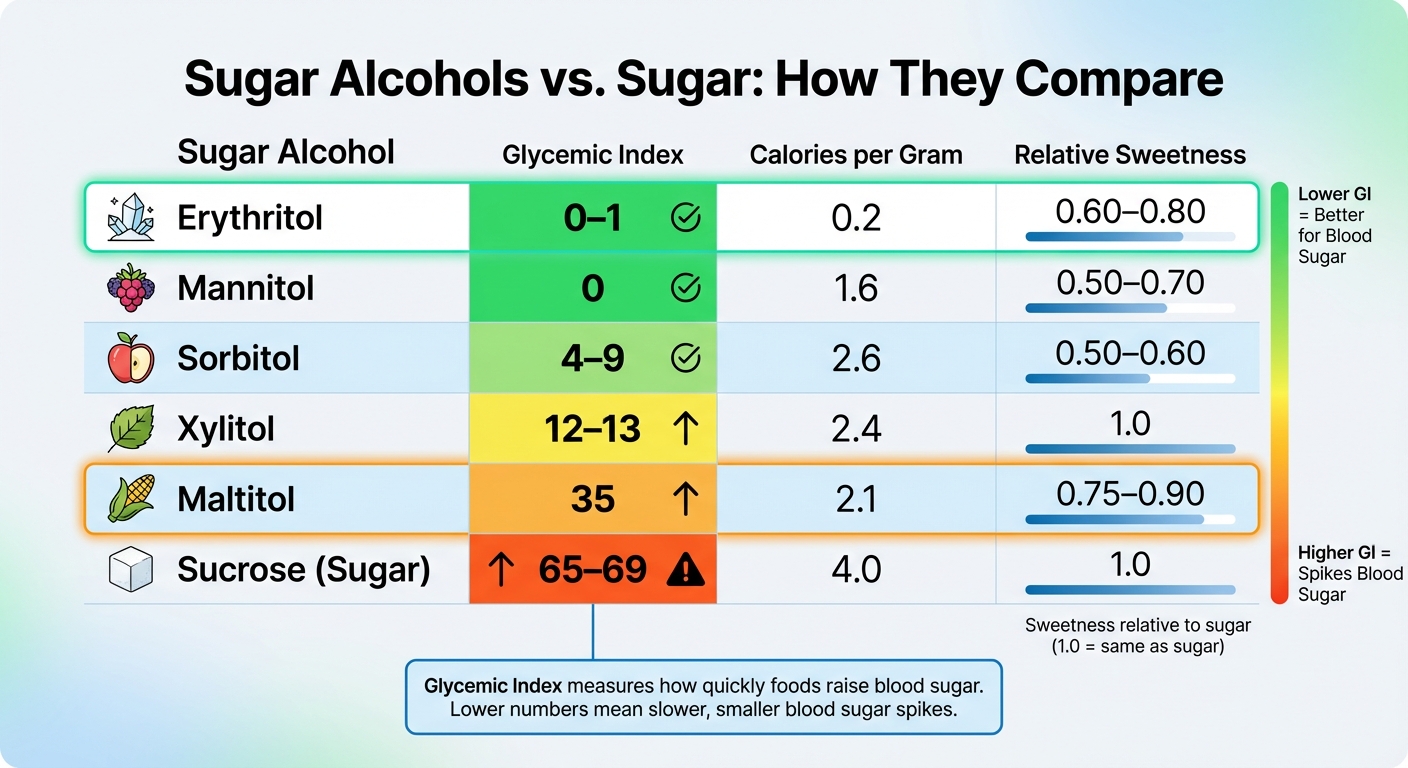
Sugar Alcohols vs Sugar: Glycemic Index, Calories, and Sweetness Comparison
Sugar alcohols don’t behave like regular sugar when processed by the body. While table sugar is quickly broken down and fully absorbed, sugar alcohols have a chemical structure that makes them harder for enzymes to recognize. As a result, they’re only partially absorbed into the bloodstream. The portion that isn’t absorbed travels to the large intestine, where gut bacteria ferment it, producing gases and short-chain fatty acids.
This incomplete absorption means sugar alcohols generally cause smaller blood sugar spikes compared to regular sugar. However, the extent of this effect depends on the type of sugar alcohol. For example, about 90% of erythritol is absorbed in the small intestine but isn’t metabolized - it simply passes through the body and exits via urine unchanged. On the other hand, maltitol is only partially absorbed (25% to 50%), with the rest undergoing fermentation in the colon.
"This keeps your blood sugar and insulin levels from spiking as they do with sugar. That makes them a useful sugar substitute for people with diabetes."
These unique processing differences make it worth exploring how individual sugar alcohols impact blood sugar levels.
Glycemic Impact of Common Sugar Alcohols
Sugar alcohols vary in how much they affect blood sugar. Maltitol, for instance, has a glycemic index of 35, meaning it can still cause noticeable blood sugar spikes despite being marketed as "sugar-free". In comparison, xylitol and sorbitol have moderate effects, with glycemic indexes of 13 and 9, respectively. Erythritol, with a glycemic index of 0 to 1, is the least likely to raise blood sugar levels.
Sugar Alcohol
Glycemic Index
Calories per Gram
Relative Sweetness (Sugar = 1.0)
Erythritol
0–1
0.2
0.60–0.80
Mannitol
0
1.6
0.50–0.70
Sorbitol
4–9
2.6
0.50–0.60
Xylitol
12–13
2.4
1.0
Maltitol
35
2.1
0.75–0.90
Sucrose (Sugar)
65–69
4.0
1.0
Sources:,,
However, individual responses can vary. Factors like gut microbiome composition, how quickly food moves through the digestive system, and personal absorption rates all play a role in how sugar alcohols affect blood sugar.
Why Sugar-Free Labels Don't Tell the Full Story
The term "sugar-free" can be misleading. Sugar alcohols still contribute to the total carbohydrate count on nutrition labels and provide between 0.2 and 2.7 calories per gram. For example, a protein bar with 15 grams of maltitol contains about 32 calories and can still raise blood sugar levels.
For those managing diabetes, paying attention to these details is crucial. If a product contains over 5 grams of sugar alcohols, you can subtract half of those grams from the total carbohydrate count to calculate net carbs and estimate its impact. However, if erythritol is the only sugar alcohol listed, you can subtract all of its grams, as it doesn’t affect blood sugar. It’s also important to consider cumulative effects - consuming multiple "low-sugar" products in a day can still lead to blood sugar spikes. Carefully reading nutrition labels is key to maintaining stable blood sugar levels.
Digestive and Health Side Effects of Sugar Alcohols
Sugar alcohols might seem like a great alternative to sugar, but they come with their own set of health concerns. These range from digestive discomfort to potential cardiovascular risks, depending on the specific type of sugar alcohol and how your body reacts to it.
Digestive Problems from Sugar Alcohols
Sugar alcohols aren't fully absorbed in the small intestine. Instead, they pass through to the colon, where bacteria ferment them, producing gas and drawing water into the intestine. This process often leads to uncomfortable symptoms like bloating, cramping, and diarrhea.
How much you’re affected depends on your sensitivity. For instance, people with conditions like Irritable Bowel Syndrome (IBS), Small Intestinal Bacterial Overgrowth (SIBO), or Inflammatory Bowel Disease (IBD) can experience symptoms with as little as 10 g of sorbitol. If your gut bacteria ferment sugar alcohols quickly, you’re more likely to experience gas and other issues. Similarly, slower digestion gives bacteria more time to ferment these compounds, while faster digestion might reduce the severity of symptoms.
"As a Registered Dietitian, I'm always on the lookout for lower sugar options that don't sweeten with sugar alcohols like sorbitol, xylitol, or mannitol. These common ingredients can cause digestive upset, like bloating and gas."
Miranda Galati, Registered Dietitian
The FDA requires products containing sorbitol or mannitol to include a warning: "Excessive consumption may have a laxative effect". And while one snack might not seem problematic, consuming multiple sugar alcohol-containing items - like gum, yogurt, and protein bars - throughout the day can lead to cumulative digestive distress.
But digestive discomfort isn’t the only concern. Research is shedding light on how sugar alcohols might also affect heart health.
New Research on Heart Health Risks
Emerging studies suggest that sugar alcohols could pose risks to cardiovascular health, particularly for those managing metabolic conditions.
A Cleveland Clinic study from August 2024 revealed that consuming 30 g of erythritol caused blood levels to spike from 4 µM to 6,480 µM - a staggering increase of over 1,000 times. This rise was linked to significantly higher blood clot formation. Similarly, a 2023 study published in Nature Medicine found that cardiac patients with the highest erythritol levels faced double the risk of heart attack or stroke.
Xylitol, another common sugar alcohol, also raises concerns. Consuming 30 g (about what’s in a scoop of some keto ice creams) can increase platelet activity and clotting risk for 4–6 hours. With erythritol, this heightened clotting risk may persist for several days.
"These compounds are in foods that are typically marketed to people with diabetes, who already have an increased risk for major heart events. And the sugar alcohols in their diets may inadvertently be adding to that risk."
Dr. Stanley Hazen, Physician-Scientist, Cleveland Clinic
This is particularly alarming for individuals with pre-existing conditions like diabetes or obesity, who are already more vulnerable to cardiovascular issues.
"I feel that choosing sugar-sweetened treats occasionally and in small amounts would be preferable to consuming drinks and foods sweetened with these sugar alcohols, especially for people at elevated risk of thrombosis such as those with heart disease, diabetes or metabolic syndrome."
Dr. Stanley Hazen
How to Choose Protein Bars That Support Blood Sugar
Now that you’re aware of the risks associated with sugar alcohols, let’s talk about how to pick protein bars that help maintain stable blood sugar levels.
What to Look for on Nutrition Labels
Start by checking the carbohydrate section on the label. Sugar alcohols are typically listed under "Total Carbohydrates". To estimate the glycemic impact, use this formula: Total Carbohydrates – Fiber – Sugar Alcohols = Net Carbs.
Look for ingredients ending in "-itol", such as erythritol or sorbitol - these indicate the presence of sugar alcohols. Also, avoid additives with an "x", like polydextrose, as they often signal synthetic ingredients. Instead, go for bars that use natural, low-glycemic sweeteners like monk fruit extract or allulose, which are less likely to cause blood sugar spikes. Ideally, the bar should have less than 5 grams of naturally derived sugar.
The protein source matters, too. Bars made with plant-based proteins - like pea, hemp, nuts, and seeds - provide essential amino acids and are easier on digestion compared to whey or soy. A good protein bar should offer at least 10 grams of both protein and fiber.
High-fiber content, especially from prebiotic sources like tapioca or chicory root, helps slow glucose absorption and supports gut health. Healthy fats, such as those from MCT oil, nut butters, or omega-3-rich chia seeds, can provide steady energy and help prevent blood sugar spikes.
Feature
Blood Sugar Friendly
Blood Sugar Disruptive
Sweeteners
Monk fruit, Allulose, Stevia
Sugar alcohols, Corn syrup, Brown rice syrup
Protein Source
Pea, Hemp, Seeds, Nuts
Whey, Soy, Milk protein
Fiber
10+ grams (Prebiotic fibers)
Low fiber or synthetic fillers
Net Carbs
Low (around 4g)
High (masked by sugar alcohols)
Additives
None (Transparent label)
Gums, Glycerin, Artificial flavors
Avoid bars containing gums (like xanthan, guar, or acacia) or vegetable glycerin, as these can disrupt gut health and hinder mineral absorption. Also, steer clear of bars that list high-glycemic ingredients like brown rice syrup, high fructose corn syrup, or agave as their main sweeteners.
With these guidelines in mind, let’s see how Resist Nutrition protein bars measure up.
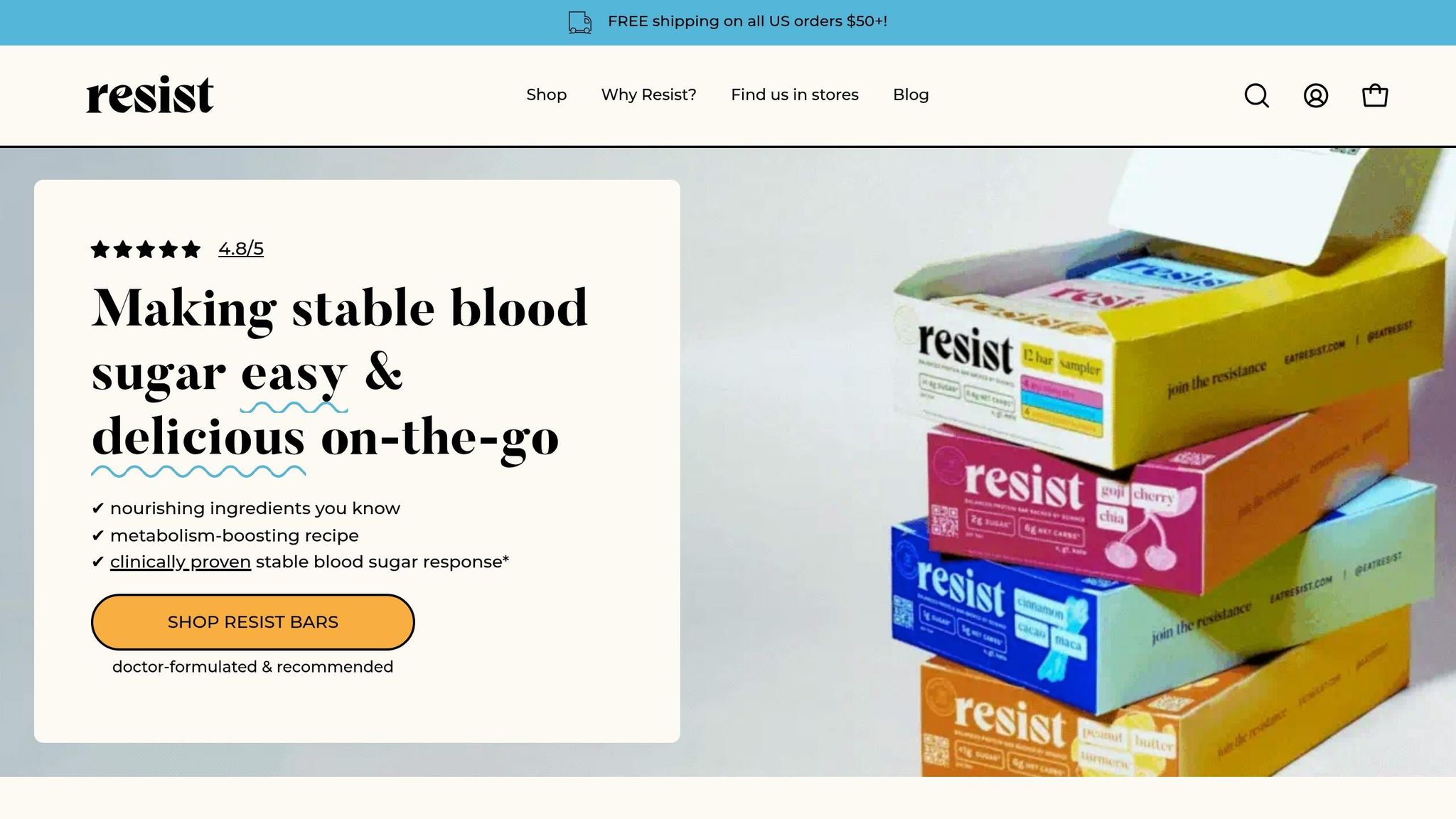
Resist Nutrition protein bars are specifically crafted to promote stable blood sugar levels. Using the principles above, these bars provide balanced nutrition without the downsides of sugar alcohols. Each bar delivers 12–13 grams of vegan protein, 14 grams of fiber, and just 4 grams of net carbs - an intentional formula developed with input from a medical advisory board.
Instead of sugar alcohols, these bars use allulose and monk fruit for sweetness, offering a pleasant taste without spiking blood sugar or causing digestive discomfort.
The protein blend includes pea protein, hemp, almonds, and seeds, avoiding whey and soy to reduce inflammation risks. Healthy fats from MCT oil and nut butters contribute to steady energy throughout the day.
Each flavor is enhanced with functional ingredients. For example:
Cinnamon Chocolate Chip: Includes cinnamon, known for its role in blood sugar regulation.
Goji Cherry Chocolate Chip: Packed with antioxidants and omega-3s.
Peanut Butter Turmeric: Features turmeric for its anti-inflammatory properties.
Additionally, the bars are packaged in BPA-free, phthalate-free wrappers to minimize exposure to endocrine disruptors.
"As a type one diabetic I can say Resist bars don't affect my blood glucose and are satisfying. These are an excellent choice for type one diabetics!"
Danielle M., Type One Diabetic
"As someone with PCOS/insulin resistance, finding quick snacks with enough fiber and protein but low sugar is hard for me. I love these protein bars for when I need a filling and healthy snack that won't spike my blood sugar!"
Kara C., Insulin Resistant PCOS
Over 1,958 clinicians recommend Resist Nutrition products for their ability to support stable blood sugar levels. The bars are rated 4.75 out of 5 stars based on 53 reviews.
Resist Nutrition protein bars are available in three flavors, priced at $39.95 for a box of 12 bars, with a 10% discount for subscribers. A sampler pack featuring all three flavors is also available for $39.95.
Conclusion
Sugar alcohols might seem like a smart sugar substitute at first glance, but the reality is a bit more nuanced. While they’re often labeled as "sugar-free" and "keto-friendly", these sweeteners can still cause slight increases in blood sugar levels. On top of that, many sugar alcohols aren’t fully absorbed in the small intestine. This can lead to fermentation in the colon, which often causes digestive discomfort. Even more concerning, research has linked sugar alcohols like erythritol and xylitol to higher risks of heart attack, stroke, and blood clotting.
These challenges highlight why it’s so important to dig deeper into nutritional labels. Don’t just rely on "sugar-free" claims - check the ingredients list for anything ending in "-itol" or warnings about potential laxative effects. Instead, look for protein bars sweetened with low-glycemic options like monk fruit, stevia, or allulose. Choosing bars with at least 10 grams of fiber, high-quality plant-based protein, and no inflammatory additives like certain gums can make a big difference.
Resist Nutrition protein bars are a great example of a better alternative. They’re specifically designed to help maintain blood sugar balance without using sugar alcohols. With 12 grams of vegan protein, 14 grams of fiber, and just 4 grams of net carbs - sweetened with allulose and monk fruit - these bars offer a balanced and thoughtful approach to nutrition.
FAQs
Which sugar alcohols spike blood sugar the most?
Sugar alcohols like xylitol, sorbitol, and maltitol are known for causing the most noticeable increases in blood sugar levels. Because of this, they may not be the best choice for individuals looking to keep their glucose levels steady.
How many grams of sugar alcohols can trigger gut issues?
Consuming over 10 grams of sugar alcohols in one sitting can trigger gut issues such as bloating, cramping, and general gastrointestinal discomfort. While these effects differ from person to person, they are often associated with eating too much sugar alcohol at once.
Are erythritol and xylitol safe for heart health?
Recent research indicates that erythritol and xylitol - two common sugar alcohols - might be associated with a higher risk of cardiovascular problems. These include serious conditions like blood clots, heart attacks, and strokes. The findings suggest a need for caution when incorporating these sweeteners into your diet, as they could potentially impact heart health.