We're reformulating our bars with an even better recipe. Sign up for early access and get an exclusive re-launch discount.
Protein Bars for Blood Sugar Balance
By Drew Lederman
Managing blood sugar is crucial for steady energy and mood. Protein bars can help by combining protein, fiber, and healthy fats to slow carbohydrate absorption and prevent glucose spikes. However, not all bars are created equal. Some contain added sugars, artificial sweeteners, or inflammatory ingredients that can disrupt blood sugar levels and gut health. Here's a quick breakdown:
Resist Nutrition Bars: Designed for blood sugar stability with plant proteins, prebiotic fiber, and low net carbs. Clinically tested for minimal glucose impact. ($39.95/box)
Generic Plant-Based Bars: Use natural ingredients like dates or honey but may cause spikes due to higher sugar content.
High-Protein Bars: Often include whey or casein but may rely on sugar alcohols and fillers, causing digestive discomfort or insulin responses.
Quick Tip: Look for bars with 10–20g protein, 3–5g fiber, and minimal added sugar for better blood sugar control. Resist Nutrition bars stand out for their clean formulation and clinical backing.
Resist Nutrition protein bars are crafted with a focus on blood sugar stability, thanks to their mix of plant protein, healthy fats, and prebiotic fiber. This combination slows down glucose absorption, encouraging a gradual rise in blood sugar levels instead of sudden spikes. A clinical trial conducted by Altus Research revealed that participants who ate a Resist bar after fasting for 10 hours experienced only a 10–20 mg/dL blood sugar increase over 90 minutes - without any subsequent crash.
"As a type one diabetic I can say Resist bars don't affect my blood glucose and are satisfying. These are an excellent choice for type one diabetics!" - Danielle M., Type 1 Diabetic
Ingredients and Clean Label
These bars feature plant-based proteins like pea and hemp, prebiotic fiber, and superfoods such as cinnamon, maca, and turmeric. Sweetened with allulose and monk fruit, they avoid raising blood sugar levels. The formula is free from sugar alcohols, gluten, soy, gums, fillers, and artificial flavors. Additionally, MCT oil provides quick energy, while omega-3s from chia seeds support heart health. Nearly 1,977 clinicians recommend these bars through the FrontrowMD platform, reflecting their trust in the product's quality and effectiveness.
Nutritional Profile
Each bar delivers 12 g of vegan protein and 14 g of fiber, combining pea protein, hemp protein, and nut butters for a complete amino acid profile without the inflammation associated with dairy or soy. With just 1–2 g of sugar and 4 g of net carbs per serving, these bars are ideal for maintaining stable blood sugar levels. The high fiber content not only aids digestion but also supports gut health. Research highlights that high-protein snacks like these can slow post-meal glucose increases and reduce insulin secretion, making them a smart choice for blood sugar management.
Taste and Flavor Options
Resist Nutrition offers three delicious flavors: Cinnamon Chocolate Chip, Goji Cherry Chocolate Chip, and Peanut Butter Turmeric. These bars boast a rich, brownie-like texture without the chalky aftertaste common in many protein bars.
"I love these protein bars for when I need a filling and healthy snack that won't spike my blood sugar!" - Kara C., Insulin Resistant PCOS
Priced at $39.95 per box, customers can choose individual flavors or opt for a sampler pack to try all three. With an impressive 4.8 out of 5 rating from 66 reviews, users frequently praise these bars for their ability to help manage blood sugar levels, particularly for those with Type 1 Diabetes and PCOS. This thoughtful formulation highlights how plant-based nutrition can effectively support energy and blood sugar stability.
sbb-itb-40fb9b7
2. Generic Plant-Based Protein Bars
Blood Sugar Impact
Many generic plant-based protein bars rely on high-glycemic carbs, which can cause sharp blood sugar spikes. Ingredients like brown rice syrup, dates, or honey often contribute to these effects, especially when added sugars exceed 5 grams per serving. On the other hand, bars that combine quality plant proteins with sufficient fiber help stabilize glucose levels. For instance, studies show that high-protein snacks (7.7–8.3 grams of protein per 35-gram serving) result in post-meal glucose levels of 120–138 mg/dL at 15–45 minutes, significantly lower than the 138–208 mg/dL seen with control snacks (P<0.001). The difference comes down to ingredient quality, which we’ll dive into next.
Ingredients and Clean Label
The ingredient list plays a big role in how these bars affect blood sugar. Protein sources like pea, rice, hemp, or soy protein, when paired with whole-food ingredients, tend to support a healthier glycemic response. However, many generic bars include less desirable additives like sugar alcohols (xylitol, sorbitol), gums (xanthan, guar, acacia), and vegetable glycerin, which add little nutritional value. Clean-label bars, on the other hand, focus on simple, recognizable ingredients - think nuts, seeds, prebiotic fibers like chicory root, and low-glycemic sweeteners like monk fruit or stevia. Bars that rely heavily on brown rice syrup or corn syrup should be avoided, as these can contribute to insulin resistance and hormonal imbalances. For better blood sugar control, aim for bars offering 10–20 grams of protein, 3–5 grams of fiber, and less than 5 grams of added sugar.
Nutritional Profile
The best plant-based protein bars balance quality ingredients with a strong nutritional profile. Look for bars that provide 10–20 grams of plant protein, at least 3–5 grams of fiber, and a moderate amount of carbs with minimal added sugars. Fiber is key - it slows down carb absorption, helping to prevent glucose spikes. Checking the fiber-to-carb ratio and ensuring the bar includes healthy fats from sources like nuts or seeds can also help maintain steady energy levels. Research has shown that high-protein plant-based snacks can significantly reduce insulin responses, with insulin Cmax levels of 18.5–19.6 μU/mL compared to 36.2 μU/mL for standard snacks (P<0.01). Unfortunately, many generic bars rely on refined brown rice protein, which lacks essential nutrients, or compensate with extra sugar and synthetic fillers.
Taste and Flavor Options
Generic plant-based protein bars come in popular flavors like chocolate, peanut butter, cookies and cream, and berry blends. While these flavors are tempting, some bars add sweeteners that can disrupt blood sugar levels. Additionally, overly processed ingredients often lead to complaints about a "chalky" texture or an unpleasant aftertaste. Bars that use real flavor sources - like cocoa, nut butters, and natural plant extracts - not only taste better but also maintain a cleaner ingredient list, making them a more satisfying choice.
3. Traditional High-Protein Bars
Blood Sugar Impact
Traditional high-protein bars often incorporate dairy proteins like whey and casein, which help slow carbohydrate digestion. However, many of these bars also include sugar alcohols and artificial sweeteners, such as sucralose, which could interfere with insulin sensitivity. Some research even suggests that sucralose may increase insulin response. For those managing diabetes, it's crucial to focus on bars containing no more than 15–20 grams of carbohydrates per serving, with protein levels exceeding net carbohydrates (total carbs minus fiber). These factors highlight the importance of understanding how these bars affect blood sugar levels.
Ingredients and Clean Label
A closer look at the ingredient lists of traditional high-protein bars often reveals the presence of synthetic additives like polydextrose, xylitol, and titanium dioxide. Protein sources such as whey, soy, and milk protein are commonly used, but they may raise concerns about exposure to antibiotics or digestive discomfort for some individuals. Additionally, labels can be misleading. For example, "natural flavors" may conceal a mix of chemicals and potential allergens, while fillers like xanthan gum, guar gum, acacia gum, and vegetable glycerin are frequently included. These ingredient choices significantly shape the nutritional value and appeal of these bars.
Nutritional Profile
The nutritional content of traditional high-protein bars can vary widely. Many contain high-glycemic carbohydrates and added sugars, such as brown rice syrup or high fructose corn syrup, which can cause rapid blood sugar spikes. These refined sugars contribute empty calories, often leading to energy crashes and increased hunger. To help manage blood sugar levels, look for bars with no more than 30 grams of total carbohydrates per serving and at least 10 grams of protein. While some bars balance protein and fiber to reduce glycemic spikes, others with little fiber offer minimal protection against blood sugar fluctuations.
Taste and Flavor Options
These bars often aim to replicate the taste and texture of desserts, featuring flavors that appeal to those with a sweet tooth. However, they frequently rely on artificial sweeteners and ambiguous "natural flavors", which can detract from their nutritional value. While these dessert-inspired options can be tempting, their formulations may not support stable blood sugar levels as effectively as thoughtfully crafted plant-based alternatives.
Can You Find the Best Protein Bar for Stable Blood Sugar?
Pros and Cons
Protein Bars for Blood Sugar Balance: Complete Comparison Guide
When it comes to managing blood sugar and maintaining steady energy levels, each bar type presents its own set of advantages and drawbacks. These factors can also influence hormone balance, making the choice more nuanced.
Resist Nutrition bars are specifically designed to support stable glucose levels. They feature a high fiber content and a steady glucose response, making them a solid option for those prioritizing blood sugar control. This is especially important when managing blood sugar spikes to alleviate PCOS symptoms. However, some flavors might come across as dry, and their price point - $39.95 per box - positions them as a premium option. Additionally, the high fiber content suggests limiting consumption to one bar per day.
Generic plant-based bars focus on whole-food ingredients like dates, nuts, and oats. While they use natural sweeteners, these can sometimes exceed 5g per serving, leading to potential blood sugar spikes. Many of these bars also include soy protein, which contains phytoestrogens that might impact hormone balance, particularly for individuals managing PCOS through diet.
Traditional high-protein bars often rely on sugar alcohols such as erythritol and xylitol, which can produce inconsistent blood sugar responses. The use of whey and casein proteins might cause inflammation or digestive discomfort in sensitive individuals, while synthetic additives and fillers commonly found in these bars could negatively affect gut health.
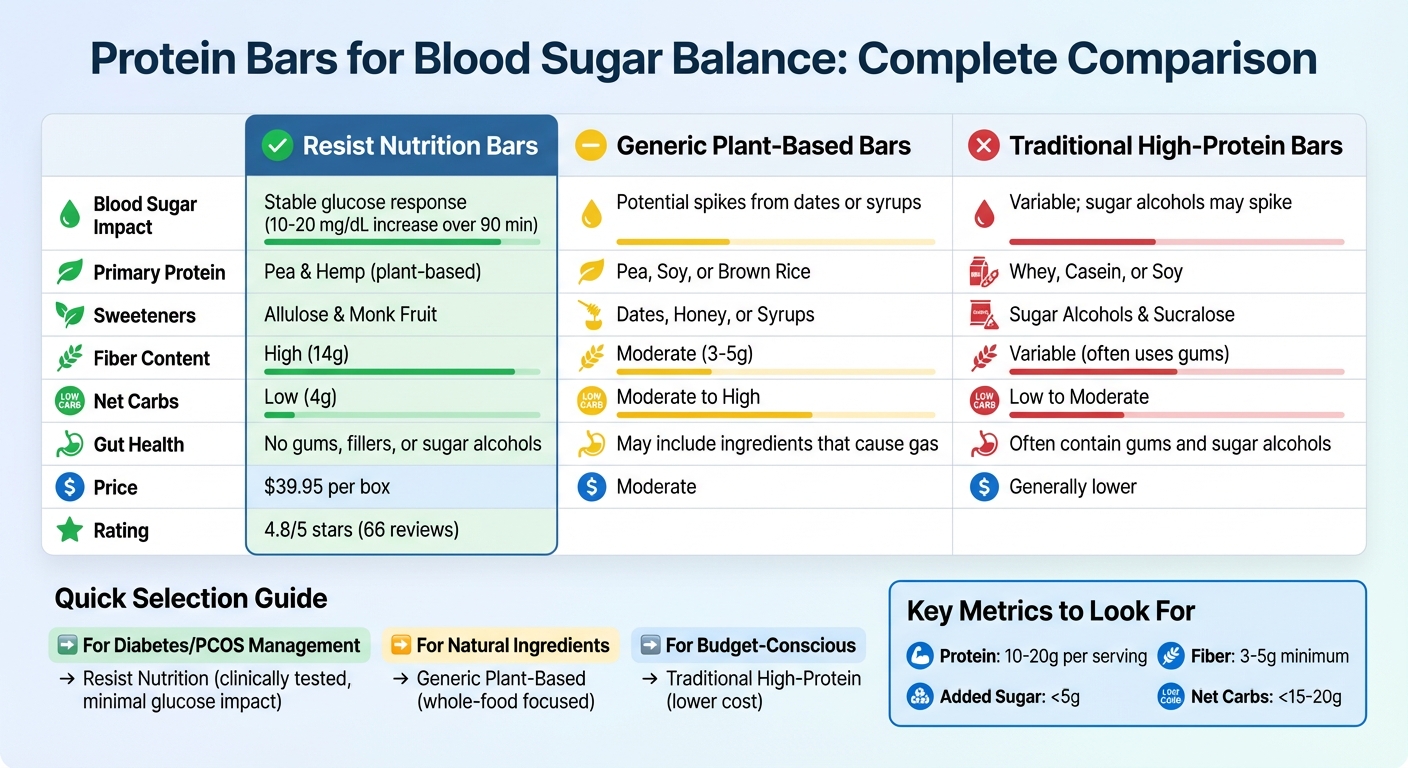
Here’s a quick comparison of the key features:
Feature
Resist Nutrition Bars
Generic Plant-Based Bars
Traditional High-Protein Bars
Blood Sugar Impact
Stable glucose response
Potential spikes from dates or syrups
Variable; sugar alcohols may spike
Primary Protein
Pea & Hemp (plant-based)
Pea, Soy, or Brown Rice
Whey, Casein, or Soy
Sweeteners
Allulose & Monk Fruit
Dates, Honey, or Syrups
Sugar Alcohols & Sucralose
Fiber Content
High (14g)
Moderate (3–5g)
Variable (often uses gums)
Net Carbs
Low (4g)
Moderate to High
Low to Moderate
Gut Health
No gums, fillers, or sugar alcohols
May include ingredients that cause gas
Often contain gums and sugar alcohols
Price
$39.95 per box
Moderate
Generally lower
Conclusion
When it comes to supporting blood sugar balance, research clearly shows that macronutrient composition matters more than flashy marketing claims. Studies indicate that high-protein, high-fiber snack bars can reduce peak glucose levels by 16% compared to high-fat, high-sugar alternatives, with benefits lasting up to 9 hours. The takeaway? Opt for bars that prioritize quality protein, sufficient fiber, and minimal added sugars - principles embraced by brands like Resist Nutrition.
The comparison highlights some key differences. Many traditional high-protein bars rely on added sugars or sugar alcohols, which can cause sharper glucose spikes and even digestive discomfort. On the flip side, some plant-based bars, while using natural ingredients, often depend on dates, syrups, or soy protein, which may lead to higher glycemic responses. Doctor-formulated bars, however, stand out by excluding sugar alcohols, gluten, soy, and added sugars, instead incorporating prebiotic fiber and plant proteins for steadier metabolic outcomes.
Your specific health goals should guide your choice. For those managing conditions like diabetes or PCOS, look for bars with clinical backing for glycemic control, offering around 10–20g of protein and 3–5g of fiber. If your focus is on clean eating or hormone health, plant-based bars free from potential endocrine disruptors provide added benefits. As Danielle M., a Type 1 diabetic, shared:
"As a type one diabetic I can say Resist bars don't affect my blood glucose and are satisfying. These are an excellent choice for type one diabetics!"
To make the best choice, read labels carefully. Look for a balanced protein-to-carb ratio, plenty of fiber, and ingredients you recognize. While taste and cost are important, maintaining stable blood sugar levels depends on thoughtful formulation, not just appealing packaging.
Plant-based options like Resist Nutrition offer a research-supported choice for those prioritizing natural ingredients and metabolic health. Select a bar that aligns with your health needs, and monitor how your body responds to find the perfect fit.
FAQs
What should I check on a label to avoid blood sugar spikes?
To help maintain stable blood sugar levels, aim for bars with less than 5 grams of sugar from low-glycemic options like monk fruit or stevia. Steer clear of added sugars, sugar alcohols like xylitol or erythritol, and heavily processed fillers. Focus on bars made with natural, easy-to-recognize ingredients for better balance.
How do fiber and net carbs affect my glucose response?
Fiber and net carbs are crucial for maintaining steady blood sugar levels. Soluble fiber helps by slowing down digestion, which results in a more gradual increase in blood sugar. On the other hand, net carbs - calculated by subtracting fiber from total carbs - represent the carbohydrates that directly affect glucose levels. Foods with fewer net carbs typically cause smaller blood sugar spikes. Combining fiber and low net carbs with protein and healthy fats can enhance this effect, promoting stable blood sugar and long-lasting energy.
Who should be cautious with sugar alcohols or artificial sweeteners?
People who have sensitive digestion, insulin resistance, or concerns about blood sugar levels should approach sugar alcohols and artificial sweeteners with care. Ingredients like erythritol and maltitol - often found in "low-sugar" products - can lead to gut issues, bloating, and, in some cases, even cause blood sugar spikes. This is especially relevant for anyone focused on managing their blood sugar or maintaining hormone balance.