We're reformulating our bars with an even better recipe. Sign up for early access and get an exclusive re-launch discount.
Why Clean Label Matters for Protein Bars
By Drew Lederman
Want a protein bar that's good for you and easy to trust? Clean label protein bars are gaining popularity because they focus on simple, recognizable ingredients and avoid artificial additives. But not all "clean" claims are created equal. Here's what you need to know:
Clean label means short ingredient lists (10–12 items), made from whole foods like nuts, seeds, and fruits.
Avoids harmful additives like artificial sweeteners, sugar alcohols, and synthetic colors.
Transparency is key: vague terms like "natural flavors" often hide unwanted chemicals.
Heavy metals and packaging contaminants are a real issue - look for bars with verified certifications and safe materials.
Healthier options help stabilize blood sugar levels, support hormone balance, and improve digestion.
Example to trust? Brands like Resist Nutrition stand out with doctor-designed formulas, plant-based proteins, and BPA-free packaging. Their bars deliver 12–13g of protein, 14g of fiber, and just 4g of net carbs, making them a solid choice for health-conscious consumers.
Clean label isn't just a trend - it's about choosing better snacks that prioritize health and transparency. Read on to learn what sets these bars apart and how to spot the ones worth buying.
Common Issues with Standard Protein Bars
These problems highlight why prioritizing clean label certifications is critical for protecting consumer health.
Artificial Additives and Unrecognizable Ingredients
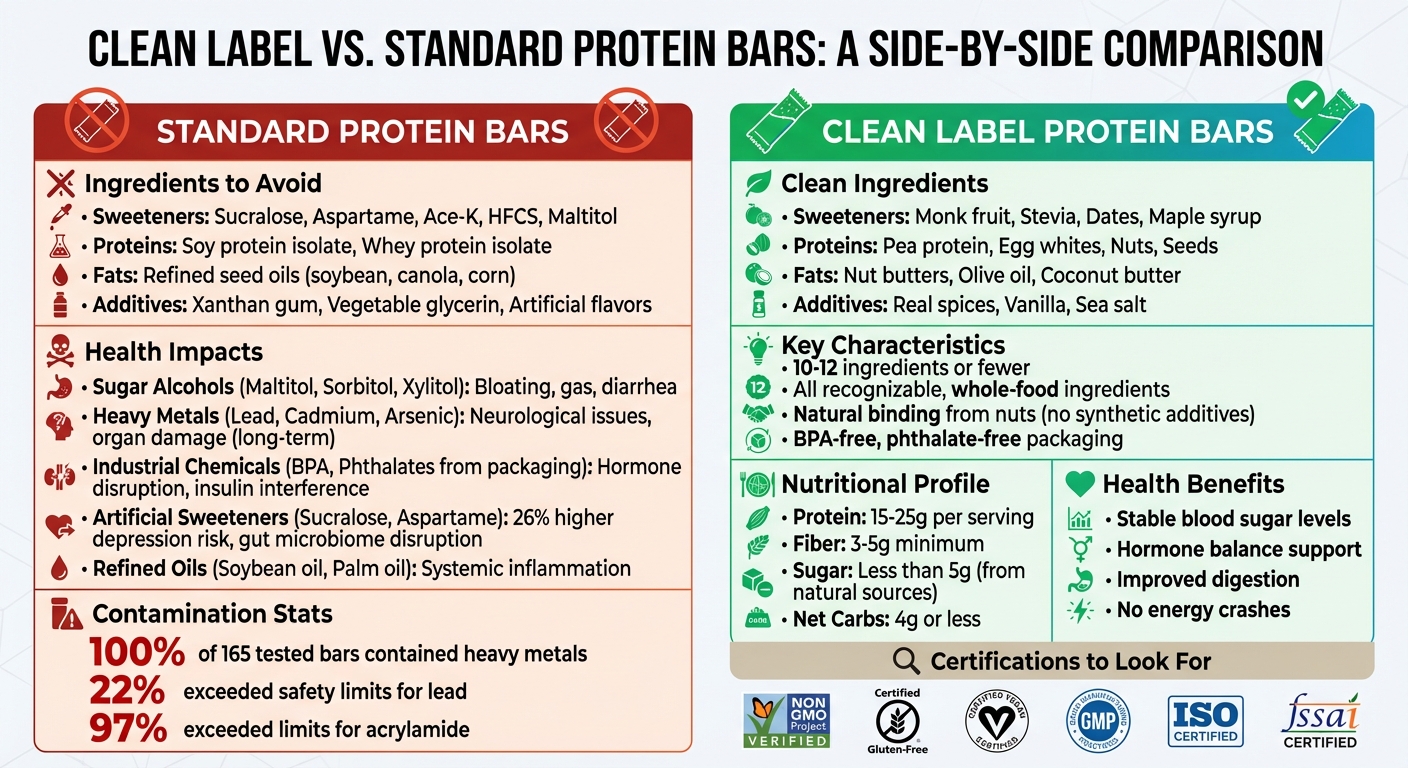
Many protein bars include ingredients that sound more like a science experiment than food. For instance, artificial sweeteners like sucralose, aspartame, and acesulfame potassium (Ace-K) are commonly used to cut down on sugar but come with their own set of concerns. Similarly, sugar alcohols such as xylitol, erythritol, sorbitol, and maltitol may lead to unpleasant side effects like gas, bloating, or even diarrhea.
To help bars maintain their structure, manufacturers often add texture agents and binders like xanthan gum, guar gum, acacia gum, and polydextrose. While effective, these additives can disrupt gut health and potentially cause inflammation. Many bars also rely on refined syrups - such as high-fructose corn syrup, brown rice syrup, or tapioca syrup - which can spike blood sugar levels in a way that's comparable to candy. As Morgan Walker, MS, RD, LDN, a Sports Dietitian, explains:
Many bars are marketed as 'healthy' or 'high-protein' but contain sugar amounts similar to candy bars.
A good tip? Be wary of ingredients with names that include the letter "x" - they're often far from natural. Beyond these additives, contamination during processing and packaging further raises safety concerns.
Contamination Risks and Missing Information
A 2025 study tested 165 of the bestselling protein bars and found that every single one contained detectable levels of heavy metals. Even worse, 22% exceeded California's safety limits for lead, and a staggering 97% surpassed Prop 65 limits for acrylamide, a chemical linked to cancer. These contaminants often come from soil absorption, manufacturing processes, or even the packaging itself. For example, industrial chemicals like BPA and phthalates can leach from plastic wrappers into the bars over time.
The "health halo" effect complicates things further. Products labeled as organic, vegan, non-GMO, or gluten-free can sometimes have higher contamination levels because plant-based ingredients tend to absorb more metals from the soil. Jaclyn Bowen, Executive Director of the Clean Label Project, cautions:
Products labeled organic, vegan, non-GMO, or gluten-free often carry a 'health halo,' which makes people assume they're automatically safer or cleaner. Heavy metals and packaging chemicals are everywhere - even in 'clean' foods.
On top of that, vague terms like "natural flavors" can hide undisclosed ingredients. These hidden risks not only reduce transparency but also pose potential health hazards.
Health Consequences of Poor-Quality Ingredients
The ingredients in many protein bars can have serious health effects over time. For instance, sugar alcohols and processed fibers often cause immediate digestive issues like bloating, gas, and a laxative effect that can disrupt your day. Meanwhile, high-glycemic syrups lead to quick blood sugar spikes, which can result in energy crashes, increased hunger, and, over time, insulin resistance - a precursor to Type 2 diabetes. Alarmingly, studies show that a 10% increase in ultra-processed food consumption is linked to a 15% higher risk of developing Type 2 diabetes, regardless of body weight.
Packaging materials add another layer of risk. Endocrine disruptors like BPA and phthalates can interfere with hormone balance and insulin function. Heavy metals, when consumed repeatedly, accumulate in the body and amplify health risks. Bowen explains:
Exposure from a single bar isn't the issue. It's long-term, repeated exposure that matters.
Artificial sweeteners come with their own set of problems. For example, people in the highest tier of artificial sweetener consumption have a 26% higher chance of developing depression compared to those who consume the least. These issues underscore the importance of clear and transparent labeling to protect consumers.
Ingredient Type
Common Examples
Health Impact
Sugar Alcohols
Maltitol, Sorbitol, Xylitol
Bloating, gas, diarrhea
Heavy Metals
Lead, Cadmium, Arsenic
Neurological issues, organ damage (long-term)
Industrial Chemicals
BPA, Phthalates (packaging)
Hormone disruption, insulin interference
Artificial Sweeteners
Sucralose, Aspartame
Depression risk, gut microbiome disruption
Refined Oils
Soybean oil, Palm oil
Systemic inflammation
sbb-itb-40fb9b7
What Defines a Clean Label Protein Bar
Clean Label vs Standard Protein Bars: Ingredient Comparison and Health Impact
After breaking down the issues with conventional protein bars, it’s clear that clean label options follow specific criteria to genuinely safeguard your health. These standards go beyond trendy slogans and demand real transparency.
Natural, Recognizable Ingredients
Clean label protein bars are defined by their short and straightforward ingredient lists - usually 10 to 12 items or fewer. When you read the label, you should recognize every ingredient without needing a chemistry degree. Think of familiar components like nuts, seeds, dried fruits, and spices, rather than hard-to-pronounce chemical names.
These bars prioritize whole-food proteins such as nuts, egg powder, or pea and hemp protein, paired with natural fats like nut butters, olive oil, or coconut butter instead of refined seed oils. Some brands take simplicity to the extreme, crafting bars with just three to five ingredients. As Devan Ciccarelli explains:
Minimalist protein bars... boast a short list of just three to five whole-food ingredients you can actually pronounce.
The choice of sweeteners is another clue to a bar's quality. Clean options stick to natural sweeteners like monk fruit, stevia, honey, or maple syrup, steering clear of potent artificial alternatives. For texture and shelf life, these bars rely on the natural binding properties of nuts rather than synthetic additives.
Verified Quality Through Third-Party Certifications
Since “clean label” isn’t a government-regulated term as of 2026, brands can interpret it loosely, sometimes leading to “cleanwashing.” This practice uses vague claims like “all natural” to mask synthetic additives or highly processed ingredients. This is where third-party certifications come in to ensure authenticity.
Look for seals such as Non-GMO Project Verified, Certified Gluten-Free, or Certified Vegan on the packaging. These labels confirm the product meets stringent dietary and ethical standards beyond FDA requirements. Certifications for manufacturing - like GMP (Good Manufacturing Practices), ISO, and FSSAI - also ensure the bars are made in hygienic, globally recognized facilities. As Fermentis Life Sciences points out:
Clean label doesn't just mean clean ingredients - it also requires hygienic, certified manufacturing. Facilities must be GMP, ISO, and FSSAI certified to ensure quality.
Brands like Resist Nutrition exemplify these standards by using natural, toxin-free ingredients and transparent certifications. Even packaging is considered, with some brands opting for BPA-free, phthalate-free, and endocrine-disruptor-free materials to prevent harmful chemicals from leaching into food.
Free from Harmful Additives
Clean label bars earn their reputation by avoiding ingredients that may pose health risks. They steer clear of sugar alcohols like maltitol, sorbitol, and xylitol, artificial sweeteners such as sucralose, aspartame, and Ace-K, and high-glycemic syrups like high-fructose corn syrup (HFCS) and brown rice syrup.
Beyond sweeteners, these bars avoid emulsifiers and gums (e.g., xanthan, guar, acacia) and refined seed oils like soybean, canola, and corn oil. Since over 95% of soybeans grown in the U.S. are genetically modified, many clean label brands also skip soy protein altogether.
Nutritional balance is just as important. High-quality clean bars typically deliver 15 to 25 grams of protein per serving to aid muscle repair, at least 3 to 5 grams of fiber, and less than 5 grams of sugar sourced naturally. As Jake Levy emphasizes:
Clean ingredients isn't just a buzzword - it's a standard you can verify yourself.
These guidelines highlight how clean label bars support stable blood sugar and promote overall well-being.
How Clean Label Bars Meet Health-Conscious Consumer Needs
Clean label protein bars go beyond just providing basic nutrition. They cater to individuals managing specific health conditions or those aiming to steer clear of processed foods, offering targeted benefits through thoughtfully chosen ingredients.
Maintaining Stable Blood Sugar Levels
Clean label bars combine protein, healthy fats, and functional fibers - like resistant dextrin from tapioca and inulin from chicory root - to slow carbohydrate absorption. This helps prevent sudden blood sugar spikes and supports better insulin sensitivity. For instance, Resist Nutrition protein bars contain just 4g of net carbs and 2g of total sugar, helping users avoid the energy crashes often linked to other snack options. Research also shows that consuming 10g of resistant dextrin fiber can lower cortisol levels and improve mood in women with Type 2 Diabetes.
Ingredients such as MCT oil and cinnamon further enhance glucose metabolism. Danielle M., who lives with Type 1 Diabetes, shares her experience:
"As a type one diabetic I can say Resist bars don't affect my blood glucose and are satisfying. These are an excellent choice for type one diabetics!"
Additionally, clean label bars steer clear of hidden sugars. Unlike many conventional bars that use vegetable glycerin - a sugar alcohol known to cause blood sugar spikes - these bars maintain a stable blood sugar profile, which also contributes to balanced hormone levels.
Supporting Hormone Balance
The benefits of blood sugar stability extend to hormone regulation. Unlike standard protein bars that often rely on whey protein (which may contain hormones and antibiotics), clean label bars use plant-based proteins like pea and hemp. These are gentler on digestion and free from hormone-disrupting additives.
High fiber content plays a key role in hormonal health as well. With 14g of fiber per bar, these products help the body eliminate excess estrogen, which is particularly helpful for women managing conditions like PCOS through diet. Even the packaging is designed with care - BPA-free wrappers ensure no harmful chemicals leach into the food, further supporting endocrine health.
As Resist Nutrition emphasizes:
"Transparency is incredibly important to us. So ingredients like 'flavors,' fillers, sugar alcohols, and gums were not going to cut it."
Kara C., who has insulin-resistant PCOS, highlights the benefits:
"I love these protein bars for when I need a filling and healthy snack that won't spike my blood sugar!"
Creating Trust Through Clear Labeling
Transparent ingredient lists eliminate confusion, allowing consumers to make decisions that align with their health goals. Instead of vague terms like "natural flavors", clean label bars explicitly name ingredients, such as vanilla extract, ensuring clarity and avoiding unwanted additives.
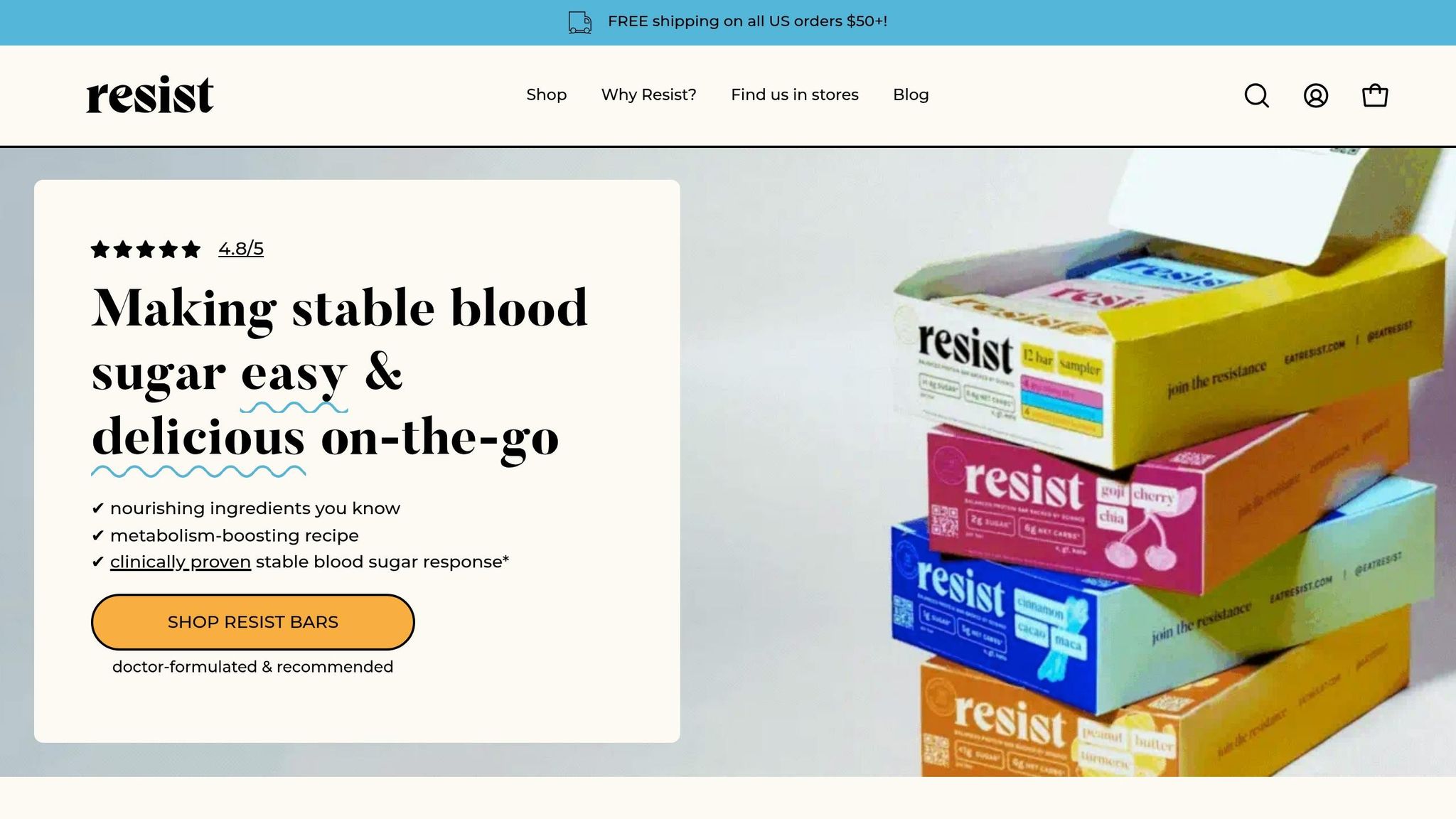
This transparency fosters trust and loyalty. Resist Nutrition, for example, boasts an impressive 4.8 out of 5-star rating from 66 reviews, demonstrating how clear labeling resonates with customers. By explaining the purpose of each ingredient - like resistant dextrin for insulin sensitivity or monk fruit for sweetness without raising blood sugar - the ingredient list becomes a helpful guide for healthier choices. In this way, clear labeling not only builds trust but also empowers consumers to take control of their wellness journey.
Resist Nutrition has taken the concept of clean label foods to the next level, offering protein bars that meet rigorous nutritional and safety standards.
Doctor-Designed Bars with Whole Food Ingredients
These bars are crafted with input from a medical advisory board that includes experts in PCOS and OB/GYN care. The team features Dr. Ami D. Patel (PCOS Coach and Clinical Pharmacist), Dr. Samuel Lederman (OB/GYN with clinical trial expertise in PCOS), and Dr. Gloria Hakkarainen (Triple Board Certified in OB/GYN and Integrative Medicine). Their combined expertise ensures that each bar is packed with superfoods, plant-based protein, fiber, and healthy fats to support both metabolic and hormonal health.
Resist bars rely on pea and hemp protein, steering clear of bovine hormones and phytoestrogens. Each serving delivers 12–13g of plant protein and 14g of prebiotic fiber. The formula avoids sugar alcohols, gums, fillers, and vague ingredients like "natural flavors", which can sometimes hide unwanted chemicals. Even the packaging aligns with their clean label promise, being free from BPA and phthalates. This thoughtful design results in a product with a standout nutritional profile.
Nutritional Profile and Health Benefits
Resist bars are low-glycemic, with just 4g of net carbs and 1–2g of total sugar per serving, helping to stabilize blood sugar levels. Unlike many conventional protein bars, these bars avoid triggering energy crashes or inflammatory spikes. Their high fiber content supports the body's natural ability to process and eliminate excess estrogen, which is especially helpful for women managing PCOS. Research also highlights that 10g of resistant dextrin - an ingredient in these bars - can significantly lower cortisol levels and improve mood in women with Type 2 Diabetes. These benefits have earned trust from 1,971 clinicians, who recommend Resist Nutrition products to patients through FrontrowMD without any financial incentives.
Three Flavor Options with Functional Ingredients
Resist Nutrition offers three carefully crafted flavors, each designed with specific health benefits in mind:
Cinnamon Chocolate Chip: Features cinnamon and maca to help regulate blood sugar and balance hormones.
Goji Cherry Chocolate Chip: Includes goji berries and acerola cherry, known for their immune-boosting and antioxidant properties.
Peanut Butter Turmeric: Combines turmeric with black pepper extract for anti-inflammatory support.
Each box of bars is priced at $39.95, with a sampler pack featuring all three flavors available at the same cost. Subscribers can take advantage of a 10% discount on their orders. Customers have rated the bars an impressive 4.8 stars, often praising their ability to stabilize blood sugar and their smooth, non-chalky texture.
Conclusion
Clean label protein bars mark a move toward more transparency and accountability in the nutrition world. When you can recognize every ingredient and understand its purpose, you're empowered to make informed decisions that benefit your metabolic health, hormonal balance, and digestion. What sets a truly clean bar apart is the absence of problematic additives like sugar alcohols, synthetic fillers, and vague "natural flavors." This simplicity not only highlights quality but also upholds your right to make educated, health-focused choices.
For those who are health-conscious or managing conditions like PCOS and insulin resistance, or Type 1 Diabetes, clean label products provide reassurance. They help you steer clear of hormone-disrupting ingredients, blood sugar spikes, and the energy crashes that often come with overly processed foods.
Resist Nutrition embodies these principles with their doctor-designed protein bars. These bars deliver full ingredient transparency, proven blood sugar stability, and BPA/phthalate-free packaging. With 12–13 grams of plant-based protein, 14 grams of prebiotic fiber, and just 4 grams of net carbs per bar, they've earned a 4.8-star customer rating - proof of their commitment to both nutrition and integrity.
Opting for clean label protein bars means putting your health first with every bite. Read the ingredient list, avoid anything unrecognizable, and choose brands that prioritize science and honesty over flashy marketing.
FAQs
How can I tell if a “clean label” claim is real?
To confirm a product's "clean label" claim, focus on its ingredient list. Look for simple, familiar ingredients and ensure it doesn’t include artificial additives, such as preservatives or synthetic colors. Products with genuine clean labels emphasize transparency about sourcing and steer clear of ingredients that might raise concerns. Always review the label carefully to ensure it provides clear and trustworthy information.
Which ingredients should I avoid in protein bars?
When choosing protein bars, steer clear of ingredients such as sugar alcohols (like erythritol, xylitol, and maltitol), added sugars (such as high-fructose corn syrup or coconut sugar), and artificial fillers or preservatives. These additives can impact your health and may cause blood sugar fluctuations. Instead, look for protein bars made with natural, wholesome ingredients that promote better health and balance.
Do clean label bars help with blood sugar and hormones?
Clean label bars can play a role in supporting blood sugar and hormone health. They’re crafted with low-glycemic ingredients, plant-based protein, fiber, and healthy fats. At the same time, they steer clear of components known to disrupt hormones or cause inflammation. This thoughtful combination helps maintain stable blood sugar levels and contributes to hormonal balance.