We're reformulating our bars with an even better recipe. Sign up for early access and get an exclusive re-launch discount.
5 Foods for Balanced Hormones and Blood Sugar
By Drew Lederman
Maintaining stable blood sugar and balanced hormones is essential for overall health. Certain hormone-balancing foods can help achieve this by providing fiber, healthy fats, and key nutrients like magnesium and polyphenols. These nutrients slow sugar absorption, improve insulin sensitivity, and support hormone regulation. Here are five foods that can make a difference:
Quinoa: High in magnesium, zinc, and fiber, quinoa supports insulin sensitivity and thyroid health while stabilizing blood sugar.
Flax Meal: Rich in lignans and omega-3 fatty acids, flax meal helps balance estrogen levels and improve insulin response.
Avocado: Packed with healthy fats, fiber, and potassium, avocados aid hormone production and prevent blood sugar spikes.
Leafy Greens: Spinach, kale, and similar greens promote liver detoxification, reduce cortisol, and stabilize glucose levels.
Cinnamon: Contains compounds that enhance insulin efficiency and regulate blood sugar, with potential benefits for PCOS.
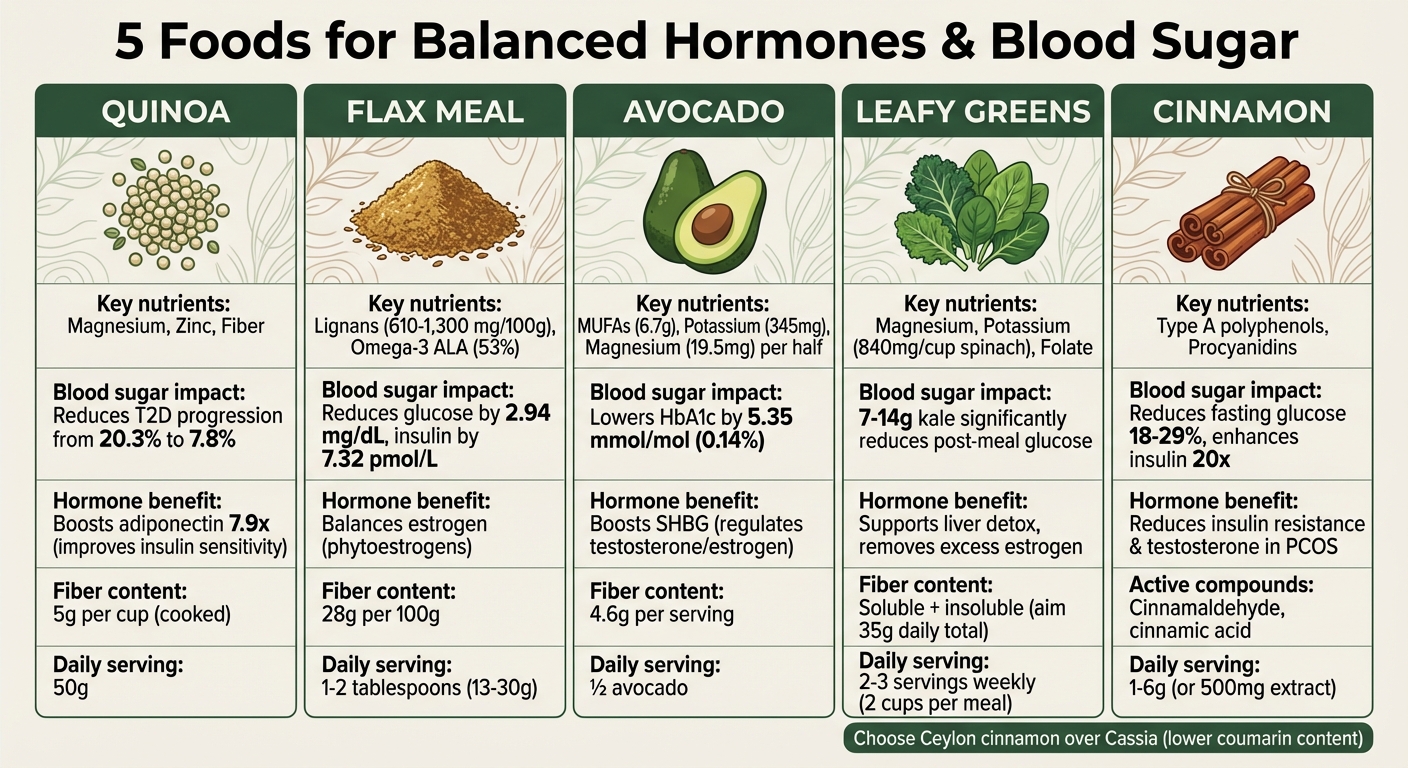
5 Foods for Balanced Hormones and Blood Sugar: Nutritional Benefits Comparison
1. Quinoa
Packed with nutrients for hormone health
Quinoa plays a key role in supporting hormone balance, making it a standout ingredient for maintaining endocrine health and stable blood sugar levels. It's loaded with zinc, a mineral crucial for thyroid hormone production. Without enough zinc, the risk of developing hypothyroidism increases. Quinoa is also a good source of magnesium, which helps regulate stress hormones and maintain balance.
Interestingly, quinoa contains 20-hydroxyecdysone (20HE), a plant-based steroid found in concentrations up to 12 times higher than in spinach. In rodent studies, 20HE boosted adiponectin expression by 7.9 times, improving insulin sensitivity. Patrick Solverson from Washington State University highlights its potential:
"Quinoa is a rich source of one of the most common plant steroids, 20-hydroxyecdysone (20HE), which has been reported to significantly improve obesity and diabetes in a rodent model."
By supporting hormonal health and stabilizing blood sugar, quinoa sets the stage for better overall metabolic function.
Helps stabilize blood sugar levels
Replacing refined grains with quinoa can significantly improve blood sugar control. A 2021 study found that swapping 100 grams of refined grains with white quinoa reduced the progression to type 2 diabetes from 20.3% to just 7.8%. Even more impressive, 23.4% of participants eating quinoa returned to normal glucose tolerance compared to only 4.3% in the control group.
Quinoa's complex carbohydrates digest more slowly than refined grains like white rice or pasta, helping to prevent sudden insulin spikes. Lina Abuhamdieh from Georgia State University explains:
"Complex carbohydrate allows for a steady release in insulin from the pancreas and keeps you feeling satisfied for longer."
In addition to its slow-digesting carbs, quinoa's fiber and antioxidants further enhance its benefits for blood sugar regulation.
High in fiber and plant compounds
A single cup of cooked quinoa provides around 5 grams of fiber. This fiber acts in the gut to bind and eliminate excess hormones like estrogen and testosterone . Soluble fiber in quinoa also triggers the release of GLP-1, a hormone that slows digestion and improves insulin sensitivity.
Quinoa is also packed with antioxidants like quercetin and kaempferol. Quinoa flour, for example, contains approximately 3,456 mg of total phenolics per kilogram. To harness these benefits, aim for 50 grams of quinoa per day. Swapping it for white rice, pasta, or couscous can also help lower the glycemic impact of your meals .
sbb-itb-40fb9b7
2. Flax Meal
Packed with Nutrients for Hormone Balance
Flax meal stands out as the richest dietary source of lignans, particularly secoisolariciresinol diglucoside (SDG), providing 610–1,300 mg per 100 g. Once consumed, gut bacteria convert lignans into enterodiol and enterolactone, which act as phytoestrogens. These plant-based compounds mimic the structure of human estrogen, allowing them to bind to estrogen receptors and help balance hormone levels. This can be especially helpful for postmenopausal women or those managing PCOS.
In addition to lignans, flax meal is a powerhouse of alpha-linolenic acid (ALA), an omega-3 fatty acid that plays a key role in hormone signaling and reducing inflammation. Flaxseed oil, containing about 53% ALA, is unmatched among plant-based sources. Research has shown that consuming 15 g of ground flaxseed daily for 7 weeks significantly increased levels of 2-hydroxyestrone, a beneficial estrogen metabolite, in postmenopausal women. These nutrients not only support hormone health but also contribute to better metabolic function.
Helps Stabilize Blood Sugar
Flax meal’s combination of soluble fiber and healthy fats makes it a powerful ally for blood sugar control. In a 12-week study involving overweight or obese individuals with pre-diabetes, consuming 13 g of ground flaxseed daily significantly lowered glucose and insulin levels while improving insulin sensitivity. Another 8-week study involving 57 people with type 2 diabetes found that 30 g of flaxseed daily led to significant reductions in HbA1c, a marker for long-term blood sugar management.
"Whole flaxseed, but not flaxseed oil and lignan extract, has significant effects on improving glycemic control." - PubMed
On average, flaxseed supplementation has been shown to reduce blood glucose by 2.94 mg/dL and insulin levels by 7.32 pmol/L. The ALA in flax meal helps lower inflammation and enhances your cells' responsiveness to insulin, while lignans may inhibit PEPCK, an enzyme involved in glucose production in the liver.
Loaded with Fiber, Healthy Fats, and Plant Compounds
Flax meal offers more than just hormone and blood sugar benefits - it’s also rich in fiber, fats, and phytonutrients. With about 28 g of fiber and 23 g of ALA per 100 g, it’s a nutritional powerhouse. The soluble fiber in flax meal binds to excess estrogen in the digestive tract, aiding in its elimination. As Melissa Grobess Azzaro, RDN, explains:
"Flax contains phytoestrogens... which can help regulate estrogen levels. In addition, flax has soluble fiber that can bind to excess estrogen and help eliminate it."
For maximum nutrient absorption, opt for ground flaxseed over whole seeds. The hard outer shell of whole flaxseeds prevents your body from fully accessing the ALA and lignans. Aim to include 1–2 tablespoons (roughly 13–30 g) of flax meal in your daily diet - mix it into yogurt, oatmeal, or smoothies. To keep the polyunsaturated fats fresh and prevent oxidation, store flax meal in an airtight container in the refrigerator.
3. Avocado
Packed with Nutrients for Hormone Health
Avocados are a powerhouse of monounsaturated fatty acids (MUFAs), which are key for hormone production and efficient signaling processes. Just half of a Hass avocado (around 2.4 oz) delivers 6.7 g of MUFAs, along with 345 mg of potassium and 19.5 mg of magnesium - minerals that work together to enhance your body's response to insulin.
Beyond healthy fats, avocados offer 57 mg of phytosterols per half-fruit. These compounds may help regulate testosterone and estrogen by boosting sex hormone–binding globulin (SHBG) levels. Additionally, the bioactive compounds in avocados stimulate the release of satiety hormones, which can curb appetite and improve metabolism. As registered dietitian Kelsey Kunik, RDN, explains:
"Nutrient-dense foods like avocados, fatty fish, and nuts provide healthy fats, vitamins, and minerals that support hormone production and signaling."
Helps Stabilize Blood Sugar
Avocados also shine when it comes to maintaining steady blood sugar levels. Their combination of healthy fats and fiber works to slow carbohydrate digestion, preventing post-meal blood sugar spikes. With 4.6 g of dietary fiber and less than 1 g of sugar per serving, avocados are a solid choice for blood sugar management. Research even shows that regular avocado consumption among Hispanic/Latino adults is linked to HbA1c levels that are 5.35 mmol/mol lower (a 0.14% reduction) compared to those who don’t eat avocados.
Interestingly, avocados contain a rare seven-carbon sugar called D-mannoheptulose, which early studies suggest may support blood glucose control instead of increasing it. Magnesium and potassium, both present in avocados, further assist in insulin secretion, carbohydrate metabolism, and glucose regulation. Lauren Manaker, MS, RDN, LD, CLEC, highlights:
"Avocados are rich in healthy fats, fiber, and essential nutrients that help regulate blood sugar and support heart health."
Loaded with Fiber, Healthy Fats, and Phytonutrients
About 80% of an avocado's carbohydrates come from dietary fiber - 70% insoluble and 30% soluble - making it excellent for digestion and gut hormone function. Avocado oil, too, is nutrient-dense, consisting of 71% monounsaturated fats, 13% polyunsaturated fats, and 16% saturated fats.
Incorporating avocados into your meals is simple and effective. Swap mayo or butter for mashed avocado on whole-grain toast, or blend a quarter to half an avocado into your morning smoothie to balance fruit sugars. Toss diced avocado into salads to boost the absorption of fat-soluble vitamins, or mix it into scrambled eggs for a nutrient-packed, hormone-supporting breakfast. These small changes can pave the way for a diet that supports overall metabolic health.
4. Leafy Greens
Packed with Nutrients for Hormonal Health
Leafy greens like spinach, kale, Swiss chard, and arugula are more than just salad staples - they play a key role in keeping your hormones in check. These greens help stabilize blood sugar levels while aiding hormonal balance. They support your liver's detox processes, which are vital for breaking down and removing excess estrogen that could otherwise disrupt your system. Plus, the fiber in these greens binds to surplus estrogen in the gut, ensuring it’s eliminated rather than reabsorbed into your bloodstream. Dr. Christina Burns, Founder of the Naturna Institute, highlights their importance:
"Leafy greens may help hormonal imbalances by removing excess estrogen from your body, as well as supporting liver detoxification."
Leafy greens are also rich in magnesium, which helps regulate your adrenal glands, reduce cortisol levels, and support thyroid hormone production. Just one cup of cooked spinach contains 840 mg of potassium, which can ease hormone-related bloating and maintain fluid balance. The USDA suggests eating at least 2 to 3 servings of dark leafy greens weekly to promote hormonal well-being.
Helps Stabilize Blood Sugar
The fiber in leafy greens slows down carbohydrate digestion, preventing sudden sugar spikes in your bloodstream. A study conducted in 2016 with 42 Japanese adults showed that eating 7 to 14 grams of kale-containing foods alongside a high-carb meal significantly reduced post-meal blood sugar levels compared to a placebo. Kale also contains quercetin and kaempferol, two flavonoid antioxidants with blood sugar-lowering and insulin-sensitizing properties.
Magnesium, abundant in leafy greens, enhances insulin response and helps calm cortisol levels. Experts recommend consuming about 35 grams of fiber daily from whole foods, and leafy greens are an easy way to work toward that goal. Adding 2 cups of non-starchy greens like spinach or kale to your meals can provide the fiber and nutrients needed to support your metabolic health.
Loaded with Fiber and Phytonutrients
Leafy greens offer both soluble and insoluble fiber, each with unique benefits. Soluble fiber slows digestion, preventing rapid blood sugar increases, while insoluble fiber improves insulin sensitivity. The chlorophyll that gives greens their vibrant color also assists the liver in producing glutathione, a compound critical for detoxifying excess hormones and heavy metals. Moreover, these greens are rich in folate (Vitamin B9), which helps produce mood-regulating hormones like dopamine and serotonin. Since over 90% of serotonin is produced in the gut, the fiber and nutrients in leafy greens play an essential role in gut health and hormone regulation.
To get the most out of the fat-soluble vitamins A, D, E, and K in leafy greens, pair them with healthy fats like olive oil or avocado. Rotating between varieties like spinach, kale, Swiss chard, and collard greens ensures you get a wide range of antioxidants and minerals such as iron and potassium.
5. Cinnamon
Helps Maintain Stable Blood Sugar Levels
Cinnamon contains water-soluble Type A polyphenols, which can significantly enhance insulin efficiency - by over 20 times, according to lab models. This supports better blood sugar stability. Dr. Richard A. Anderson from the USDA highlighted this effect, stating:
"People with metabolic syndrome have adequate amounts of insulin but the insulin is not efficient. Components of cinnamon make insulin more efficient."
Research shows that consuming 1 to 6 grams of cinnamon daily for 40 days can reduce fasting blood sugar by 18% to 29% in adults with type 2 diabetes. Cinnamon also slows the digestion of carbohydrates by blocking enzymes like alpha-glucosidase and alpha-amylase. For instance, adding 6 grams of cinnamon to a high-carb meal has been shown to reduce post-meal insulin spikes in overweight individuals.
Supports Hormonal Balance
Beyond its blood sugar benefits, cinnamon plays a role in regulating hormones. In women with Polycystic Ovary Syndrome (PCOS), a daily intake of 1,500 mg of cinnamon (split into three 500 mg doses) was found to reduce insulin resistance and testosterone levels, showing effects comparable to the medication metformin. As noted in Frontiers in Nutrition:
"Cinnamon supplementation causes similar reductions in insulin resistance and testosterone level to that of metformin."
Active compounds in cinnamon, such as cinnamaldehyde and cinnamic acid, improve insulin signaling through pathways like phosphatidylinositol 3-kinase, which may aid in regulating androgen levels and promoting regular menstrual cycles. In another study, 500 mg of aqueous cinnamon extract taken daily for 12 weeks lowered fasting blood sugar, reduced systolic blood pressure, and increased lean body mass in individuals with metabolic syndrome.
Loaded with Protective Phytonutrients
Cinnamon is packed with phytonutrients that combat oxidative stress and inflammation. Procyanidins in cinnamon can increase antioxidant capacity by about 9% and reduce malondialdehyde levels by 8%. Additionally, its phenolic compounds help prevent the formation of Advanced Glycation End Products (AGEs), which are linked to diabetic complications.
Clinical studies have used 1–6 grams of ground cinnamon or 500 mg of extract daily. To incorporate cinnamon into your diet, try adding it to oatmeal, smoothies, or rice pudding - it can help moderate blood sugar spikes after meals. When choosing cinnamon, opt for Ceylon cinnamon (also called "True" cinnamon) instead of Cassia. Ceylon contains significantly lower levels of coumarin, a compound that can harm the liver in large amounts. For the best results, consistency is key - regular use is essential for cinnamon's blood sugar-lowering properties. This spice is a versatile addition to any diet, offering benefits for both metabolic health and hormonal balance.
Dietitian Answers: Best Foods For Hormone Balancing
How to Add These Foods to Your Daily Meals
Incorporating these nutrient-packed foods into your daily meals doesn't have to mean a complete diet overhaul. Here are some easy and practical ways to include them in your routine.
Quinoa is a fantastic base for grain bowls. Try pairing it with plant-based proteins like tofu or tempeh, along with non-starchy vegetables and avocado. To keep your blood sugar levels steady, make sure the quinoa portion doesn’t exceed the amount of plant protein on your plate. You can also substitute quinoa for white rice or pasta for a gentler impact on blood sugar levels.
For a fiber boost, flax meal is incredibly versatile. Stir two tablespoons into your morning yogurt, cereal, or smoothie. It also works well sprinkled over salads, mixed into sandwich spreads, or added to baked goods.
Avocado is an easy swap for butter or cream cheese on toast and adds a creamy touch to tacos, grain bowls, or guacamole. Its monounsaturated fats can help slow sugar absorption when paired with carbohydrate-rich foods.
When it comes to leafy greens like spinach and kale, aim to fill at least half your plate with them or other non-starchy vegetables at the start of your meal to help promote fullness. Want to sneak them into your breakfast? Blend a handful into your morning smoothie for an extra nutrient boost without altering the flavor much.
Cinnamon is another simple addition. Sprinkle it into oatmeal, brew it as a tea, or mix it into savory dishes like curries.
For days when meal prep isn’t feasible, Resist Nutrition protein bars offer a quick and convenient solution. Each bar provides 15g of protein, 4g of net carbs, and 57% of your daily fiber, helping maintain balanced blood sugar and hormone levels. Made with functional ingredients like maca (to support adrenal function) and cinnamon (to enhance insulin sensitivity), they’re sweetened with allulose and monk fruit instead of sugar alcohols. A clinical trial even showed that Resist bars help raise blood sugar levels gradually, avoiding sudden spikes or crashes. Available in flavors like Cinnamon Chocolate Chip, Goji Cherry Chocolate Chip, and Peanut Butter Turmeric, these vegan, gluten-free, and keto-friendly bars are priced at $39.95 per box.
When you're pressed for time and meal prep isn't an option, these protein bars are a convenient way to support balanced blood sugar and hormones.
Each Resist Nutrition bar packs 14 g of prebiotic fiber, 12 g of plant-based protein, and 4 g net carbs. They're vegan, gluten-free, keto-friendly, and contain no added sugars or sugar alcohols. Plus, their wrappers are BPA- and phthalate-free, which helps reduce exposure to potential endocrine disruptors.
The main difference between the three flavors lies in their taste and slight variations in sugar content:
Peanut Butter Turmeric: Combines a rich peanut butter flavor with turmeric for its anti-inflammatory properties, activated by black pepper. Contains 1 g of sugar.
Cinnamon Chocolate Chip: Offers a warm cinnamon flavor, which naturally aids blood sugar regulation. Also contains 1 g of sugar.
Goji Cherry Chocolate Chip: Features antioxidant-packed goji berries and acerola cherry with a sweet chocolate chip twist. Contains 2 g of sugar.
Flavor
Protein
Fiber
Net Carbs
Sugar
Key Benefits
Peanut Butter Turmeric
12g
14g
4g
1g
Rich peanut butter taste with anti-inflammatory turmeric & black pepper
Cinnamon Chocolate Chip
12g
14g
4g
1g
Cinnamon for natural blood sugar support
Goji Cherry Chocolate Chip
12g
14g
4g
2g
Antioxidants from goji berries and acerola cherry
These options fit seamlessly into a nutrient-rich, hormone-supportive diet.
Customer feedback highlights their popularity: Goji Cherry Chocolate Chip has an impressive 4.94/5 rating (36 reviews), while Peanut Butter Turmeric scores 4.81/5 (16 reviews). Each box is priced at $39.95, with a 10% discount for subscribers. Notably, over 1,922 clinicians recommend these bars.
Conclusion
Incorporating nutrient-dense foods like quinoa, flax meal, avocado, leafy greens, and cinnamon into your meals can provide a powerful mix of fiber, healthy fats, and protein. These nutrients work together to slow glucose absorption and help prevent sudden blood sugar spikes, which can trigger excessive insulin release.
"What you put on your plate becomes raw material for hormone production. Every hormone your body creates - from estrogen to insulin to cortisol - requires specific nutrients as building blocks."
These foods also play a role in hormone regulation. For example, the healthy fats in avocado support steroid hormone production, while flax meal and leafy greens assist in clearing out excess hormones and managing cortisol levels. Studies even show that diets rich in fruits, vegetables, legumes, and whole grains can lower the risk of Type 2 diabetes by 25%.
To get started, try adding two or three of these foods to your daily routine. Pair carbs with protein or healthy fats, fill half your plate with leafy greens, or sprinkle cinnamon on your oatmeal or coffee. For convenience, options like Resist Nutrition bars can help you keep blood sugar steady throughout the day. These small changes can pave the way for balanced hormones and improved metabolic health.
FAQs
How much quinoa should I eat daily?
Quinoa doesn't come with a set daily intake recommendation, but it works well as part of a balanced diet. You can use it as a healthier alternative to higher-carb options like white rice or bread. The key is moderation, which helps maintain stable blood sugar levels and supports overall hormone balance.
Is ground flax better than whole flaxseed?
Ground flaxseed is often preferred over whole flaxseed because your body can digest it more easily, allowing you to absorb more nutrients. Whole flaxseed, on the other hand, might pass through your digestive system without being fully broken down, which can reduce its potential health benefits.
Which cinnamon is safest to use every day?
Ceylon cinnamon, known as "true" cinnamon, is considered the better choice for everyday use. Unlike cassia cinnamon, which is more common in North America, Ceylon cinnamon contains significantly less coumarin - a compound that can pose health risks when consumed in large amounts. This makes it a safer option for regular consumption.