We're reformulating our bars with an even better recipe. Sign up for early access and get an exclusive re-launch discount.
The Ultimate Guide to Managing PCOS Through Diet
By Drew Lederman
Managing PCOS starts with what’s on your plate. Polycystic ovary syndrome (PCOS) impacts 1 in 10 women of reproductive age in the U.S., with insulin resistance affecting up to 80%. This hormonal imbalance can lead to symptoms like irregular periods, acne, and weight gain. But the right diet can make a difference.
Here’s the bottom line:
Focus on low-glycemic index foods to stabilize blood sugar.
Add fiber-rich and nutrient-dense foods like leafy greens, beans, and whole grains.
Balance meals with lean protein and healthy fats such as avocado, nuts, and olive oil.
Avoid refined carbs, sugary drinks, and processed foods that spike blood sugar and worsen insulin resistance. Small changes - like swapping white bread for quinoa or sugary snacks for nuts - can improve symptoms and reduce the risk of long-term complications like Type 2 diabetes.
For busy days, snacks like Resist Nutrition protein bars offer a practical way to stay on track with PCOS-friendly ingredients like fiber, plant-based protein, and anti-inflammatory spices.
Take control of PCOS with simple, consistent dietary habits that support your body’s needs.
Nutrition Essentials | How Diet Can Be Used To Manage PCOS
sbb-itb-40fb9b7
Core Dietary Principles for PCOS
Managing PCOS through diet isn't about rigid rules or restrictions - it’s about addressing the metabolic imbalances driving the symptoms. The focus is on tackling insulin resistance, chronic inflammation, and hormonal imbalance. Here are three key principles to guide a PCOS-friendly diet.
Choose Low-Glycemic Index Foods
Low-glycemic index (GI) foods release glucose gradually into the bloodstream, helping to avoid the sharp spikes that lead to excessive insulin production. This is crucial because high insulin levels can signal the ovaries to produce more testosterone, worsening symptoms like acne and irregular periods.
Research strongly supports this approach. For example, 95% of women on a low-GI diet reported improved menstrual regularity, compared to just 63% following a standard healthy diet. Additionally, a low-GI diet improves whole-body insulin sensitivity three times more effectively than conventional healthy eating.
To adopt this method, swap high-GI foods like white bread, white rice, and sugary cereals with options such as oats, quinoa, barley, and legumes. Opt for lower-sugar fruits like berries and citrus. These changes can help your body manage insulin more efficiently without overproducing it.
"Low-glycemic index diet... is the gold standard for managing blood sugar for people not taking insulin." - Cleveland Clinic
Add High-Fiber and Nutrient-Dense Foods
Fiber is another crucial piece of the puzzle. It helps stabilize blood sugar levels and supports overall gut health, which plays a role in improving insulin sensitivity. Women with PCOS should aim for 25 to 40 grams of fiber daily, sourced from foods like chia seeds, beans, leafy greens, and whole grains.
Fiber’s benefits go beyond blood sugar control. It promotes a healthy gut microbiome, which can further enhance insulin regulation. To ease into a high-fiber diet, start gradually and focus on non-starchy vegetables like spinach, kale, broccoli, and peppers. Aim to fill half your plate with these at every meal.
Balance Macronutrients with Healthy Fats and Protein
Balancing macronutrients is the next step to stabilizing energy levels and avoiding sugar spikes. Pairing carbohydrates with protein and healthy fats is particularly effective. A good target is a 40/30/30 split: 40% complex carbohydrates, 30% lean protein, and 30% healthy fats.
Breakfast is a key opportunity to set the tone for the day. Consuming 30 grams of protein in the morning can help stabilize blood sugar for hours. Plant-based proteins like tofu, tempeh, lentils, and pea protein are excellent choices, as they provide protein without the saturated fats found in many animal products.
Healthy fats also play a vital role. Foods like avocados, walnuts, chia seeds, and extra virgin olive oil can help reduce inflammation and support hormone production. These fats are especially helpful in balancing androgen levels, which are often elevated in PCOS. Eating every 3 to 4 hours with this balanced approach can maintain steady energy levels and prevent the blood sugar highs and lows that exacerbate symptoms.
"The most successful PCOS meal plans aren't about perfection - they're about consistency with foods that support your body's unique metabolic needs." - Nancy Sidnam, MS, RD, PCOS Nutrition Specialist
Best Foods for PCOS Management
Here’s a closer look at specific foods that align with hormone-balancing foods for managing PCOS. These selections are designed to help you create balanced, nutrient-rich meals.
Vegetables and Whole Foods
Aim to fill half your plate with non-starchy vegetables like spinach, kale, arugula, broccoli, cauliflower, Brussels sprouts, bell peppers, zucchini, mushrooms, and asparagus. Pair these with a fist-sized portion of low-GI whole grains such as quinoa, oats, barley, buckwheat, or brown rice. Adding a source of protein to this mix helps keep blood sugar levels steady throughout the day.
Plant-Based Proteins and Clean Protein Sources
Pairing vegetables and whole grains with high-quality proteins is key to creating balanced meals.
Plant-based proteins not only promote satiety but also help preserve muscle mass without causing insulin spikes. Foods like lentils, chickpeas, black beans, kidney beans, tofu, and edamame are excellent options, offering the added benefit of fiber.
For those aiming to meet protein goals, especially in the morning, clean plant-based protein powders can be a great addition. When choosing protein powders or bars, look for options with minimal ingredients, low added sugars, and no artificial sweeteners. Research even suggests that replacing 35% of daily animal protein with soy protein can significantly lower BMI, fasting blood sugar, and testosterone levels.
"Protein helps make you feel full faster and helps you maintain your muscle mass. Without enough protein, you can start to lose weight from muscle instead of fat, which shouldn't be the goal."
Dr. Yolanda Thigpen, MD, Cleveland Clinic
Healthy Fats and Omega-3 Sources
Healthy fats are essential for hormone production and reducing inflammation. Focus on monounsaturated fats from sources like avocados and extra virgin olive oil. Additionally, include omega-3-rich foods such as walnuts, chia seeds, ground flaxseeds, hemp seeds, and pumpkin seeds.
A simple way to incorporate these fats is by adding a tablespoon of ground flaxseeds or chia seeds to your morning smoothie or oatmeal. This not only supports hormone balance but also helps combat inflammation. These omega-3 sources are particularly beneficial for improving insulin sensitivity and supporting anti-inflammatory dietary goals.
Foods to Avoid with PCOS
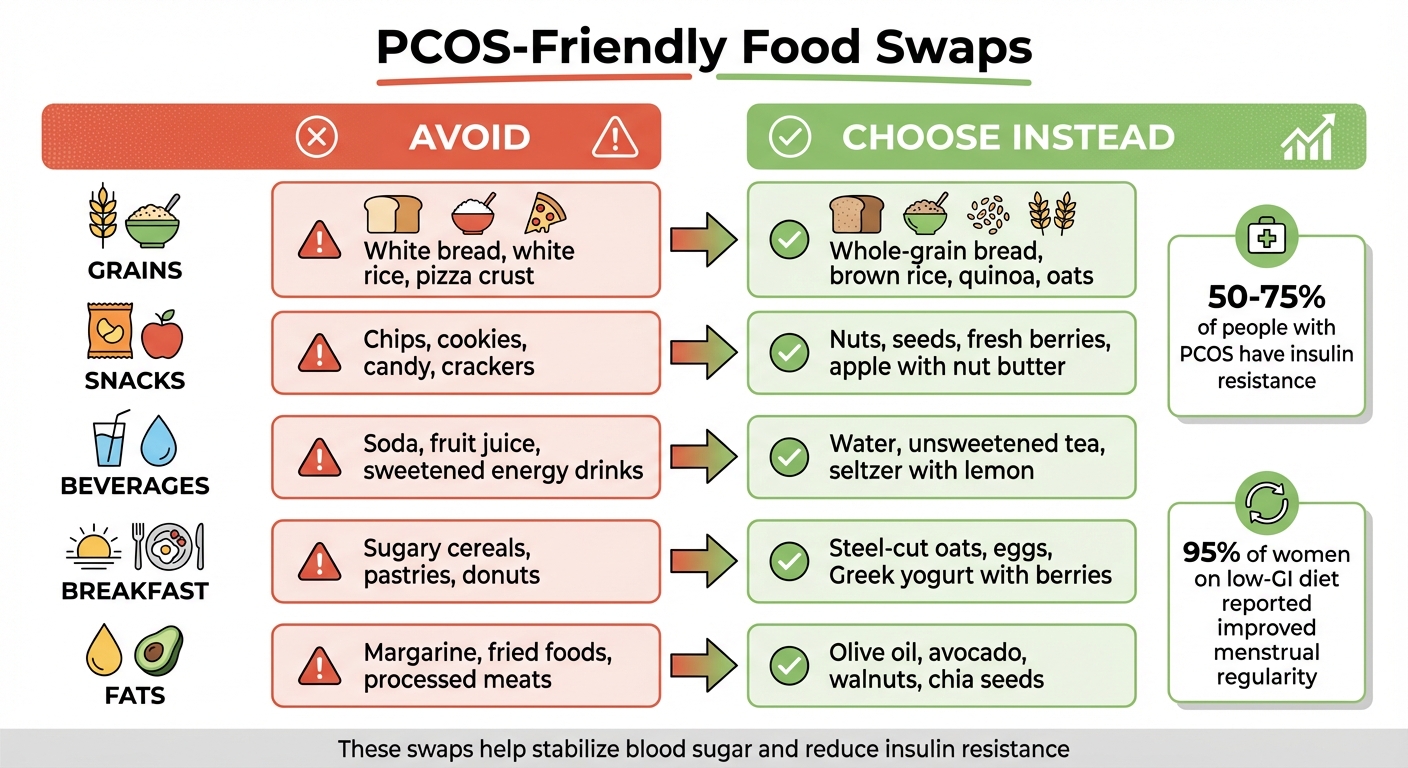
PCOS Diet Guide: Foods to Eat vs Avoid for Blood Sugar Management
Understanding what to steer clear of is just as important as knowing what to eat when managing PCOS. Some foods can spike blood sugar, increase inflammation, and worsen insulin resistance - factors that contribute to hormonal imbalances.
Refined Carbohydrates and Sugary Foods
Foods like white bread, pasta, pizza crust, pastries, candy, cookies, cakes, and sweetened cereals can cause rapid blood sugar spikes, exacerbating insulin resistance. Since insulin resistance affects 50% to 75% of people with PCOS, this can set off a harmful chain reaction.
"The sugar in those foods enters your bloodstream very quickly. Then your pancreas produces insulin to help your body process the glucose. People with PCOS who have insulin resistance are not able to process blood glucose effectively."
Shruthi Mahalingaiah, MD, MS, Reproductive Endocrinologist, Mass General Brigham
High insulin levels can prompt the ovaries to produce more androgens like testosterone, intensifying symptoms like acne, excessive hair growth, hair thinning, and irregular periods. To better manage blood sugar, swap out white rice, white bread, and white pasta for whole-grain options like brown rice, quinoa, or barley. Replace sugary drinks like soda and energy drinks with water, seltzer, or unsweetened tea. Even "healthy" snacks like granola bars or flavored yogurts often hide sugars that can trigger similar insulin spikes.
Processed and fried foods also play a role in metabolic issues.
Processed and Fried Foods
Items like French fries, fried chicken, hot dogs, sausages, lunch meats, fast-food burgers, margarine, frozen pizza, and donuts are loaded with saturated and trans fats. These fats can increase oxidative stress and chronic inflammation by raising pro-inflammatory markers such as TNF-α, IL-6, and C-Reactive Protein. A diet high in saturated fats is also linked to elevated androgen levels. Insulin, when combined with other hormones, can boost testosterone production while lowering Sex Hormone-Binding Globulin (SHBG), leaving more active testosterone to worsen PCOS symptoms. Aim to avoid foods with long ingredient lists full of unrecognizable additives.
Artificial Sweeteners and Sugary Beverages
Sugary drinks - like soda, fruit juice, and sweetened energy drinks - deliver a concentrated sugar load without fiber, causing immediate blood sugar spikes and insulin surges. Artificial sweeteners, on the other hand, may negatively impact metabolism and gut health, potentially aggravating PCOS symptoms. Opt for water, unsweetened tea, or seltzer with a splash of fresh juice instead. Pairing carbohydrates with proteins or healthy fats - like apple slices with almond butter - can also help slow sugar absorption and stabilize insulin levels.
Here’s a quick-reference guide to help you make better food choices:
Food Category
Avoid
Choose Instead
Grains
White bread, rice, and pizza crust
Whole-grain bread, brown rice, quinoa, oats
Snacks
Chips, cookies, candy, crackers
Nuts, seeds, fresh berries, apple with nut butter
Beverages
Soda, fruit juice, sweetened energy drinks
Water, unsweetened tea, seltzer with lemon
Breakfast
Sugary cereals, pastries, donuts
Steel-cut oats, eggs, Greek yogurt with berries
Fats
Margarine, fried foods, processed meats
Olive oil, avocado, walnuts, chia seeds
Next, see how Resist Nutrition Protein Bars align with these dietary strategies to help manage PCOS symptoms.
Resist Nutrition protein bars are designed with the needs of individuals managing PCOS in mind, offering a practical solution for stabilizing blood sugar and reducing inflammation. For those navigating the challenges of PCOS, having snacks that help maintain stable glucose levels is a game-changer. These bars are crafted to address the metabolic challenges linked to insulin resistance, which affects 50% to 75% of people with PCOS. The ingredient list is intentionally clean, avoiding gluten, soy, sugar alcohols, and added sugars - common culprits that can trigger inflammation.
Each bar is packed with 12g of plant-based protein and 14g of fiber, creating a balanced macronutrient profile with a low glycemic index. This combination helps slow glucose absorption, promoting steady insulin levels. This is particularly important since women with PCOS are 27% less insulin sensitive compared to those without the condition.
"Try to pair carbs and sugars with protein and fiber. This can slow the release of glucose into your bloodstream, which lessens the amount of insulin your body releases."
Shruthi Mahalingaiah, MD, MS, Mass General Brigham
Available in three flavors, these bars not only taste great but also incorporate functional ingredients tailored to address specific PCOS concerns. At $39.95 for a box of 12 bars, they provide a convenient and purposeful snack option.
Cinnamon Chocolate Chip: Blood Sugar Support
This flavor is a sweet treat that tastes like cookie dough but works hard to stabilize blood sugar. It features cinnamon, a spice known for improving insulin sensitivity and reducing insulin resistance. With 4g net carbs and only 1g of sugar, it’s a smart option for satisfying sweet cravings without causing insulin spikes. Cinnamon also enhances how cells respond to insulin, aligning perfectly with the low-GI dietary strategies recommended for PCOS management.
Goji Cherry Chocolate Chip: Antioxidant Benefits
This fruity and chewy bar combines goji berries and chia seeds to deliver a one-two punch of antioxidants and omega-3 fatty acids. These nutrients are key for combating oxidative stress, which can interfere with glucose uptake and contribute to hormonal imbalances. The 14g of fiber in this bar helps slow digestion, keeping blood sugar levels steady. By addressing both metabolic and inflammatory factors, this flavor supports the nutrient-rich eating habits essential for managing PCOS.
Peanut Butter Turmeric: Anti-Inflammatory Support
Turmeric takes center stage in this flavor, offering anti-inflammatory properties that target the chronic low-grade inflammation often linked to PCOS. Since inflammation can worsen insulin resistance and metabolic dysfunction, incorporating turmeric into your diet is a proactive step. The peanut butter adds healthy fats and protein, helping you feel full and satisfied between meals. Research suggests that anti-inflammatory foods can reduce PCOS symptoms by up to 40%, making this bar a strategic addition to your snack rotation.
"I tell my PCOS patients that supplements are just that - supplements to a solid nutrition foundation. The magic happens when you combine evidence-based supplementation with consistent, anti-inflammatory eating patterns."
Dr. Wendy Vitek, MD, Board-Certified Reproductive Endocrinology & PCOS Specialist
Each of these flavors is packaged in BPA-free wrappers and is free from artificial ingredients, inflammatory oils, or other additives that can disrupt digestion. Perfect for on-the-go snacking, these bars help prevent the blood sugar dips that often lead to irritability, shakiness, and cravings. Whether you’re at work, traveling, or just need a quick bite, Resist Nutrition protein bars are a practical tool for managing PCOS without sacrificing flavor or nutrition.
7-Day PCOS Meal Plan with Plant-Based Options
Managing PCOS can feel overwhelming, but this 7-day meal plan breaks it down into manageable steps by focusing on the "Protein + Fiber + Healthy Fat" trifecta. This combination helps keep blood sugar steady and prevents insulin spikes throughout the day. The plan highlights low-glycemic carbs, like quinoa and sweet potatoes, which support sustainable blood sugar control while accounting for portion sizes. Eating every 3–4 hours also plays a role in maintaining glucose levels. Each meal is thoughtfully designed to stabilize blood sugar, support hormonal balance, and promote metabolic health.
"A balanced breakfast is key to blood sugar balance, steady energy, and appetite control. Avoid skipping breakfast, since it can worsen insulin resistance later in the day."
Breakfast is a critical meal for PCOS management. Research shows that women with PCOS who make breakfast their largest meal of the day can experience an 8% reduction in glucose levels and a 50% decrease in testosterone levels. For breakfast options, consider tofu-spinach scrambles, peanut butter chia overnight oats, or buckwheat pancakes topped with strawberries.
Lunch should focus on fiber-packed meals like quinoa and black bean salads, sweet potato chili, or chickpea "tuna" salad served in lettuce wraps. These combinations ensure you’re getting the nutrients needed to keep blood sugar stable and energy levels consistent.
For dinner, keep things simple and nourishing. Try dishes like red lentil dahl served over cauliflower rice, tofu stir-fries with bok choy, or stuffed bell peppers filled with a mix of quinoa and beans.
When it comes to snacks, balance is key. Resist Nutrition protein bars are a convenient option, offering targeted benefits: the Cinnamon Chocolate Chip bar for mid-morning blood sugar support, the Goji Cherry Chocolate Chip bar for an antioxidant boost in the afternoon, or the Peanut Butter Turmeric bar post-workout for its anti-inflammatory properties. Other great snack ideas include apple slices with almond butter, a handful of walnuts paired with berries, or carrots and celery served with hummus.
"The goal is to eat in a sustainable way that manages your symptoms without creating extra stress."
Melissa Groves Azzaro, RDN, LD
To structure meals effectively, use the MyPlate method: fill half your plate with non-starchy vegetables, one-quarter with plant-based proteins like lentils or tofu, and the last quarter with whole grains or starchy vegetables. Aim for 25g to 30g of fiber daily, and make water your go-to drink. Add lemon or cucumber slices for flavor without added sugar. Pair this eating plan with resistance training twice a week to build muscle strength and improve insulin sensitivity.
Conclusion
The dietary strategies discussed above provide a practical way to manage PCOS while focusing on habits that fit your lifestyle. It's not about achieving perfection but about creating consistent patterns that support your body's specific metabolic needs. The key principles are simple: choose low-glycemic index carbohydrates, include protein and healthy fats with every meal, and aim for 25g to 35g of fiber each day to help stabilize blood sugar and reduce insulin resistance. These choices directly target the underlying issues of insulin resistance and inflammation that drive PCOS.
A plant-based diet naturally supplies the fiber and anti-inflammatory compounds your body needs. Adding functional spices like cinnamon, turmeric, and ginger can further boost insulin sensitivity and reduce inflammation. As mentioned earlier, research highlights that anti-inflammatory eating patterns can reduce PCOS symptoms by up to 40%. For busy days, products like Resist Nutrition bars can offer a quick and convenient way to maintain a balance of protein, fiber, and healthy fats, helping to keep blood sugar levels steady.
Even small changes can make a noticeable difference. Losing just 5% to 10% of your body weight can lead to significant improvements in hormonal balance and symptom severity. Staying consistent with regular meals every 3 to 4 hours and making manageable adjustments can yield meaningful results. Your diet is a powerful tool in managing PCOS - use it thoughtfully and tailor it to suit your individual needs. By incorporating these strategies into your daily routine, you can take meaningful steps toward better hormonal and metabolic health.
FAQs
How do I know if a food is low glycemic?
A food qualifies as low glycemic if its glycemic index (GI) is 55 or below. This means it causes a slower rise in blood sugar levels. To keep your meals low glycemic, focus on whole, less-processed options like non-starchy vegetables, whole grains, and legumes. For precise choices, consult GI food lists or guides to check the specific values of different foods.
What’s the easiest way to hit 25–40 g of fiber a day?
The simplest way to hit that daily fiber target of 25–40 g is by adding fiber-packed foods to your meals and snacks. Think along the lines of whole grains, beans, fruits, and non-starchy vegetables. Working these into your everyday diet not only helps you reach your fiber goals but also promotes better overall health.
Can a PCOS-friendly diet work if I don’t want to lose weight?
Absolutely. A PCOS-friendly diet isn’t just about shedding pounds - it’s about managing symptoms and promoting hormonal balance through smarter food choices. By incorporating nutrient-rich foods and keeping blood sugar levels steady, you can improve overall well-being and tackle PCOS symptoms, even if weight loss isn’t your primary goal.