We're reformulating our bars with an even better recipe. Sign up for early access and get an exclusive re-launch discount.
How to Make Sugar-Free Snacks with Plant Protein
By Resist Team
A blood-sugar-friendly snack is simple: build it with plant protein + fiber + fat, and skip added sugar.
If I want a homemade snack that keeps me full, I keep my target simple:
5–10g protein per serving
At least 5g fiber
Little to no added sugar
Unsweetened flavors like cacao, vanilla, or cinnamon
The article’s main point is clear: “sugar-free” on a label does not always mean a snack is a good pick for blood sugar. In the U.S., sugar-free means less than 0.5g sugar per serving, but homemade snacks are easier to judge by one rule: don’t add sugar.
Here’s the short version:
Use plant protein like pea protein, hemp protein, or chia
Add prebiotic fiber like resistant dextrin or chicory root fiber
Include fat from nut or seed butter
Check labels for added sugars, maltodextrin, corn syrup solids, and sugar alcohols
Chill or bake bars so they hold together
Start low on added fiber: about 3–5g per day, then add more slowly if your stomach feels fine
Store extras in the fridge or freezer so snacking is easy later
A few numbers stand out:
Pea protein isolate: about 20–25g protein per 1/4 cup
Chia seeds: about 4g protein and 11g fiber per 2 tbsp
Ready-made bars mentioned in the article have 12–13g protein and 14g fiber
If I had to boil the whole article down to one line, it would be this: pick plain ingredients, keep sugar out, and make snacks that are easy to portion and store.
sugar-free, high protein, high fiber plant based snack.
sbb-itb-40fb9b7
Pick Ingredients That Keep Snacks Filling and Low in Sugar
A good homemade snack usually comes down to three parts: plant protein, prebiotic fiber, and unsweetened flavor.
Best Plant Proteins and Prebiotic Fibers for Homemade Snacks
Pea protein isolate is an easy place to start. It has a mild flavor and usually gives you about 20–25g of protein per ¼ cup (30g), with no sugar. Hemp protein is a good whole-food option, with 10–15g of protein per 3 tablespoons plus essential fatty acids. And chia seeds do more than one job at once. 2 tablespoons add about 4g of protein and 11g of fiber, while also helping with texture and binding.
For fiber, soluble tapioca fiber - also known as resistant dextrin - and inulin from chicory root show up a lot in homemade snack recipes. They add bulk, help ingredients stick together, and support gut health without pushing blood sugar up.
Ingredient
Typical Serving
Protein / Fiber
Why It Helps
Pea Protein Isolate
¼ cup (30g)
~20–25g protein
Easy on the gut; supports muscle; no sugar
Hemp Protein
3 tbsp
~10–15g protein
Whole-food source; rich in essential fatty acids
Chia Seeds
2 tbsp
4g protein / 11g fiber
Adds protein, fiber, and thickness
Soluble Tapioca Fiber
1–2 tbsp
~10–14g fiber
Resistant dextrin; supports gut health and may improve insulin resistance
Inulin (Chicory Root)
1–2 tbsp
High prebiotic fiber
Supports gut health and acts as a binder
Peanut / Almond Butter
2 tbsp
~7–8g protein
Adds fat, protein, and binding power
For flavor, keep it simple: cacao powder, pure vanilla extract, and cinnamon add depth without added sugar. If you want a little sweetness, monk fruit extract and allulose are common picks because they sweeten without causing blood sugar spikes.
How to Spot Hidden Sugars on U.S. Nutrition Facts Labels
Once you have your pantry staples, labels become the next filter. Some ingredients look harmless at first glance but can still push sugar intake up or mess with digestion.
On a U.S. Nutrition Facts label, pay close attention to Total Carbohydrates, Dietary Fiber, and Added Sugars. Looking at those three lines together gives you a much better read on the product than checking sugar alone.
The ingredient list tells the bigger story. Watch for maltodextrin, corn syrup solids, and refined starches. Even in products labeled sugar-free, maltodextrin and refined starches can still spike glucose. Nut butters are another easy one to check. The best option is a short ingredient list: just the nut, and maybe sea salt. If you spot palm oil or added sugar, it’s usually worth putting back on the shelf.
Sugar alcohols can be sneaky too. If a product contains erythritol or xylitol, they’ll usually appear under Total Carbohydrates. Even when Added Sugars says zero, they can still lead to bloating, gas, and gut upset, so many people do better skipping them. That’s why unflavored protein powder is often the safer pick - you can add cacao, cinnamon, or vanilla yourself and know exactly what’s in it.
With the ingredient list dialed in, the next move is turning those parts into a snack that holds together and stores well.
Step-by-Step: How to Make Sugar-Free Plant Protein Snacks
How to Make Sugar-Free Plant Protein Snacks: Step-by-Step Guide
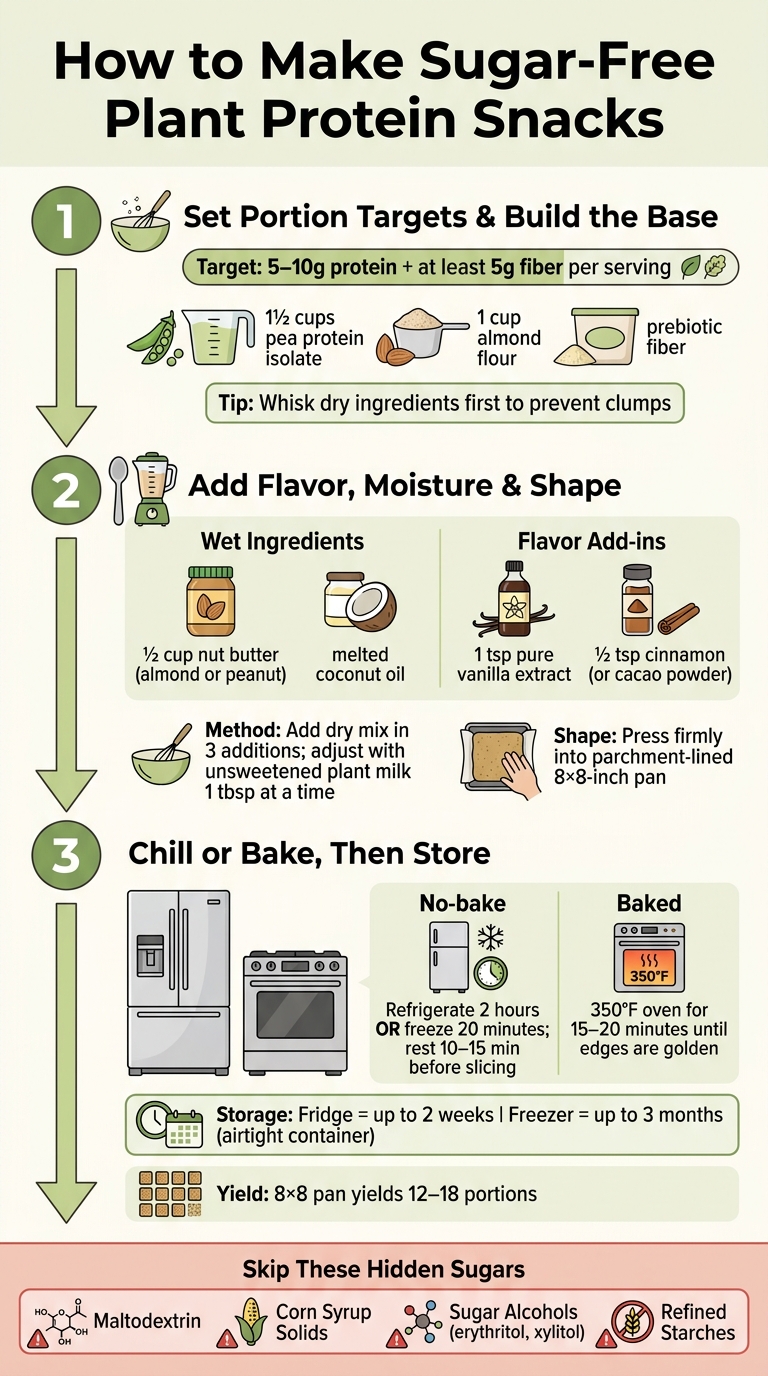
Step 1: Set Portion Targets and Build the Base
Use the protein, fiber, and fat combo above to make the snack in three stages: mix, bind, and set.
Aim for 5–10 g of protein and at least 5 g of fiber per serving. Start with the dry base. Whisk 1½ cups pea protein isolate, 1 cup almond flour, and your prebiotic fiber until everything is evenly mixed. That quick whisk matters more than it sounds. It helps stop clumps from forming and gives you a more even texture.
Step 2: Add Flavor, Moisture, and Shape the Snack
Once the dry mix is ready, add the wet ingredients and bring it together into a firm dough.
Blend about ½ cup of nut butter - almond or peanut both work well - with melted coconut oil. Let the oil cool a bit after melting so the mixture stays smooth instead of turning greasy or uneven.
Then add 1 teaspoon of pure vanilla extract and ½ teaspoon of cinnamon. Cinnamon gives the snack more taste without adding sugar. If you want to switch it up, you can also mix in unsweetened cacao powder or a small pinch of turmeric.
Add the dry mixture to the wet base in three separate additions, stirring after each one. If the dough seems too dry to hold its shape, pour in unsweetened plant milk, 1 tablespoon at a time, until it feels like firm cookie dough. From there, press the mixture into a parchment-lined 8×8-inch pan. Use a measuring cup to press it down flat and pack it tightly.
Step 3: Chill or Bake, Then Store Safely
After shaping, set the snack by chilling or baking so the bars stay firm and easy to carry.
For no-bake bites or bars, refrigerate for at least 2 hours or freeze for 20 minutes before slicing. If the bars are fully chilled, let them sit at room temperature for 10–15 minutes before cutting. That can help keep the edges from cracking.
For baked versions, place the pan in a preheated 350°F oven for 15–20 minutes, until the edges are golden. Store the bars in an airtight container in the fridge for up to 2 weeks, or freeze them for up to 3 months.
Use Prebiotic Fiber and Ready-Made Options to Support Hormone Health
How Much Prebiotic Fiber to Add and How to Increase It Gradually
Once you make the bars, adjust your fiber intake based on how your digestion feels. A good starting point is 3 to 5 grams of prebiotic fiber per day, then slowly add more as tolerated. In plain English: go low and slow.
It also helps to spread fiber across a few snacks during the day instead of eating a big dose all at once. That’s usually much easier on your stomach. And as you add more fiber, drink plenty of water. Steadier blood sugar may help support hormone balance and more even energy through the day.
When a Ready-to-Eat Bar Fits Into the Plan
When you don’t have time to prep, a shelf-stable bar can give you the same blood-sugar-friendly setup in a simpler form. Resist Nutrition bars are doctor-formulated with plant protein and prebiotic fiber, and they’re made without added sugar, sugar alcohols, gluten, or soy.
Each bar has 12 to 13 grams of vegan protein and 14 grams of fiber, and has been shown to support a steadier blood sugar response. They come individually wrapped, so they’re easy to toss in a bag or keep at your desk. Flavor options include Cinnamon Chocolate Chip, Goji Cherry Chocolate Chip, and Peanut Butter Turmeric.
For busy days, it makes sense to keep a shelf-stable backup on hand, such as Resist Nutrition bars, for a grab-and-go mix of plant protein, prebiotic fiber, and no added sugar.
Conclusion: Build a Simple Sugar-Free Snack Routine You Can Repeat
Sugar-free plant protein snacks don’t need to be complicated. Mix the base, portion it out, and store it. That’s the routine.
The formula is simple: start with a plant protein base, add prebiotic fiber and healthy fats, leave out anything with added sugar, and make enough at once so you’re not starting from scratch every time. After that, storage is easy. Keep bars in the fridge for up to 5 days, or freeze them for up to 3 months in an airtight container.
An 8×8-inch pan cut into 12 to 18 portions gives you a steady stash without much effort. Refrigerate the portions you’ll eat within five days, and freeze the rest.
Key Takeaways for Everyday Snacking
Build each serving around plant protein, prebiotic fiber, and nut or seed fat. Pea protein isolate, resistant dextrin, flaxseeds, and nut butters each play a clear role.
Read labels with care. Honey, maple syrup, agave, coconut sugar, and date paste can all spike blood glucose. For sweetness, use monk fruit or allulose, and leave out added sugars.
On busy days, Resist Nutrition bars provide a shelf-stable backup with 12 to 13 grams of vegan protein, 14 grams of fiber, and no added sugar. For homemade snacks, store single portions in airtight containers or reusable wraps so they’re easy to grab on the way out the door.
FAQs
How do I make the bars less chalky?
Use unflavored pea protein isolate instead of flavored options. Plant proteins tend to soak up moisture and can leave you with a dry mix, so add enough binders, like nut butter or soaked Medjool dates, to get a smoother, denser texture.
If the mixture still feels dry, mix in small amounts of almond milk or a bit more nut butter. Blending the coconut oil and sunflower lecithin well can also help cut down on that chalky mouthfeel.
Can I use flax or oat fiber instead of chicory root fiber?
Yes, but they don’t work the same way as chicory root fiber.
Chicory root provides inulin, a prebiotic fiber that may help lower glucose spikes. Oat fiber contains beta-glucan, which may also help with blood sugar control and support heart health.
Flaxseed is also a good source of fiber, but it works best when it’s ground, since that makes it easier to digest.
One thing to watch: these swaps can change both the nutrition and the texture of your sugar-free snacks.
How do I know if a sugar-free label is actually blood-sugar-friendly?
A sugar-free label can be misleading. It sounds safe, but that doesn’t always mean the snack is blood-sugar-friendly.
The front of the package is marketing. The ingredient list tells you what’s actually inside.
Watch for hidden sugars and syrups such as jaggery, honey, maple syrup, agave, and coconut sugar. It’s also smart to check for maltitol and high-glycemic fillers like maltodextrin.
A better pick? Snacks made with whole-food ingredients, plus plant protein and prebiotic fiber.