We're reformulating our bars with an even better recipe. Sign up for early access and get an exclusive re-launch discount.
PCOS and Low-Glycemic Meal Planning
By Resist Team
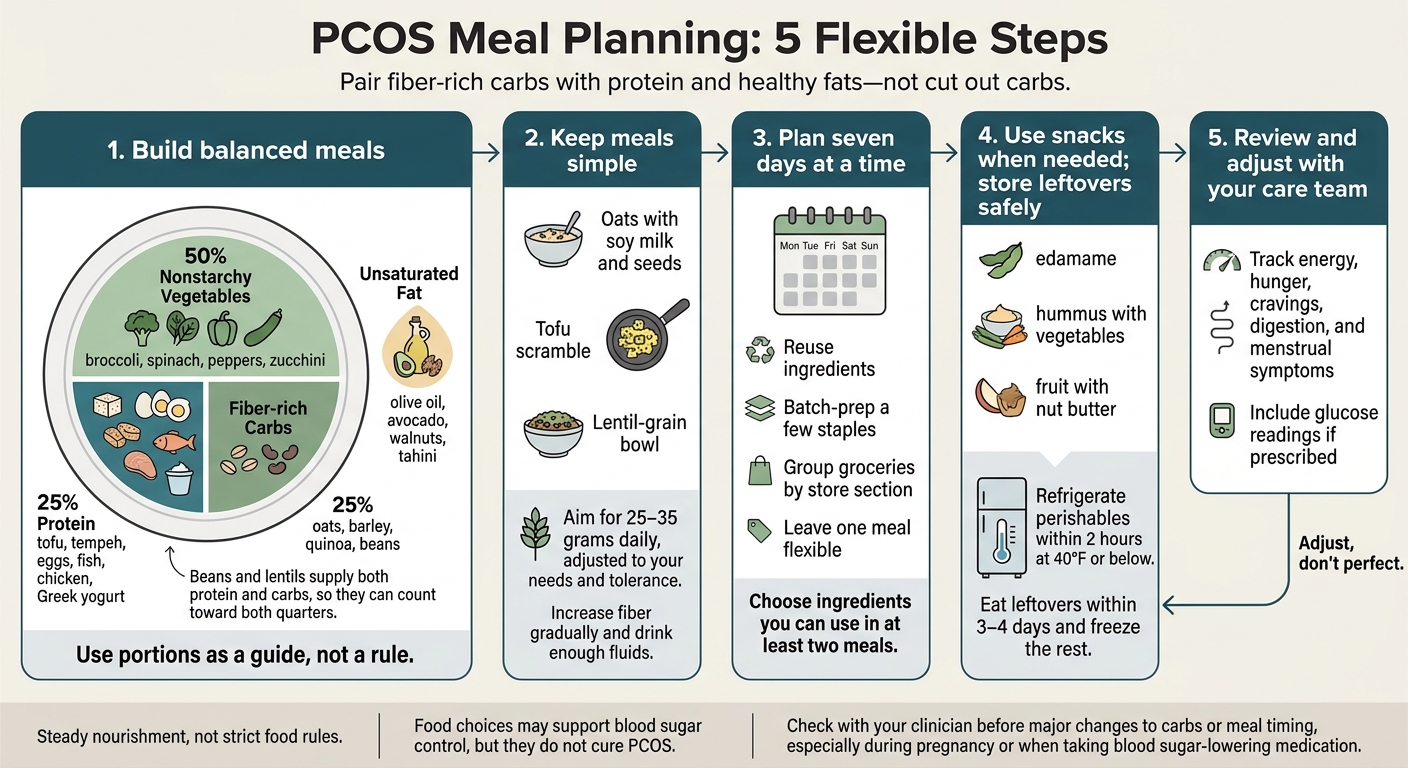
My starting point for PCOS meal planning: pair fiber-rich carbs with protein and healthy fats - not cut out carbs. For lunch and dinner, I use a simple guide: 50% nonstarchy vegetables, 25% protein, and 25% fiber-rich carbs, plus a little unsaturated fat.
Here’s how I turn that into a weekly plan:
Build balanced meals and add fiber gradually, working toward 25–35 grams daily if it suits your needs.
Keep meals simple: oats with soy milk and seeds, tofu scrambles, or lentil-grain bowls.
Plan seven days at a time, reuse ingredients, group groceries by store section, and leave room for schedule changes.
Use snacks when hungry or when meals get delayed, and refrigerate leftovers within two hours.
Review the plan with your care team, tracking energy, cravings, digestion, and menstrual symptoms.
My focus is steady nourishment, not strict food rules. <u>Food choices may support blood sugar control, managing spikes to reduce symptoms, but they do not cure PCOS.</u> Check with your clinician before major changes to carbs or meal timing, especially during pregnancy or when taking blood sugar-lowering medication.
PCOS Meal Planning: 5 Flexible Steps
PCOS: Low GI diet
sbb-itb-40fb9b7
Step 1: Build Balanced Meals
Use portions as a guide, not a rule. Adjust them for hunger, activity, medications, and your clinician’s advice to help keep blood sugar steadier, feel full, and maintain more even energy. Choose fiber-rich carbs like oats, barley, quinoa, and beans as part of a PCOS diet.
Use the Plate Method
Fill half your plate with nonstarchy vegetables, one-quarter with protein, and one-quarter with fiber-rich carbs. Then add a small portion of unsaturated fat. Protein, fiber, and fat slow digestion and can soften glucose spikes. Beans and lentils supply both protein and carbs, so they can count toward both quarters.
Use this structure to put meals together without much planning.
Meal component
Planning role
Options
Fiber-rich carbs
Energy and fiber
Oats, barley, quinoa, sweet potatoes (with skin), berries, apples
Both plant and animal foods can supply protein. If medications affect your appetite or digestion, ask your care team about meal adjustments. Metformin may also require B12 monitoring.
Plan for Cravings, Energy Dips, and Protein Gaps
Cravings and energy dips can be cues to check your meal balance and whether you’re eating enough. Aim for regular meals - for example, breakfast within two hours of waking and meals every 3–5 hours - with timing based on hunger, activity, and your needs.
Problem
Possible meal-planning gap
Practical adjustment
Carb cravings
Carbohydrates without enough protein, fiber, or fat
Pair carbohydrate foods with protein and unsaturated fat.
Energy dips
Long meal gaps or too little fuel before activity
Plan a balanced meal or snack before a busy stretch or workout.
Low-protein meals
Meals built mostly around starch
Add beans, lentils, or Greek yogurt to meals; use fortified unsweetened plant milks.
Add Fiber Gradually
Add fiber through legumes, vegetables, berries, apples, and whole grains. Aim for 25–35 grams daily, adjusted to your needs and tolerance. Start with small additions to meals you already eat, then increase gradually. Drink enough fluids, especially when adding high-fiber snacks, to help limit digestive discomfort.
With this meal structure in place, you can start building quick meals to repeat throughout the week.
Step 2: Make Simple Low-Glycemic Meals
These meal templates make it easy to put together a fast meal that helps steady your energy and curb cravings.
Choose Easy Breakfasts
Tofu scramble: Cook 6 ounces of firm tofu with peppers, spinach, and mushrooms. Serve with whole-grain toast and avocado. This is a balanced meal for low-glycemic eating. Adjust the serving to your hunger and needs.
Overnight oats with chia: Soak 1/2 cup of oats in 1 cup of unsweetened soy milk with 2 tablespoons of hemp hearts, 1 tablespoon of chia seeds, and 1 cup of raspberries. Refrigerate overnight and serve chilled.
Build Bowls, Salads, and Lettuce Wraps
Lentil-quinoa bowl: Combine 3/4 cup of cooked quinoa and 1/2 cup of cooked lentils with greens and roasted zucchini or Brussels sprouts. Finish with lemon-tahini dressing. Scale the grain portion to your appetite and activity level.
Chickpea salad: Add chickpeas, cucumber, peppers, and avocado to greens, then serve over cooked barley.
Tempeh lettuce wraps: Fill large lettuce leaves with 3 ounces of tempeh, 1/2 cup of shelled edamame, and shredded cabbage. Add sesame-lime dressing. If you need more fuel, add a whole-grain side.
Use these templates as building blocks for your 7-day plan to cut down on planning time.
Step 3: Create a 7-Day Meal Plan
Schedule Meals and Batch-Prep Ingredients
Turn your meal templates into a 7-day schedule, planning around your busiest days to help avoid energy dips later on. A steady meal routine can help reduce carb cravings and afternoon crashes while keeping meals balanced.
Reuse the templates above and batch-prep a few staples for the week. Leave one meal flexible in case your schedule changes. The grid below is a starting point, with protein, fiber, and carbs paired at each meal to support steadier blood sugar.
Refrigerate perishables within 2 hours at 40°F or below. Eat leftovers within 3–4 days and freeze the rest.
Once you've mapped out your meals, sort the ingredients by store section.
Group Your Grocery List
Organize your grocery list by store section, choosing ingredients you can use in at least two meals.
Choose Optional Snacks
Have a snack when you're hungry or a meal gets delayed - not just because it's on the schedule.
Try edamame, hummus with vegetables, or fruit with nut butter.
Resist Nutrition bars offer a portable option. They're vegan and keto-friendly, with plant protein, prebiotic fiber, and no added sugar, sugar alcohols, gluten, or soy. Check current labels and consider your fiber tolerance. Choose snacks that bridge the gap between meals without spiking blood sugar.
Conclusion: Review Your Plan With Your Care Team
After planning your meals, review the plan with your care team. A registered dietitian can help tailor it to your needs.
Track Symptoms and Make Safe Changes
Track how you feel as you follow the plan. Discuss your energy, hunger, cravings, menstrual symptoms, and digestion with your care team - not just your weight. Include glucose readings if prescribed, and seek an assessment if symptoms persist or get worse.
Before making major changes to carbohydrate intake or meal timing, talk with a healthcare professional to help avoid low blood sugar. This is especially important if you take blood sugar-lowering medication or are pregnant.
FAQs
How might steadier blood sugar affect my PCOS hormones?
Keeping blood sugar steady helps manage PCOS by addressing insulin resistance, which drives many hormonal symptoms. Fewer blood sugar swings mean less excess insulin. This can help lower androgen production and reduce inflammation.
These changes can also help regulate appetite, curb cravings, and improve reproductive function - supporting better hormone balance and more regular ovulation.
Why do I still crave carbs after balanced meals?
Many people with PCOS experience insulin resistance, which can affect appetite regulation and contribute to cravings. Even a meal that seems balanced may fall short on protein, fiber, or healthy fats, leaving blood sugar more likely to fluctuate.
Pair carbohydrates with protein and fiber to help keep blood sugar steadier and feel full longer. Resist Nutrition protein bars contain plant protein and prebiotic fiber and are formulated to support stable blood sugar.
How can I tell if I’m getting enough protein?
Pay attention to hunger, cravings, energy, and how satisfied you feel after meals - not just your protein total. Eating 20 to 35 grams of protein at each main meal may help keep blood sugar steady and keep you feeling full longer.
Aim to fill about one-quarter of your plate with protein, and spread your intake across breakfast, lunch, and dinner. A registered dietitian can offer guidance based on your activity level, health history, and goals.