

Fiber Calculator
Fiber Calculator Estimate Your Daily Fiber Goal A good Fiber Calculator makes nutrition guidance feel simple instead of overwhelming. This tool helps adults estimate a daily fiber target, compare it with current intake, and spot...

Prebiotic fiber may help with blood sugar control, but it is not a proven treatment for gestational diabetes. My takeaway: start with fiber-rich foods that fit your carbohydrate plan, and work toward about 28 grams of total fiber a day with your care team’s guidance.
Here’s what I’d keep in mind:
The goal is better glucose control while meeting your pregnancy nutrition needs - not simply eating more fiber.
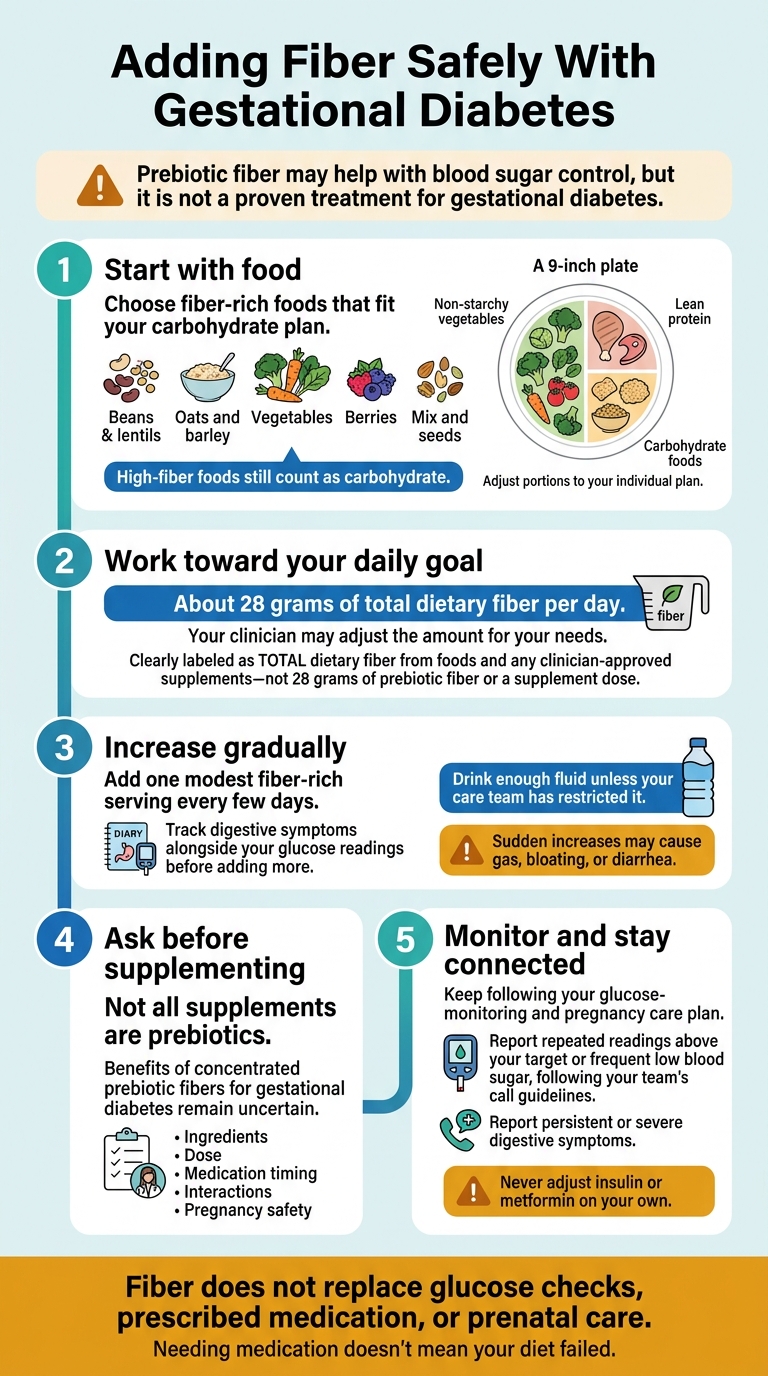
Adding Fiber Safely With Gestational Diabetes
That mechanism shows promise, but the strongest pregnancy evidence comes from broader eating patterns - not prebiotic fiber alone.
Prevention and management are different. Mediterranean-style diets have reduced gestational diabetes (GDM) risk in some prevention studies. In some trials involving people already diagnosed with GDM, low-glycemic index (LGI), DASH, and Mediterranean eating patterns improved fasting and post-meal glucose control.
These studies tested whole diets, so they can't tell us how much of the effect came from fiber. Some trials also reported lower insulin use, but that doesn't mean medication can be avoided.
| Evidence type | Main findings | Limitations |
|---|---|---|
| Higher-fiber dietary patterns (indirect evidence) | Mediterranean, DASH, and LGI diets can improve glucose control and may reduce GDM risk. | Whole-diet changes make it hard to separate fiber's role from other changes. |
| Animal studies of inulin | Inulin has improved insulin sensitivity in pregnant animal models. | Animal results don't establish benefits or a treatment dose for pregnant people. |
| Soluble-fiber supplements (indirect evidence) | Some small studies link soluble fiber to better fasting and post-meal glucose control. | Not all soluble fiber is prebiotic, and the findings don't apply to every supplement. |
| Observational gut microbiome studies (indirect evidence) | Differences in gut bacteria are associated with GDM. | These links don't show whether bacterial changes cause GDM or happen after it develops. |
Small samples, short follow-up periods, and reviews that combine different supplement types limit confidence in findings about prebiotic fiber alone. Although the research suggests possible benefits, current evidence does not show that isolated prebiotic fiber can prevent or treat gestational diabetes on its own.
Put those findings into practice by building meals around fiber-rich foods that fit your carb plan. Choose minimally processed options that also supply nutrients needed during pregnancy. Steel-cut oats, barley, brown rice, and quinoa provide complex carbohydrates, while beans, lentils, and chickpeas add protein.
Start with 1/2 cup cooked lentils, then adjust to your carb plan and digestive tolerance; fiber supports the plan but does not prevent a glucose rise.
For prebiotic foods, try asparagus, artichokes, onions, and garlic. Legumes supply resistant starch and galactooligosaccharides (GOS), while oats and barley provide beta-glucans.
Berries, apples, and pears add more fiber to meals and snacks. Walnuts, chia seeds, and ground flaxseed supply both fiber and healthy fats.
Rotate these foods instead of depending on one ingredient to meet your needs. High-fiber foods still count as carbohydrate. A 9-inch plate can help you plan meals: fill half with non-starchy vegetables, one-quarter with lean protein, and one-quarter with carbohydrate foods. Your portions should still follow your individual plan. Pair carbohydrate foods with protein or healthy fat, and check your glucose to see how those portions affect you.
For packaged snacks and other convenience foods, read the label rather than relying on front-of-pack or net-carb claims. Check the serving size, total carbohydrate, fiber, ingredients, and allergens.
Resist Nutrition bars include plant protein and prebiotic fiber; check the label to see whether the carb and fiber counts fit your plan.
Once you’ve chosen fiber-rich foods, set a daily goal and work toward it slowly.
Aim for about 28 grams of total dietary fiber per day, with your clinician adjusting the amount for your needs. Don’t use research doses as starting doses. The goal is steadier post-meal glucose - not a higher supplement dose. Increase your intake gradually.
Add one modest fiber-rich serving every few days. Track digestive symptoms alongside your glucose readings before adding more. Sudden increases, especially in fermentable fibers such as inulin, can cause gas, bloating, or diarrhea.
Drink enough fluid unless your care team has restricted it. Too little fluid can worsen constipation, especially when taking psyllium.
If food alone doesn’t meet your fiber target, a supplement may fill the gap under clinical guidance. The type of fiber determines which supplement and dose to use. Not all supplements are prebiotics.
High-fiber bars can provide too much fiber at once and cause digestive upset.
Before starting any supplement, ask your clinician to review ingredients, dose, medication timing, interactions, and pregnancy safety.
As you add fiber and track your glucose, know when to reach out to your care team.
Report repeated readings above your target or frequent low blood sugar, following your team’s call guidelines. Follow their instructions for treating lows, too. Talk with your team before making major diet changes, and never adjust insulin or metformin on your own.
Report digestive symptoms that persist or become severe, unintended weight loss, vomiting, dehydration, or any symptoms that limit how much you can eat. Contact your obstetric team promptly if you have concerns about fetal growth or notice changes in fetal movement.
A registered dietitian who coordinates with your obstetric team can help you fine-tune your eating plan. They can help you spread carbohydrates across meals and snacks, choose fiber sources you digest well, and meet your pregnancy nutrition needs without eating too little.
Ask your dietitian to review your glucose readings and how you respond to higher-fiber foods. Leave medication changes to your prescribing clinician.
Prebiotic foods may fit into a gestational diabetes meal plan, but evidence for supplements remains limited. Choose a variety of fiber-rich foods, add them slowly, and drink enough fluids. Check with your pregnancy care team before starting a prebiotic supplement.
Needing medication doesn’t mean your diet failed. Insulin resistance often increases as pregnancy progresses. Fiber is one part of care - not a replacement for glucose monitoring, medication when needed, or prenatal follow-up.
As you gradually increase prebiotic fiber, track your fasting glucose and post-meal blood sugar spikes consistently. Prebiotic fiber feeds gut bacteria and supports metabolic health. Its effects build over weeks and months - it doesn’t act like a drug.
If you take diabetes medication, monitor your blood sugar closely. If your readings improve, talk with your healthcare provider about whether your dosage needs to change.
Start with about 3–5 grams of prebiotic fiber per day, then slowly work toward 5–20 grams daily over 2–3 weeks. Add one new source every 3–4 days to help limit gas and bloating.
Spread your fiber intake across meals and drink plenty of water to help soluble fiber work best. Monitor your glucose as you increase fiber, especially if you have gestational diabetes.
Talk to your doctor or dietitian before adding fiber supplements during pregnancy, especially if you take diabetes medication. Better blood sugar control may mean your medication needs adjusting. They can also check whether a supplement fits your pregnancy and metabolic health needs.
For an easy way to add fiber, Resist Nutrition offers doctor-formulated protein bars with prebiotic fiber, plant protein, and superfoods to help support steady blood sugar levels.

