

Protein Bar Ingredient Checker
Smarter Protein Bar Choices in Seconds A Protein Bar Ingredient Checker makes it easier to sort through flashy packaging and focus on what actually matters. Many bars look healthy at first glance, but the nutrition...

Fiber can improve how your body manages blood sugar. Insulin sensitivity describes how effectively your cells respond to insulin, the hormone that helps regulate glucose levels. When this process doesn't work well, it can lead to higher blood sugar and an increased risk of diabetes and heart disease. Adding more fiber to your diet - especially soluble fiber - can help slow digestion, stabilize blood sugar, and support gut health.
Pro Tip: Gradually increase fiber intake and drink plenty of water to avoid digestive discomfort. Small changes, like switching to whole-grain pasta or adding chia seeds to oatmeal, can make a big difference in your health.
Fiber plays a crucial role in regulating blood sugar levels by triggering biological processes that enhance metabolic health. Let’s break down how it works.
Dietary fiber comes in two main forms, each contributing to insulin sensitivity in distinct ways:
But fiber’s influence goes beyond these physical effects - it also changes how gut bacteria function.
When soluble fibers like pectin, inulin, and resistant starch reach the large intestine, they become food for gut bacteria. During fermentation, these bacteria produce short-chain fatty acids (SCFAs), which are powerful compounds that:
These benefits collectively enhance insulin sensitivity and contribute to better blood sugar control.
Fiber doesn’t just affect the gut - it also influences key hormones that regulate insulin action. As fiber ferments, it slows digestion and prompts the release of hormones like GLP-1 and PYY. These hormones signal fullness, delay gastric emptying, and improve how the body processes insulin after meals.
Additionally, prebiotic fibers such as inulin help reshape the gut microbiome, reducing harmful fructose absorption in the small intestine. This change addresses another factor that can contribute to insulin resistance.
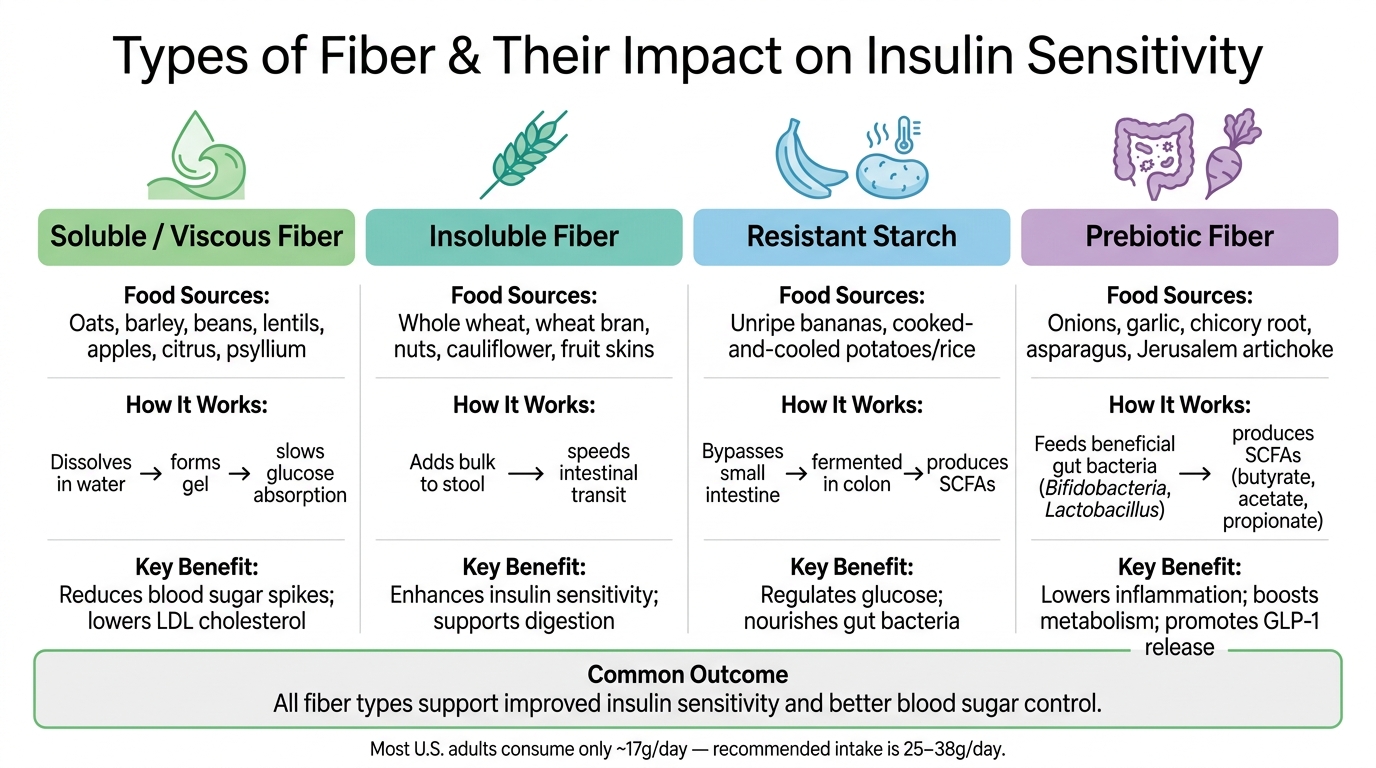
Types of Fiber & Their Impact on Insulin Sensitivity
Different types of fiber contribute to insulin sensitivity in unique ways. Knowing how they work can help you make better choices for managing blood sugar levels.
Soluble fibers dissolve in water, forming a gel-like substance that slows digestion and glucose absorption. Viscous fibers, like beta-glucans found in oats and barley, psyllium, and pectins in fruits such as apples and citrus, also increase intestinal viscosity. This not only improves satiety but can also help lower LDL cholesterol levels.
Insoluble fiber doesn’t dissolve in water. Instead, it adds bulk to stool and speeds up its passage through the intestines. While its primary role is to aid digestion, regular consumption of insoluble fiber has been linked to improved insulin sensitivity and a lower risk of type 2 diabetes.
Resistant starch is another player in the fiber category. It bypasses digestion in the small intestine and reaches the colon, where it’s fermented by gut bacteria. This fermentation process produces short-chain fatty acids (SCFAs), which support glucose regulation and overall metabolic health. You can find resistant starch in foods like unripe bananas and cooked-and-cooled potatoes or rice.
Prebiotic fibers, such as inulin and fructooligosaccharides (FOS), act as food for beneficial gut bacteria like Bifidobacteria and Lactobacillus. These bacteria ferment the fibers, producing SCFAs like butyrate, acetate, and propionate. These SCFAs nourish colon cells, reduce inflammation, and enhance insulin sensitivity.
Prebiotics also promote the release of incretin hormones like GLP-1, which helps the pancreas release insulin in response to food. Foods rich in prebiotic fiber include dandelion greens, Jerusalem artichokes, garlic, leeks, and onions. These foods contain between 100 and 240 milligrams of prebiotics per gram.
"Eating foods rich in prebiotic fibers has been indicated by previous research to benefit health. Eating in a way to promote microbiome wellness while eating more fiber may be more attainable and accessible than you think." - Cassandra Boyd, Researcher, San José State University
Here’s a quick guide to the types of fiber, their food sources, and how they benefit your metabolism:
| Fiber Type | Common Food Sources | Primary Metabolic Benefit |
|---|---|---|
| Soluble / Viscous | Oats, barley, beans, lentils, apples, citrus, psyllium | Slows glucose absorption; reduces blood sugar spikes |
| Insoluble | Whole wheat, wheat bran, nuts, cauliflower, fruit skins | Enhances insulin sensitivity; supports digestion |
| Resistant Starch | Unripe bananas, cooked and cooled potatoes/rice | Regulates glucose; nourishes gut bacteria |
| Prebiotic | Onions, garlic, chicory root, asparagus, Jerusalem artichoke | Produces SCFAs; lowers inflammation; boosts metabolism |
With these fiber types explained, the next step is to explore daily fiber recommendations and specific high-fiber foods that can maximize these benefits.
Fiber plays a key role in maintaining overall health, but most adults don't get nearly enough of it. The general guideline is 14 grams of fiber per 1,000 calories consumed. This translates to specific daily targets based on age and sex:
| Age Group | Women | Men |
|---|---|---|
| 19–30 years | 28g | 34g |
| 31–50 years | 25g | 31g |
| 51+ years | 22g | 28g |
The reality? Only about 5% of U.S. adults actually hit these targets. On average, adults consume just half the recommended amount. That shortfall has real consequences: studies show that adding just 8 grams of fiber daily can reduce the risk of type 2 diabetes and heart disease by 5% to 27%.
"Fiber is crucial for overall health by aiding in blood sugar management, its positive impact on digestion and heart health." - Beth Czerwony, Registered Dietitian, Cleveland Clinic
Now, let’s look at how to bridge the fiber gap with everyday foods.
You don’t need to completely overhaul your diet to boost your fiber intake. Small changes, like including fiber-rich foods in your meals, can make a big difference. Legumes are some of the best options - just one cup of boiled lentils packs 15–18 grams of fiber. Split peas and black beans are similarly fiber-packed, offering 15 to 16 grams per cup.
Whole grains are another excellent choice. Foods like barley, quinoa, and whole-wheat pasta provide 5 to 7 grams of fiber per serving. Fruits such as raspberries (8 grams per cup) and pears (5.5 grams per medium fruit) also contribute significantly. Here’s a quick rundown of top fiber sources:
| Food Item | Serving Size | Fiber (grams) |
|---|---|---|
| Split Peas (boiled) | 1 cup | 16.0 |
| Lentils (boiled) | 1 cup | 15.5 |
| Black Beans (boiled) | 1 cup | 15.0 |
| Chia Seeds | 1 oz | 10.0 |
| Raspberries | 1 cup | 8.0 |
| Whole-wheat Spaghetti | 1 cup | 6.0 |
| Pear | 1 medium | 5.5 |
| Broccoli (boiled) | 1 cup | 5.0 |
Simple swaps can help you get there: eat whole fruits instead of drinking juice to retain the fiber found in the skin and pulp. Switching out white rice or regular pasta for whole-grain versions is another easy way to up your fiber intake without major changes to your meals.

If meeting your fiber goals through food alone feels challenging, products like Resist Nutrition bars can help. These bars are designed with prebiotic fiber, plant protein, and superfoods like chia seeds, almonds, and goji berries. Each bar provides 14 grams of fiber, along with just 4 grams of net carbs. They’re free of added sugars, gluten, soy, and sugar alcohols.
For someone aiming for 28 grams of fiber a day (based on a 2,000-calorie diet), one Resist Nutrition bar covers half that goal in a single snack. Available in flavors like Cinnamon Chocolate Chip, Goji Cherry Chocolate Chip, and Peanut Butter Turmeric, they’re priced at $39.95 per box.
"If you're insulin resistant, your goal should be eating foods that require less insulin for processing. It's about giving your body a better chance to do what it needs to do." - Beth Czerwony, RD, Cleveland Clinic
One common misstep when adding fiber to your diet is ramping up too quickly. Overloading on fiber all at once can upset your digestive system, as your gut needs time to adapt. The key is to go slow - add no more than 5 grams of fiber per week - and make sure to stay hydrated to avoid issues like bloating or cramping.
"Add in fiber slowly - if added too quickly, you can either have GI issues like bloating, gas or diarrhea until your gut microbiome is adjusted." - Beth Czerwony, RD, LD
Water is especially important when upping your fiber intake. Soluble fiber, in particular, absorbs water to work effectively. Without enough fluids, you could end up worsening constipation instead of relieving it.
"Your digestive system can't always tolerate a lot of fiber at one time, which can lead to gas, bloating, diarrhea, and stomach cramps. Take it slow, and make sure to drink plenty of water daily as you increase your fiber." - Dr. Walter Willett, Professor of Epidemiology and Nutrition, Harvard T.H. Chan School of Public Health
To maximize benefits and minimize discomfort, aim to spread your fiber intake evenly throughout the day.
Instead of cramming all your fiber into one meal, divide it across breakfast, lunch, dinner, and snacks. This approach not only helps with digestion but also keeps your blood sugar levels steady.
Here are some practical ways to add fiber to your day:
This steady, balanced approach supports better digestion and may even improve insulin sensitivity.
As you distribute fiber throughout your day, pay attention to how your body responds. Everyone's digestive system reacts differently to fiber increases, so it's important to monitor your energy levels, digestion, and blood sugar. If you notice discomfort, scale back slightly and increase your intake more gradually. Fine-tuning your fiber consumption can help you find the balance that works best for your body.
Fiber plays a key role in improving insulin sensitivity by slowing down glucose absorption and promoting gut fermentation. The byproducts of this fermentation, such as SCFAs (short-chain fatty acids), along with hormone responses, are essential to fiber's ability to help manage blood sugar levels. When fiber becomes a regular part of your diet, its benefits can build over time.
However, there's a noticeable gap in fiber intake among U.S. adults. Most fall short of the recommended 25–38 grams per day. Studies indicate that for every 10-gram reduction in fiber intake per 1,000 calories, insulin resistance increases by an average of 0.4 points. The good news? Closing this gap doesn’t require a drastic diet change. Small, consistent adjustments can make a big difference. For an easy way to increase your intake, you might try a high-quality prebiotic fiber supplement, such as a Resist Nutrition bar.
"Fiber really is good for you. Eat a lot of it and often." - Ryan Bradley, ND, MPH, Diabetes Action Research and Education Foundation
To get the best metabolic support, aim for a variety of fiber sources like legumes, leafy greens, oats, and whole grains. If whole foods aren’t enough, a Resist Nutrition bar can provide 14 grams of prebiotic fiber and 12 grams of plant protein per serving - without added sugars, gluten, or soy.
Make fiber a consistent part of your diet, and you’ll set yourself up for long-term metabolic health.
Increasing fiber intake has been shown to enhance insulin sensitivity in a relatively short time. Research indicates that noticeable improvements may occur within 4 to 6 weeks of consistently following a high-fiber diet. However, results can differ based on individual factors and existing dietary patterns.
Soluble fiber plays a key role in managing blood sugar levels. When consumed, it creates a gel-like substance in the digestive system. This process slows the absorption of sugar, delays stomach emptying, and activates satiety hormones like GLP-1. Together, these effects help stabilize blood sugar levels after meals and support overall metabolic health.
To increase fiber without dealing with bloating or gas, prioritize soluble fiber from foods like oats, fruits, and vegetables. These are gentler on your digestive system. Begin with small portions and slowly raise your intake over time to give your gut a chance to adjust. Staying well-hydrated is also key - drinking enough water supports digestion and can help reduce any discomfort. This steady method lets you reap fiber's benefits without the unwanted side effects.

