We're reformulating our bars with an even better recipe. Sign up for early access and get an exclusive re-launch discount.
Plant-Based Superfoods for Diabetes Prevention
By Resist Team
Eating the right foods can lower your risk of type 2 diabetes. Research shows that a healthy plant-based diet can cut the risk by up to 34%, while adding just 8g of fiber daily reduces it by 15%. Foods like dark leafy greens, berries, legumes, whole grains, and nuts help regulate blood sugar and improve insulin sensitivity. Meanwhile, low-carb diets offer quicker blood sugar control but may lack long-term benefits. For convenience, options like Resist Nutrition protein bars combine plant-based ingredients and low-carb principles to support blood sugar management on the go.
Key Takeaways:
Plant-Based Superfoods: High in fiber, antioxidants, and nutrients; reduces diabetes risk by 23-34%.
Low-Carb Diets: Focus on cutting carbs for immediate blood sugar control but may be harder to maintain.
Resist Nutrition Bars: Portable, plant-based snack with 12g protein and 14g fiber; helps stabilize blood sugar.
Quick Comparison:
Factor
Plant-Based Superfoods
Low-Carb Diets
Resist Nutrition Bars
Blood Sugar Impact
Long-term improvement
Immediate stabilization
Steady levels
Risk Reduction
23-34%
Varies by quality
Daily management
Convenience
Requires meal prep
Moderate
High
Sustainability
High (if planned well)
Challenging long-term
Easy for busy lifestyles
The key is focusing on whole, unprocessed foods and finding a plan you can stick with.
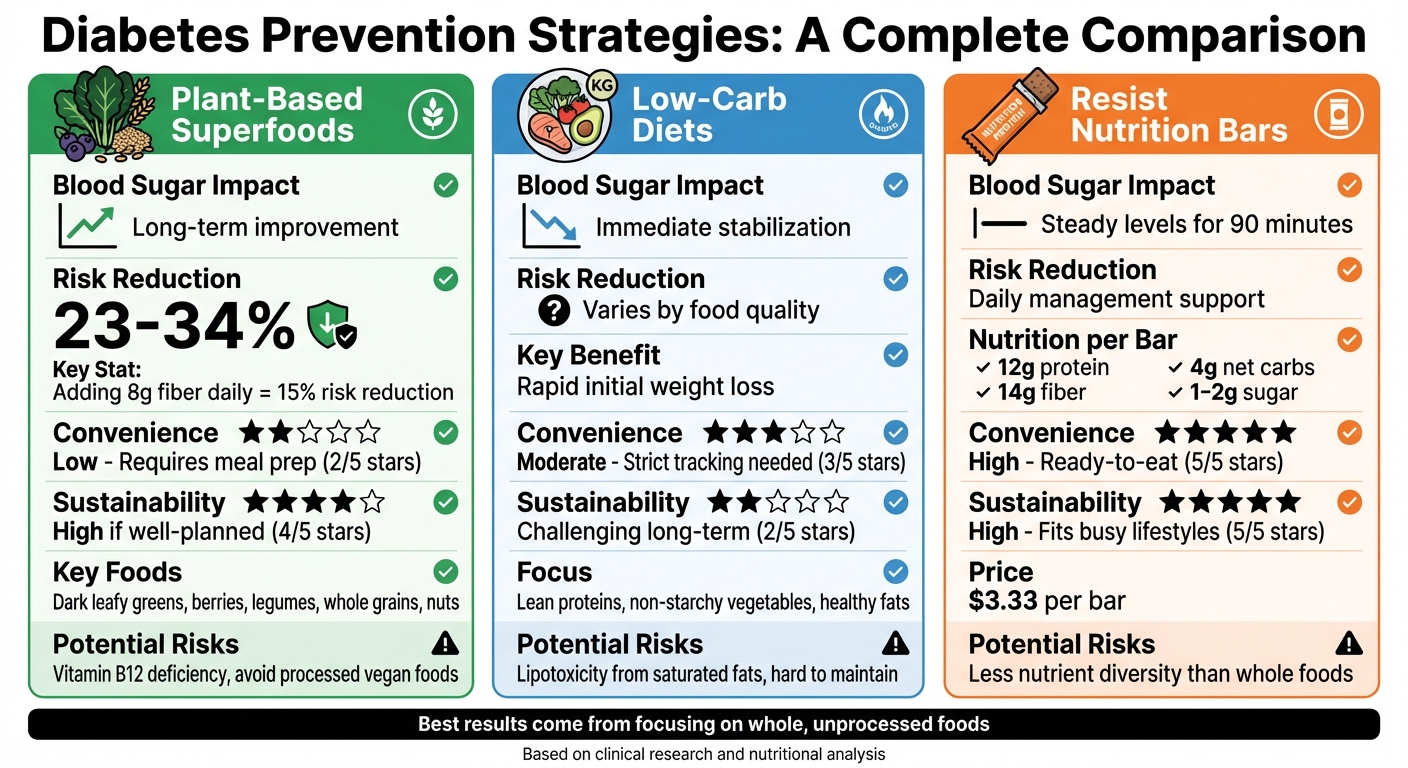
Plant-Based vs Low-Carb vs Protein Bars for Diabetes Prevention Comparison
1. Plant-Based Superfoods
Nutritional Benefits
Plant-based superfoods pack a punch when it comes to nutrients that help regulate blood sugar. Dark leafy greens like spinach, kale, and collards are loaded with vitamins A, C, and K, along with essential minerals - all while being low in calories and carbs. Beans and legumes are excellent sources of protein, rivaling meat, but they also bring fiber and potassium to the table. Nuts, seeds, and whole grains provide magnesium, fiber, and omega-3 fats, while berries are rich in antioxidants and fiber. And let’s not forget avocados, which offer heart-friendly fats and keep you feeling full.
"Minimally processed, fiber- and bioactive-rich plant-source foods may reduce risk of diabetes, while sugar-sweetened beverages and red meat may increase risk." - Dariush Mozaffarian, Director of the Food Is Medicine Institute, Tufts University
These nutrient-dense foods play a key role in keeping blood sugar levels in check.
Impact on Blood Sugar Levels
The research speaks for itself. Sticking to a healthy plant-based diet can lower the risk of type 2 diabetes by 23%. The Portfolio Diet - centered on plant sterols, plant protein, nuts, and viscous fibers - shows the same level of risk reduction. A long-term study spanning 22 years, which followed nearly 12,000 adults, revealed that roughly 4,208 participants developed diabetes. Interestingly, about half of the protective effect from plant-based diets was linked to cutting back on red meat.
Here’s why these foods work: soluble and viscous fibers slow down digestion and glucose absorption, while polyunsaturated fats enhance the body’s insulin response. Even your gut microbiome benefits - diets rich in prebiotics and polyphenols have been shown in clinical trials to improve fasting glucose levels and HbA1c, a key marker of long-term blood sugar control. These biological effects make plant-based eating a practical and effective way to support diabetes prevention.
Convenience and Accessibility
Plant-based superfoods aren’t just packed with benefits - they’re also easy to fit into your daily routine. Whole grains, vegetables, legumes, fruits, nuts, and seeds are widely available and affordable options for most people aiming to prevent diabetes. These foods are naturally low in energy density, meaning you can eat satisfying portions without worrying about strict calorie limits. To save money, consider buying seasonal produce or opting for frozen or canned versions - just make sure they’re free of added sugars or sauces.
When shopping for whole grain products, check that the first ingredient includes the word "whole." Also, choose whole fruits like oranges over juice to get the full fiber benefits from the pulp. The beauty of plant-based eating lies in its flexibility. Whether you follow the Mediterranean diet, DASH diet, or Portfolio Diet, all offer similar protective effects against diabetes. You can tailor these approaches to fit your lifestyle and the foods available to you.
sbb-itb-40fb9b7
Plant-Based vs Low-Carb: What Actually Lowers Diabetes Risk? #healthline #type2diabetes #diet #food
2. Low-Carb Diets
Low-carb diets take a different approach compared to plant-based superfoods, focusing on cutting down carbohydrate intake to help control blood sugar levels.
Nutritional Benefits
By limiting carbohydrates, low-carb diets aim to reduce glucose spikes and keep blood sugar steady. The key to success lies in the quality of the food you choose. Prioritizing lean proteins, non-starchy vegetables, and healthy unsaturated fats can provide notable metabolic advantages. Short-term ketogenic diets, in particular, have been shown to lower blood sugar and promote weight loss. However, it's worth noting that while these diets can deliver quick results, they may not directly address underlying insulin resistance.
Impact on Blood Sugar Levels
Cutting back on carbs often leads to immediate improvements in blood sugar levels. This change is frequently paired with rapid initial weight loss, which can improve insulin sensitivity. For the best results, focus on whole, unprocessed foods rather than heavily processed low-carb alternatives. It's also essential to be cautious with animal-based saturated fats, as excessive intake may contribute to fat buildup in the liver and pancreas, increasing the risk of diabetes complications. If you're on diabetes medications, it's crucial to monitor your blood sugar closely when starting a low-carb diet. While these diets can deliver measurable benefits, they offer a more structured and shorter-term approach compared to the broader, long-term advantages of plant-based superfoods.
Convenience and Accessibility
Low-carb diets work well for individuals who prefer clear and structured eating plans. To keep costs manageable, consider options like frozen or canned non-starchy vegetables and fish, as long as they don’t contain added sugars or high levels of sodium. That said, sticking to a low-carb diet over the long haul can be challenging, making sustainability a common hurdle.
Resist Nutrition protein bars blend plant-based ingredients with low-carb principles, offering a simple and portable way to help manage blood sugar levels.
Nutritional Benefits
Each Resist Nutrition protein bar packs 12 grams of plant-based protein (sourced from pea protein) and 14 grams of fiber, creating a macronutrient profile designed to support stable blood sugar. The bars use prebiotic fiber as a binder, which keeps net carbs at just 4 grams and sugars between 1 and 2 grams per serving. They also feature nutrient-rich superfoods like turmeric and goji berries, known for their anti-inflammatory and antioxidant properties, while maintaining a low glycemic index.
Impact on Blood Sugar Levels
Clinical studies show that Resist bars help maintain steady blood sugar levels for up to 90 minutes after eating. This is thanks to their balanced mix of plant protein, fiber, and healthy fats, which slow the absorption of carbohydrates, reducing the risk of blood sugar spikes and crashes. With nearly half of Americans dealing with metabolic conditions like diabetes or PCOS, these bars are crafted to meet the needs of a wide range of individuals. They’re also free from sugar alcohols, gluten, soy, and added sugars, avoiding ingredients that might disrupt hormones or cause digestive discomfort. This makes them a convenient option for daily blood sugar management.
Convenience and Accessibility
Resist bars are perfect for anyone looking for a quick, diabetes-friendly snack on a busy schedule. They come in three flavors: Cinnamon Chocolate Chip, Goji Cherry Chocolate Chip, and Peanut Butter Turmeric. At $39.95 per box (around $3.33 per bar), they’re now available in over 200 stores following recent investments.
"Resist is a Gen-Z brand making blood sugar health cool, easy, and delicious through vegan, all-natural nutrition bars".
This whole-food-focused snack bridges the gap between plant-based eating and the convenience needed for managing blood sugar effectively.
Pros and Cons
Let’s break down the strengths and challenges of each diabetes prevention strategy.
Each method offers its own advantages and hurdles. Plant-based superfoods shine when it comes to reducing inflammation and boosting insulin sensitivity, thanks to their high fiber and antioxidant content. Studies link health-conscious plant-based diets to a 34% reduction in type 2 diabetes risk. That said, they require careful planning to avoid pitfalls like processed vegan foods and nutrient gaps, such as Vitamin B12 deficiencies.
On the other hand, low-carb diets can quickly stabilize blood sugar by limiting glucose intake. However, sticking to them long-term can be tough, and animal-heavy versions might lead to higher saturated fat consumption, which could contribute to lipotoxicity and insulin resistance.
Resist Nutrition protein bars aim to combine the best of both worlds, using plant-based ingredients with low-carb principles. These bars, priced around $3.33 each, offer a convenient, ready-to-eat option that fits into busy U.S. lifestyles. They eliminate the need for lengthy meal prep or strict macro tracking. But, they may not provide the same variety of nutrients found in whole foods.
Here’s a quick comparison to help you weigh the options:
Factor
Plant-Based Superfoods
Low-Carb Diets
Resist Nutrition Bars
Blood Sugar Impact
Steady, long-term improvement
Rapid initial stabilization
Stable levels
Risk Reduction
23% to 34% reduction (if healthful)
Varies by food quality
Designed for daily management
Convenience
Low (requires meal prep)
Moderate (strict tracking needed)
High (ready-to-eat, portable)
Sustainability
High (if well-planned)
Can be tough long-term
High (fits busy schedules)
Potential Risks
Vitamin B12 deficiency; processed options
Lipotoxicity from saturated fats
Less nutrient diversity than whole foods
Experts stress the importance of focusing on unprocessed and nutrient-dense foods to reduce diabetes risk effectively.
"A healthy plant-based diet, characterized by a high intake of fresh and unprocessed products, was associated with a lower risk of type 2 diabetes, while an 'unhealthy' plant-based diet was not".
Whether you lean toward superfoods, low-carb meals, or the simplicity of protein bars, the quality of your food choices is what ultimately matters for long-term diabetes prevention.
Conclusion
Plant-based superfoods present a promising approach to reducing the risk of diabetes. Research highlights that sticking to a healthy plant-based diet, such as the DASH diet, can lower diabetes risk by as much as 31%. The secret lies in focusing on whole, unprocessed foods like legumes, nuts, whole grains, and leafy greens, while steering clear of refined options that lack protective benefits.
These superfoods help combat lipotoxicity - an accumulation of fat in the liver and pancreas that contributes to insulin resistance. At the same time, they deliver fiber and antioxidants that support stable blood sugar levels. The benefits of these nutrient-dense choices are well-documented and impactful.
"Remission of T2D should be the primary clinical goal, and this is feasible for many individuals using a low-fat, WFPB diet." - American College of Lifestyle Medicine
Adapting this approach to your lifestyle is essential. If you're short on time, convenient options like Resist Nutrition protein bars combine plant-based superfoods with low-carb principles in a grab-and-go format. For those who enjoy cooking, incorporating elements from the "Portfolio" diet - such as plant sterols, viscous fibers from oats and barley, and plant proteins - can significantly reduce diabetes risk over time. Consistency with nutrient-rich, whole foods is the cornerstone of effective diabetes prevention.
FAQs
Which plant-based superfoods help most with insulin sensitivity?
A diet centered around plant-based superfoods like fruits, vegetables, whole grains, and beans can help support insulin sensitivity. Research shows that a low-fat vegan diet packed with these nutrient-rich foods may lower insulin requirements and enhance the body's sensitivity to insulin. Including these options in your meals can be an important step toward better blood sugar management and improved overall well-being.
How do I balance high-fiber plant foods with a low-carb approach?
When you're aiming for stable blood sugar levels, non-starchy vegetables should be your go-to. Think leafy greens, broccoli, and peppers - these are packed with fiber and naturally low in carbs, making them perfect for your plate.
You can also include small portions of legumes and whole grains. These foods provide fiber and help you feel full without causing major blood sugar spikes, especially when you pair them with healthy fats and proteins.
For an extra boost, focus on minimally processed, plant-based foods. Foods rich in prebiotic fibers, like those found in Resist Nutrition's bars, can also play a role in maintaining steady blood sugar levels while supporting hormone health.
When is a Resist Nutrition bar a good choice for blood sugar support?
A Resist Nutrition bar is a great option for those looking to support blood sugar levels with a snack that's both vegan and keto-friendly. These bars contain no added sugars, making them a smart choice for anyone managing diabetes, PCOS, or insulin resistance - all while focusing on clean, natural ingredients.