

Plant-Based Superfoods for Diabetes Prevention
Eating the right foods can lower your risk of type 2 diabetes. Research shows that a healthy plant-based diet can cut the risk by up to 34%, while adding just 8g of fiber daily reduces...

Insulin resistance and diabetes are closely related but not the same. Insulin resistance occurs when your cells stop responding effectively to insulin, while diabetes develops when your pancreas can no longer compensate, leading to high blood sugar levels. Insulin resistance is often silent, showing no symptoms, but it can progress to Type 2 diabetes over 10–15 years if left unaddressed.
| Feature | Insulin Resistance | Diabetes |
|---|---|---|
| Cause | Cells resist insulin | Pancreas can't keep up |
| Symptoms | Often none; may include skin changes | Thirst, fatigue, frequent urination |
| Diagnosis | Inferred from metabolic markers | Blood sugar tests (A1C, fasting) |
| Management | Lifestyle changes (diet, exercise) | Medications + lifestyle adjustments |
| Reversibility | Often reversible | Type 2: Possible remission; Type 1: No |
The takeaway: Insulin resistance is a warning sign that can be addressed early with exercise, diet, and weight loss to prevent diabetes.
Insulin resistance happens when your cells stop responding effectively to insulin, making it harder for glucose to enter cells and be used for energy. Instead, glucose builds up in your bloodstream, leading to higher blood sugar levels.
Think of insulin as a key that unlocks cells, allowing glucose to enter. In insulin resistance, the "locks" on the cells become stiff, so more insulin is needed to get the job done. To compensate, the pancreas ramps up insulin production, a condition called hyperinsulinemia, to keep blood sugar levels stable.
According to the American Diabetes Association:
"The ability of the pancreas to increase insulin production means that insulin resistance alone won't have any symptoms at first." – American Diabetes Association
This overproduction can go unnoticed for years until the pancreas becomes overworked. When that happens, blood sugar levels rise, potentially leading to prediabetes or Type 2 diabetes.
Insulin resistance is influenced by a mix of factors, often acting together. One of the biggest contributors is excess visceral fat - fat stored deep in the abdomen around vital organs. This type of fat promotes inflammation, which disrupts how insulin functions.
Lack of physical activity is another key factor. Since skeletal muscles handle up to 70% of glucose absorption, inactivity reduces the body's ability to clear glucose from the blood. Other factors that contribute include:
| Risk Factor Category | Specific Examples |
|---|---|
| Lifestyle | Sedentary habits, diets high in sugar or processed foods, smoking |
| Biological | Being 45 or older, having a family history of Type 2 diabetes, certain ethnic backgrounds (Black, Hispanic/Latino, Asian) |
| Medical History | Polycystic ovary syndrome (PCOS), gestational diabetes, high blood pressure, sleep apnea |
| Medications | Steroids (glucocorticoids), some antipsychotics, and certain SSRIs |
Insulin resistance often develops silently, thanks to the pancreas compensating by producing more insulin. However, there are subtle signs to watch for. Skin changes like acanthosis nigricans - dark, velvety patches on areas like the neck or armpits - and skin tags can be early indicators.
Fatigue, particularly after eating, is another common clue. Clinically, certain markers can signal insulin resistance, such as fasting triglycerides at or above 150 mg/dL, fasting blood sugar levels of 100 mg/dL or higher, or waist measurements exceeding 40 inches for men and 35 inches for women. If you notice these signs, it's worth discussing them with your doctor.
To understand diabetes, it's important to see how it differs from insulin resistance. While insulin resistance involves the body's reduced ability to use insulin effectively, diabetes occurs when the pancreas can no longer compensate, leading to persistently high blood sugar levels. This happens because the body either doesn't produce enough insulin or can't use it properly, causing glucose to build up in the bloodstream instead of being absorbed by cells for energy.
Both Type 1 and Type 2 diabetes lead to high blood sugar levels, but the reasons behind them are very different.
Type 1 diabetes is an autoimmune condition where the immune system mistakenly attacks the insulin-producing beta cells in the pancreas. As a result, the body produces little to no insulin. This type is usually diagnosed in children and young adults, with symptoms that appear quickly, sometimes within weeks or months. People with Type 1 diabetes rely on daily insulin injections, and currently, there’s no way to prevent it.
Type 2 diabetes, on the other hand, develops over time and is closely tied to insulin resistance. Shannon Knapp, a Certified Diabetes Care and Education Specialist at Cleveland Clinic, describes it this way:
"Type 2 diabetes is like having the key but a sticky lock. You jiggle the key until you eventually give up."
Type 2 diabetes is far more common, accounting for 90% to 95% of all diabetes cases in the U.S.. Its symptoms often develop so gradually that they can go unnoticed for years.
| Feature | Type 1 Diabetes | Type 2 Diabetes |
|---|---|---|
| Primary Cause | Autoimmune attack on beta cells | Insulin resistance + insufficient insulin |
| Insulin Production | Little to none | Produced, but not used effectively |
| Symptom Onset | Rapid (weeks or months) | Gradual (often years) |
| Typical Age at Diagnosis | Children and young adults | Adults (but rising in teens) |
| Prevention | No known prevention | Can often be delayed or avoided |
The gradual nature of Type 2 diabetes underscores the importance of early detection and action, especially as it progresses through distinct stages.
Before developing Type 2 diabetes, many people go through a prediabetes stage, where blood sugar levels are elevated but not high enough to meet the criteria for diabetes. In the U.S., approximately 98 million people are living with prediabetes.
Here are the diagnostic thresholds for blood sugar levels:
| Category | Fasting Blood Glucose (mg/dL) | A1c Level (%) |
|---|---|---|
| Normal | Less than 100 | Less than 5.7% |
| Prediabetes | 100 to 125 | 5.7% to 6.4% |
| Diabetes | 126 or higher | 6.5% or higher |
The encouraging news is that prediabetes is often reversible. Studies show that losing just 5% to 7% of body weight can greatly reduce the risk of progressing to Type 2 diabetes. This makes early intervention crucial, as lifestyle changes can have the most impact before the pancreas becomes too overworked to function properly.
Insulin resistance often serves as an early warning sign before diabetes develops. It happens when muscle, fat, and liver cells stop responding effectively to insulin, prompting the pancreas to produce extra insulin to keep blood sugar levels in check. This overcompensation can go on for years without any noticeable symptoms. Diabetes, on the other hand, emerges when the pancreas can no longer keep up, resulting in consistently high blood sugar levels. Understanding this progression is key to identifying and addressing each condition effectively.
Insulin resistance is typically a silent condition. While some people may notice skin changes like dark patches, these signs are easy to overlook.
Diabetes, however, comes with more obvious symptoms. People with diabetes often experience frequent urination, excessive thirst, constant fatigue, blurred vision, and slow-healing wounds - symptoms that usually drive them to seek medical help.
Testing for insulin resistance isn't part of routine clinical care, as there’s no single definitive test. Instead, its presence is inferred from a combination of metabolic markers, including elevated triglycerides (≥150 mg/dL), low HDL cholesterol, high blood pressure, and increased waist circumference. Detecting it early is crucial to prevent it from progressing into diabetes. For diabetes, diagnosis is more straightforward and relies on blood sugar measurements, such as an A1C test or Fasting Plasma Glucose (FPG) test.
"Doctors don't usually test for insulin resistance as a part of standard diabetes care." - American Diabetes Association
Here’s a quick look at how the two conditions differ:
| Feature | Insulin Resistance | Type 2 Diabetes |
|---|---|---|
| Primary Cause | Obesity (visceral fat), inactivity, genetics | Prolonged insulin resistance leading to beta cell exhaustion |
| Onset | Gradual; often undetected for years | Occurs when the pancreas can no longer compensate |
| Symptoms | Usually none; may include skin changes | Frequent urination, extreme thirst, fatigue, blurred vision |
| Diagnosis | Inferred from metabolic markers (triglycerides, HDL, waist size) | Confirmed via A1C ≥6.5% or fasting glucose ≥126 mg/dL |
| Potential for Reversal | Can often be reversed with lifestyle changes | Manageable; remission is possible but typically requires ongoing care |
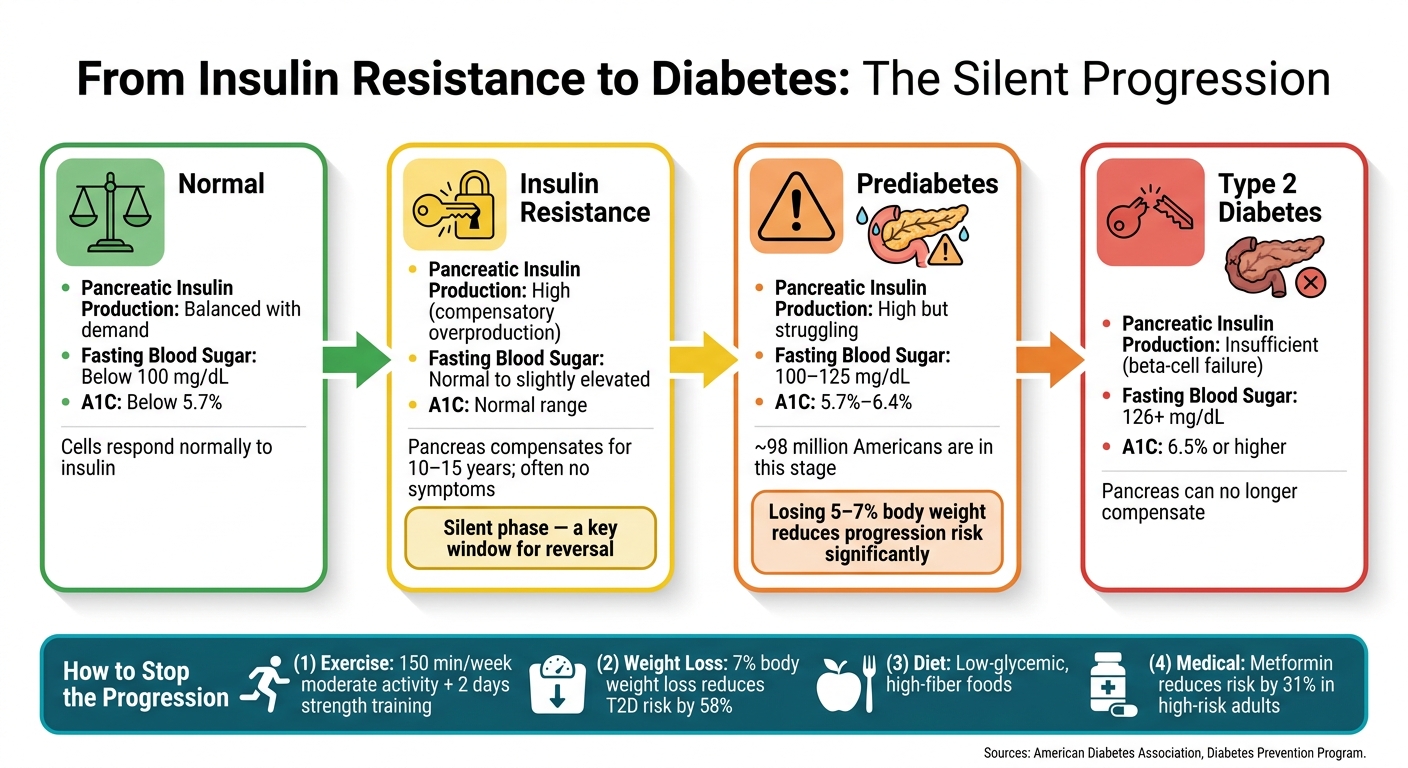
From Insulin Resistance to Diabetes: The Silent Progression
Insulin resistance is a slow march toward diabetes. At first, the pancreas tries to keep up by producing more insulin - a process that can go on for over a decade. But this extra effort wears out the beta cells in the pancreas, leading to their eventual failure.
"Eventually, the pancreas no longer produces enough insulin to overcome the cells' resistance. The result is higher blood glucose levels, and ultimately prediabetes or type 2 diabetes." - American Diabetes Association
This breakdown in beta cell function ties back to the metabolic imbalances discussed earlier. As these cells falter, blood sugar levels begin to creep up. The table below outlines how this progression typically unfolds:
| Stage | Pancreatic Insulin Production | Fasting Blood Sugar |
|---|---|---|
| Normal | Balanced with demand | Below 100 mg/dL |
| Insulin Resistance | High (compensatory) | Normal to slightly elevated |
| Prediabetes | High but struggling | 100–125 mg/dL |
| Type 2 Diabetes | Insufficient (beta-cell failure) | 126+ mg/dL |
An A1C level between 5.7% and 6.3% is a key marker for prediabetes. Recognizing this progression early is critical for taking action before diabetes develops.
The good news? This progression isn’t set in stone. Studies show that losing just 7% of your body weight can lower the risk of Type 2 diabetes by 58%. For a 200-pound individual, that’s about 14 pounds.
Exercise is one of the best ways to manage insulin resistance. It allows muscle cells to absorb glucose without needing insulin. Aim for 150 minutes of moderate activity per week, plus two days of strength training. Since skeletal muscle handles up to 70% of the body’s glucose disposal, keeping it active is a game-changer.
Diet is equally important. Cutting back on high-glycemic foods - like white bread, sugary drinks, and processed starches - reduces the strain on your pancreas. Instead, focus on low-GI foods like beans, leafy greens, nuts, and berries to help stabilize blood sugar levels. Pairing these with adequate fiber (14 grams) and protein (12 grams) at every meal further supports blood sugar control.
For some, lifestyle changes might not be enough. The Diabetes Prevention Program study found that metformin reduced the risk of Type 2 diabetes by 31% in adults at high risk. If your fasting glucose or A1C levels are climbing, it’s worth discussing additional options with your doctor.
The good news about insulin resistance? It can often be turned around with consistent lifestyle adjustments. While diabetes typically requires lifelong management, insulin resistance offers a window of opportunity for reversal.
One of the most effective tools is exercise. The American Diabetes Association highlights physical activity as a key strategy for tackling insulin resistance. Why? Movement allows glucose to enter muscle cells without relying on insulin. Even if your cells are resistant, exercise creates an alternate pathway to help your muscles absorb blood sugar. The goal is 150 minutes of moderate aerobic activity each week, paired with two days of strength training. This combination helps your body clear glucose from the bloodstream more efficiently.
Diet is another critical piece of the puzzle. The idea is simple: eat foods that demand less insulin, giving your pancreas a chance to recover. As Beth Czerwony, RD, LD, from the Cleveland Clinic puts it:
"If you're insulin resistant, your goal should be eating foods that require less insulin for processing. It's about giving your body a better chance to do what it needs to do."
Focus on non-starchy vegetables like leafy greens, cauliflower, and asparagus. Add legumes, nuts, and lean proteins like fish and poultry. On the flip side, cut back on white bread, potatoes, sugary drinks, and processed cereals. Sleep is another often-overlooked factor - aim for 7 to 9 hours nightly. Poor sleep can spike cortisol levels, which worsens insulin sensitivity.
These lifestyle changes can go a long way in reversing insulin resistance. However, managing diabetes often requires a more comprehensive approach.
When it comes to diabetes, the stakes are higher, and the treatment approach is more structured. For many, lifestyle changes alone aren't enough - medications often play a crucial role in keeping blood sugar levels within a safe range.
Metformin is usually the first medication prescribed for Type 2 diabetes. It works by reducing the amount of glucose the liver releases and improving how cells respond to insulin. In more advanced cases, doctors might add other options like thiazolidinediones (TZDs), SGLT2 inhibitors, or insulin therapy. For Type 1 diabetes, insulin is non-negotiable since the body produces little to none.
Dietary management for diabetes is more than just eating healthy - it’s about carbohydrate monitoring and timing meals to align with medications. Exercise also plays a vital role. Working out shortly after meals, for instance, can help reduce post-meal blood sugar spikes.
While sustained lifestyle changes and medical care can lead to remission for some with Type 2 diabetes, Type 1 diabetes remains a chronic autoimmune condition with no current cure.
| Feature | Insulin Resistance | Diabetes |
|---|---|---|
| Primary Goal | Reverse resistance and improve sensitivity | Maintain blood glucose within a target range |
| Dietary Focus | Low–glycemic index, high-fiber foods | Carbohydrate counting and consistent meal timing |
| Exercise Role | Opens alternate glucose pathways to help reverse resistance | Reduces medication needs and prevents complications |
| Medical Options | Metformin used off-label (no drugs specifically approved) | Metformin, insulin therapy, TZDs, and SGLT2 inhibitors |
| Reversibility | Highly reversible with sustained lifestyle changes | Type 2 may reach remission; Type 1 is a chronic condition |
This comparison highlights how the management of these conditions overlaps in lifestyle strategies but diverges in medication use and the potential for reversal.
For example, high-fiber, low–glycemic snacks can help stabilize blood sugar levels. Products like Resist Nutrition's doctor-formulated bars - offering 14g of fiber, 12g of protein, and just 4g of net carbs with no added sugars - are a convenient way to stay on track. These types of targeted dietary choices are essential for managing insulin resistance and preventing diabetes progression.
Insulin resistance and diabetes are connected but not the same. Insulin resistance develops quietly, as cells gradually stop responding to insulin, forcing the pancreas to work overtime producing more. This process can continue for 10 to 15 years before blood sugar levels rise enough to diagnose diabetes. That silent phase is a key opportunity to step in and make changes.
Here’s the main point to remember: insulin resistance can often be reversed with timely action, while diabetes is a chronic condition. While Type 2 diabetes can sometimes enter remission with strict management, it doesn’t go away. On the other hand, catching insulin resistance early can often lead to a complete turnaround through steady lifestyle adjustments. Even modest weight loss can dramatically reduce the risk of progression.
Early detection matters. Routine checkups might not catch insulin resistance because it rarely has clear symptoms. If you have risk factors like a family history of diabetes, abdominal weight gain, or conditions such as PCOS, it’s worth asking your doctor to check fasting glucose, A1c levels, and a lipid panel. These tests can uncover warning signs that standard exams might miss.
The steps to prevent insulin resistance and slow diabetes progression are surprisingly similar. Regular exercise, a low-glycemic diet, quality sleep, and maintaining a healthy weight are all key. Strength training stands out as particularly effective since skeletal muscle handles up to 70% of the body’s glucose uptake.
"Insulin resistance is thought to precede the development of T2D by 10 to 15 years." - Andrew M. Freeman, MD
This early window is your chance to take control and set the stage for lasting metabolic health.
Yes, it's possible to have insulin resistance even if your blood sugar levels are normal. This often happens in the early stages, before it develops into prediabetes or diabetes. During this time, your body compensates by producing extra insulin to keep glucose levels within the normal range, which can temporarily hide the problem.
When discussing your health with your doctor, consider asking about specific tests such as fasting blood glucose, fasting insulin levels, and the oral glucose tolerance test. These tests are crucial for assessing insulin resistance and can provide valuable insights to guide your next steps in managing your health effectively.
Improvements in insulin resistance often begin to show within a few weeks to a few months. Research suggests that noticeable changes typically occur around the 3-month mark when individuals stick to healthy habits like balanced eating, regular exercise, and achieving weight loss. However, the timeline can differ based on personal factors and the level of commitment to these lifestyle adjustments.

