We're reformulating our bars with an even better recipe. Sign up for early access and get an exclusive re-launch discount.
Prebiotic Fiber and Type 2 Diabetes: Key Insights
By Drew Lederman
Prebiotic fiber is emerging as a powerful tool for managing type 2 diabetes. Unlike general dietary fibers, prebiotics like inulin and resistant starch specifically feed beneficial gut bacteria, leading to improved blood sugar control. Research shows that prebiotic supplements can reduce HbA1c, enhance insulin sensitivity, and lower inflammation through mechanisms like SCFA production and gut barrier strengthening.
Here’s what you need to know:
HbA1c Reduction: A 12-week study showed a significant HbA1c drop (p=0.009) with prebiotic fiber use. Early intervention, especially in pre-diabetes, yields better results.
Mechanisms: Prebiotics produce SCFAs, which activate liver pathways to reduce glucose production and enhance insulin secretion via incretin hormones like GLP-1.
Tolerability: Most people tolerate 10–20 grams of prebiotic fiber daily, though gradual introduction minimizes bloating or discomfort.
Ease of Use: Supplements, like powders or bars, simplify reaching daily fiber goals when dietary sources fall short.
Compared to other dietary strategies - high-fiber diets, low-GI plans, and calorie restriction - prebiotic fiber offers a practical approach to improving glycemic control without drastic lifestyle changes. Early and consistent use can improve outcomes for individuals managing type 2 diabetes.
1. Prebiotic Fiber Interventions
Impact on HbA1c
Among dietary approaches, prebiotic fiber interventions stand out for their ability to improve glycemic control. A 12-week trial highlighted in the Introduction reported a measurable reduction in HbA1c levels for individuals with type 2 diabetes (p=0.009).
Timing also plays a critical role. Between November 2022 and October 2023, researchers Thomas Gurry and Caitlin Victoria Hall from Myota GmbH conducted a study involving 66 pre-diabetic participants. These individuals consumed 20 grams daily of a diverse prebiotic fiber supplement. While the overall group showed modest changes after 16 weeks, participants with baseline HbA1c levels below 6.0% achieved a notable reduction of -0.17%, compared to a 0.07% increase in the placebo group (p=0.05). This suggests that intervening earlier in the progression of the disease may yield better results.
On the other hand, single-ingredient prebiotics often show limited benefits. For example, a 6-week trial using 16 grams per day of inulin-type fructans (ITF) failed to improve postprandial glucose or insulin responses in type 2 diabetes patients. Eline Birkeland from Oslo University Hospital commented:
"Our findings do not support that ITF [inulin-type fructans] improve incretin responses or glucose regulations in this population [T2D]."
These findings suggest that diverse fiber blends may be more effective than single-ingredient options. To understand why, it’s helpful to examine the mechanisms behind prebiotic benefits.
Mechanism of Action
Prebiotics work through several metabolic pathways beyond the production of short-chain fatty acids (SCFAs). SCFAs increase the presence of G-coupled receptor 43 (GPR43) in the gut, which promotes the release of incretin hormones like GLP-1 and Peptide YY (PYY). These hormones enhance insulin secretion after meals, helping to lower postprandial glucose levels. Additionally, prebiotics strengthen gut barrier integrity by reducing the leakage of lipopolysaccharides (LPS) into the bloodstream, which helps prevent inflammation and metabolic endotoxemia.
Prebiotics also activate the Nrf2 pathway, boosting antioxidant production that protects pancreatic β-cells from oxidative stress. This multi-faceted approach addresses several metabolic challenges at once, making prebiotics an effective tool for managing type 2 diabetes. Understanding these mechanisms underscores the importance of tolerability for sustained use.
Tolerability and Side Effects
For most people, prebiotic fiber supplements are well-tolerated at doses of 10–20 grams per day. Common side effects include mild gastrointestinal discomfort such as bloating, loose stools, and abdominal pain, particularly during the initial adjustment period.
In the Myota GmbH study, participants maintained an adherence rate of 89.3% over 16 weeks while taking 20 grams daily of a diverse prebiotic supplement. However, trials using single-ingredient prebiotics have reported higher rates of gastrointestinal discomfort. For instance, one study found that 64% of participants experienced increased flatulence after consuming 16 grams per day of inulin-type fructans for six weeks, compared to just 4% in the control group.
"Adverse events reported were consistent with those typically seen in fibre-based interventions, including bloating, loose stools and abdominal pain."
Caitlin Victoria Hall, Myota GmbH
To minimize side effects, it’s best to start with lower doses and gradually increase intake. Isomaltooligosaccharides (IMOs), for example, have been tolerated at doses of up to 30 grams per day in adults, with only mild gastrointestinal effects. Balancing tolerability with practicality is key to making these interventions a sustainable part of diabetes management.
Ease of Integration
Incorporating prebiotic supplements into daily routines is straightforward. Many come as unflavored powders or single-serve sachets that dissolve easily in water, coffee, tea, or even breakfast cereals. This makes them a convenient alternative to consuming large amounts of prebiotic-rich foods.
While natural food sources of prebiotics are available, reaching the recommended 10–20 grams daily through diet alone can be difficult. Supplements often become the preferred choice for this reason. However, maintaining long-term adherence can be challenging. For instance, in the Myota study, adherence dropped by 8.33% between weeks 16 and 24. Simple habits, like setting reminders or pairing supplement intake with existing routines, can help maintain consistency.
For added convenience, products like Resist Nutrition's protein bars provide prebiotic fiber alongside 14 grams of total fiber per bar, making it easier to meet daily goals. These practical solutions support better metabolic health and long-term diabetes management.
sbb-itb-40fb9b7
2. General High-Fiber Diets
Impact on HbA1c
General high-fiber diets, while not as targeted as prebiotic interventions, consistently lead to moderate improvements in blood sugar control. Meta-analyses reveal that increasing fiber intake can lower HbA1c levels by an average of 0.5%. While this reduction might seem small, it’s comparable to the lower range of what metformin achieves, which typically reduces HbA1c by 0.2% to 2%.
The length of time spent on a high-fiber diet plays a big role. Studies lasting more than six weeks tend to show the most noticeable changes. For example, a well-known trial published in the New England Journal of Medicine compared a high-fiber diet (50 grams daily) to the standard American Diabetes Association (ADA) recommendation of 24 grams per day. The results? The high-fiber group saw a 10% drop in 24-hour plasma glucose levels and a 12% decline in insulin concentrations.
"A high intake of dietary fiber, particularly of the soluble type, above the level recommended by the ADA, improves glycemic control, decreases hyperinsulinemia, and lowers plasma lipid concentrations in patients with type 2 diabetes." - New England Journal of Medicine
Not all fiber is created equal. Cereal fibers stand out, with the highest intake levels linked to a 17% to 33% lower risk of developing type 2 diabetes. Soluble fibers, such as those in oats, psyllium, and legumes, are particularly effective. Thanks to their gel-forming properties, they outperform insoluble fibers in reducing HbA1c and fasting blood sugar levels. These glycemic benefits also pave the way for broader metabolic improvements.
Mechanism of Action
Soluble fibers work by forming a gel-like substance in the stomach, which slows digestion and delays the absorption of carbohydrates. Additionally, when these fibers ferment in the gut, they produce short-chain fatty acids (SCFAs). SCFAs play a key role in releasing GLP-1, a hormone that enhances insulin secretion.
But fiber’s benefits don’t stop there. Whole grains rich in fiber also provide magnesium, an essential mineral for enzymes involved in glucose metabolism. Moreover, high-fiber diets are linked to lower levels of inflammation markers like IL-6 and TNF-α, both of which are known to contribute to insulin resistance. This multi-pronged effect makes fiber a powerful tool in managing metabolic health.
Tolerability and Side Effects
Most people handle high-fiber diets well, although some may experience digestive discomfort at first. Symptoms like gas, bloating, or cramping are more common with highly fermentable fibers.
The solution? Take it slow. Gradually increasing fiber intake by 2–3 grams every few days gives the gut time to adjust.
"Increasing fiber intake too quickly can cause bloating, gas, cramping, and general gastrointestinal discomfort. Gradual introduction over a few weeks allows the gut microbiota and digestive tract to adapt." - StatPearls
Staying hydrated is also essential. Without enough water, even a high-fiber diet can lead to constipation. Clinical trials involving 50 grams of fiber per day from unprocessed whole foods have shown excellent tolerability when these principles are followed.
Ease of Integration
While the metabolic benefits of a high-fiber diet are clear, making it a practical part of daily life is just as important. The Dietary Guidelines for Americans suggest 25 to 38 grams of fiber daily, but managing diabetes often calls for even higher amounts - up to 50 grams per day.
Good sources of fiber include lima beans, lentils, oats, berries, okra, and papaya. Although these foods can add volume to meals, thoughtful planning makes it easier to reach fiber goals. Shockingly, 94% of Americans don’t meet even the basic recommended fiber intake, with the average consumption hovering around just 17 grams per day.
For those struggling to meet their fiber targets through whole foods alone, products like Resist Nutrition’s vegan, keto-friendly protein bars can help. Each bar packs 14 grams of fiber, offering a convenient way to support stable blood sugar levels while fitting into busy routines.
Hitting a daily fiber intake of 35 grams has been associated with a 35% reduction in all-cause mortality for people with diabetes. Whether through whole foods, fiber-rich products, or a combination of both, finding a sustainable approach is key to long-term success.
3. Low-Glycemic Index Diets
Impact on HbA1c
Low-glycemic index (GI) diets offer a focused way to manage blood sugar levels, complementing approaches like prebiotic and high-fiber diets. Research shows that these diets can lower HbA1c levels more effectively than several other dietary methods. For instance, a six-month randomized trial reported a 0.50% reduction in HbA1c among participants on a low-GI diet, compared to a 0.18% decrease in those following a high-cereal fiber diet. What’s even more noteworthy is that these benefits were observed in individuals already taking one or more antihyperglycemic medications. Dr. David J. A. Jenkins from St. Michael's Hospital emphasized:
"the reduction in HbA1c observed in our study was achieved in individuals already treated with 1 or more antihyperglycemic medications, and without weight gain".
Given that the FDA considers a 0.3%–0.4% HbA1c reduction clinically meaningful, the effectiveness of low-GI diets becomes even more apparent.
Low-glycemic load (GL) diets also show promising results. In one study, a low-GL diet reduced HbA1c by 0.95%, compared to a 0.35% reduction with a standard weight-loss plan. Similarly, a calorie-restricted low-GL diet led to an 0.8% reduction, whereas a low-fat diet achieved only a 0.1% drop over 40 weeks. Meta-analyses further reveal that every 10-unit decrease in dietary GL corresponds to a 0.04% reduction in HbA1c. Reflecting on these findings, Dr. Jenkins noted:
"our 0.33% HbA1c treatment difference might therefore be expected to reduce microvascular complications by 10% to 12% and possibly more in the longer term".
Mechanism of Action
Low-GI diets work by slowing the digestion of carbohydrates, much like alpha-glucosidase inhibitors such as acarbose, which leads to a more gradual rise in blood sugar. This helps reduce glucose spikes, eases the demand for insulin, and supports steadier blood sugar levels. Evidence also suggests that these diets can enhance insulin sensitivity, as measured by the Matsuda index, and lower fasting insulin levels. Interestingly, for every one-point drop in GI, there’s an associated weight loss of about 0.2 pounds, which further supports improved HbA1c control.
Beyond regulating blood sugar, low-GI diets - often rich in fiber - promote a healthier gut microbiome. They encourage the growth of beneficial bacteria like Bifidobacterium, Lactobacillus, and Akkermansia, which produce short-chain fatty acids such as butyrate that contribute to metabolic health. These diets also help reduce systemic inflammation, as evidenced by lower levels of biomarkers like C-reactive protein, interleukin-6, and tumor necrosis factor-α.
Tolerability and Side Effects
Low-GI diets are usually well-tolerated and may be easier to stick to compared to strict calorie-restricted or low-fat plans. They focus on the quality of food rather than just cutting calories, which can make them more sustainable. Clinical trials show dropout rates of about 19% for low-GI diets, compared to 23% for high-fiber diets. However, because these diets can significantly lower blood sugar, those on diabetes medications may experience more frequent minor hypoglycemic episodes. This makes regular monitoring and occasional medication adjustments essential.
Another consideration is macronutrient balance. Without proper guidance, individuals might unintentionally increase their fat intake. Even so, low-GI/GL diets generally deliver better glycemic control, even when calorie consumption is similar. These factors make low-GI diets both effective and practical for everyday use.
Ease of Integration
Incorporating a low-GI diet into daily life can be simple. A popular method is "carbohydrate exchange", where high-GI foods like white bread or rice are swapped for lower-GI options such as whole grains, legumes, or fruits like apples and pears. Research indicates that maintaining dietary GI values below 57.95 and GL values under 96.31 leads to the most noticeable improvements in blood sugar control. Foods high in resistant starch (RS) - like cooked and cooled potatoes or legumes - can also help lower post-meal glucose levels while offering prebiotic benefits. The Journal of Diabetes Investigation highlights RS-enriched foods as a valuable addition to carbohydrate-rich meals.
To minimize potential gastrointestinal discomfort, it’s best to introduce fiber-rich, low-GI foods gradually, ideally with the guidance of a dietitian. For convenience, products like Resist Nutrition's protein bars can be a helpful addition. Each bar contains 14 grams of prebiotic fiber and is designed to stabilize blood sugar levels, making it easier to stay on track even on busy days. This simplicity of integration underscores the practicality of low-GI diets as a key part of diabetes management.
4. Calorie-Restricted Weight-Loss Plans
Impact on HbA1c
Calorie-restricted (CR) diets have been shown to significantly lower HbA1c levels, making them a strong option for managing type 2 diabetes. Research indicates that cutting 500 calories daily can reduce HbA1c by about 0.82% over six months when compared to standard care. For instance, a six-month study at the University of Illinois Chicago, involving 75 adults with type 2 diabetes and obesity, found that participants who reduced their energy intake by 25% saw a 0.94% drop in HbA1c and lost 1.78% of their body weight. Another program at Xincheng Intelligent Internet Hospital in China, which alternated five days of 917-calorie intake with ten days of regular eating, achieved a 20% remission rate - defined as maintaining HbA1c below 6.5% without medication for at least three months. This was a significant improvement compared to the 2% remission rate in the control group. According to the American Journal of Clinical Nutrition, CR can lead to 38 additional remissions per 100 patients at six months compared to standard diets.
Mechanism of Action
The improvements in HbA1c from CR diets are largely tied to weight loss and its effects on metabolic health. By reducing calorie intake, the body begins to burn stored fat, particularly in the liver and pancreas, which plays a key role in improving insulin sensitivity and addressing pancreatic β-cell dysfunction. This process reduces harmful fat deposits (ectopic fat) and lowers lipotoxicity, ultimately enhancing the body's ability to regulate blood sugar. Achieving a weight loss of more than 10% of total body weight is often recommended to maximize the likelihood of diabetes remission. The DiRECT trial in the UK highlighted this effect: participants on a total diet replacement (TDR) plan - consuming around 825–853 calories daily for three to five months - lost an average of 22 pounds in a year, with 46% achieving remission, compared to just 4% in the control group.
Tolerability and Side Effects
While CR diets offer clear benefits, they require a high level of commitment. Vasiliki Pavlou, MS, RD, from the University of Illinois Chicago, notes:
"Many patients find it difficult to adhere to CR because calorie intake must be vigilantly monitored every day".
In the same six-month trial, only 68% of participants managed to stick to their calorie goals. Common side effects during intensive calorie restriction include mild constipation (reported by 10–18% of participants), diarrhea (3–5%), and dizziness (3–5%). However, no serious side effects were reported when these diets were followed under medical supervision. Adherence often becomes more challenging when transitioning from a structured clinical setting to preparing meals at home, especially without regular guidance from a dietitian.
Ease of Integration
Calorie restriction requires consistent effort, particularly compared to more flexible approaches like high-fiber or low-GI diets. Daily tracking of meals and calories is essential, which can make long-term adherence difficult. Structured programs like total diet replacement (TDR) simplify the initial phase by providing pre-measured, formula-based meals of around 825–853 calories per day. However, transitioning back to regular foods often requires sustained support to maintain results. For those looking to stabilize blood sugar without constant calorie counting, incorporating prebiotic fiber into the diet can help. For example, products like Resist Nutrition's protein bars, which are enriched with prebiotic fiber, offer a practical way to balance nutrition and blood sugar control while managing calorie intake.
The Research Backs This Blood Sugar Regulating Supplement
Advantages and Disadvantages
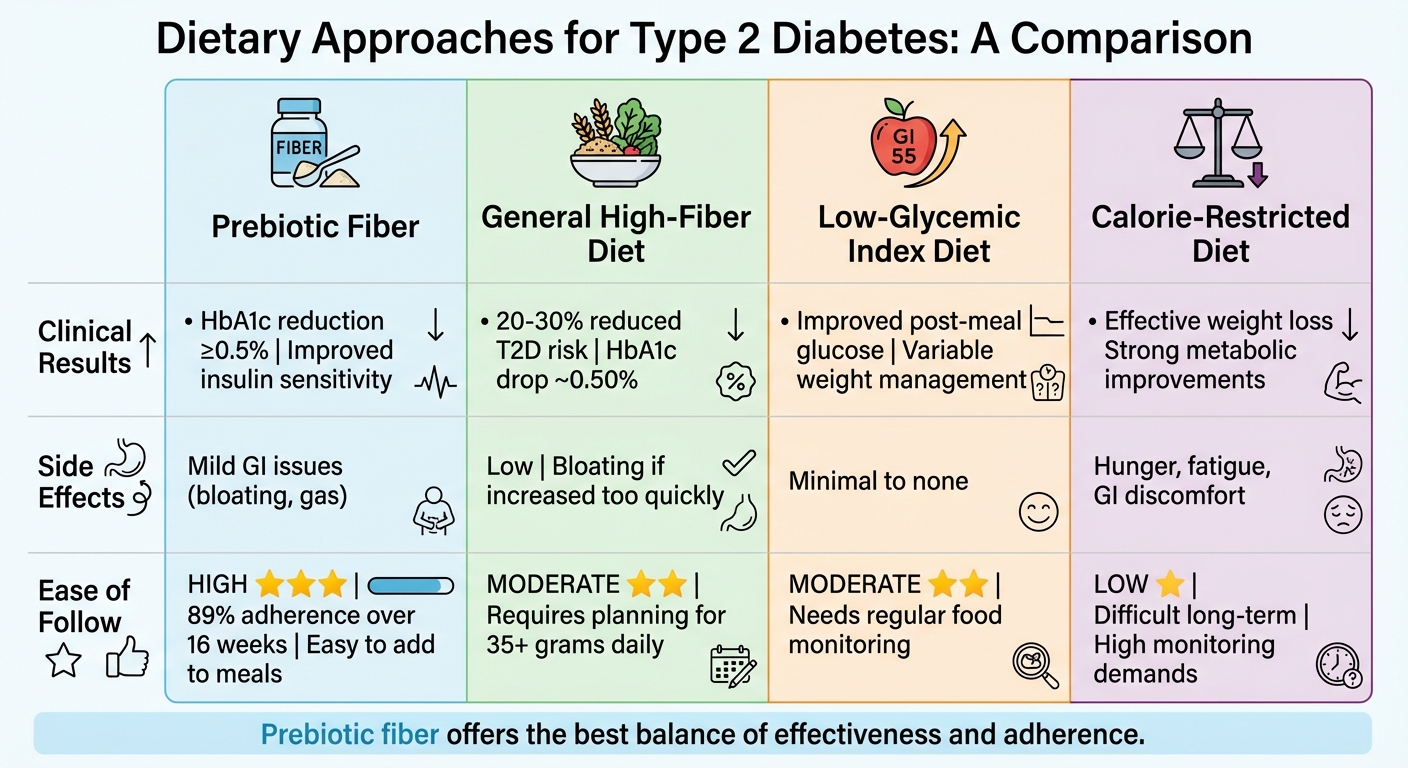
Comparing 4 Dietary Approaches for Type 2 Diabetes Management
When it comes to managing type 2 diabetes through diet, different approaches have their own set of benefits and challenges. Below is a breakdown of how prebiotic fiber interventions, general high-fiber diets, low-glycemic index diets, and calorie-restricted weight-loss plans compare in terms of effectiveness, potential side effects, and ease of adherence.
Dietary Approach
Clinical Results
Side Effects
Ease of Follow
Prebiotic Fiber
Significant reduction in HbA1c (around 0.5% or more) and improved insulin sensitivity.
Mild gastrointestinal issues.
High: Around 89% adherence over 16 weeks; easily incorporated into meals.
General High-Fiber
Linked to a 20–30% reduced risk of developing type 2 diabetes and an HbA1c drop of about 0.50%.
Generally low; bloating possible if fiber intake increases too quickly.
Moderate: Requires careful planning to achieve 35+ grams daily from food alone.
Low-Glycemic Index
Improves post-meal glucose control; weight management results are variable.
Minimal to none reported.
Moderate: Needs regular monitoring of food choices and glycemic index values.
Calorie-Restricted
Effective for weight loss and metabolic improvements.
Hunger, fatigue, and occasional gastrointestinal discomfort are common.
Low: Difficult to sustain long-term due to high daily monitoring demands.
Why Prebiotic Fiber Stands Out
Among these options, prebiotic fiber shines for its simplicity and practicality. Unlike other plans, it doesn't require drastic changes to daily eating habits. Dr. Caitlin Hall from Myota highlights that many traditional methods "are currently resource‐intensive, challenging to maintain over time, and fail to address significant barriers to behaviour change".
In a 24-week study, participants showed nearly 90% adherence to prebiotic fiber interventions while improving insulin sensitivity - all without disrupting their usual routines. This makes it a convenient choice for those seeking manageable adjustments rather than complete dietary overhauls.
For a straightforward way to boost prebiotic intake, products like Resist Nutrition's protein bars offer 14 grams of fiber per serving. These bars provide an easy, structured way to increase fiber consumption while managing calorie intake, making them a less burdensome alternative to restrictive calorie-counting diets.
Challenges with Other Approaches
Calorie-restricted diets deliver short-term benefits but are often hard to stick with due to the constant monitoring and hunger they can cause.
High-fiber diets can be effective, but hitting daily fiber goals through whole foods alone demands significant effort and planning.
Low-glycemic index diets help with blood sugar control but require meticulous food tracking, which can be time-consuming and less practical for everyday life.
This comparison underscores why prebiotic fiber is a practical and sustainable option for managing type 2 diabetes. It strikes a balance between effectiveness and ease, offering a realistic path for long-term blood sugar management without the heavy commitment some other diets require.
Conclusion
Managing type 2 diabetes effectively often requires combining multiple dietary strategies. Among these, prebiotic fiber stands out, especially when paired with other proven methods. Research highlights that prebiotic interventions not only adjust gut bacteria but also help reduce inflammation. For instance, one study noted a 2.02 mg/L decrease in C-reactive protein over a 16-week period. Prebiotic fibers enhance the gut microbiome and improve long-term insulin sensitivity, while viscous fibers - like those found in oats - help moderate blood sugar spikes after meals. As C.V. Hall from Myota GmbH explains:
"Interventions that leverage both prebiotic and postprandial glycaemic benefits represent a dual-pronged approach, acting via non-overlapping yet complementary mechanisms of action".
This combination demonstrates how integrating different fiber sources can offer better metabolic control.
Practical application matters. Aiming for at least 35 grams of fiber daily from a variety of sources - mixing fermentable prebiotics with cereal fibers - can help achieve the 20–30% reduced diabetes risk associated with high fiber intake. It also supports beneficial gut bacteria like Faecalibacterium prausnitzii. For those who find it challenging to meet this goal through diet alone, products like Resist Nutrition's protein bars, which contain 14 grams of fiber per serving, can make it easier without requiring extensive meal prep.
Starting early is critical. Research suggests that prebiotic interventions are most effective during the pre-diabetes stage, especially when HbA1c levels are below 6%. Early action can maximize the chance of reversing metabolic dysfunction. Additionally, combining prebiotics with medications like metformin can amplify their benefits. As Luis Vitetta from The University of Sydney points out:
"The efficacy of drugs such as metformin and sulfonylureas can be enhanced by the activity of the intestinal microbiome elaborated metabolites".
FAQs
What are the best prebiotic fibers for HbA1c improvement?
Research shows that galactomannans and psyllium, both types of soluble fiber, play a key role in reducing HbA1c levels. Additional fibers like xylo-oligosaccharides, gum arabic, inulin, and resistant starch offer similar benefits by promoting gut health and enhancing insulin sensitivity. Including these fibers in your meals can support better blood sugar management and aid in controlling type 2 diabetes.
Can I take prebiotic fiber with metformin?
Taking prebiotic fiber alongside metformin might ease some of the common gastrointestinal side effects while also promoting better gut health. That said, its effect on blood sugar levels isn't the same for everyone - it can differ from person to person. It's important to approach prebiotic fiber with care and always consult your healthcare provider to make sure it fits well with your overall treatment plan.
How do I start prebiotic fiber without bloating?
When introducing prebiotic fiber into your diet, it's best to start small and increase the amount gradually. This gives your gut time to adapt and can help prevent bloating. Choosing low FODMAP fibers - like those found in oats, bananas, or apples - can be easier on your digestion. These soluble fibers are generally gentler for most people. Also, don’t forget to stay hydrated, as water plays a big role in supporting digestion and easing any discomfort. Taking it slow and steady is the best way to minimize bloating and gas.