We're reformulating our bars with an even better recipe. Sign up for early access and get an exclusive re-launch discount.
Daily Fiber Needs for Blood Sugar Control
By Resist Team
Fiber is key to managing blood sugar. It slows glucose absorption, improves insulin sensitivity, and supports overall metabolic health. Most Americans only get 16–17 grams daily, far below the recommended 25–38 grams. Boosting fiber intake can prevent blood sugar spikes, improve energy levels, and reduce the risk of chronic conditions like Type 2 diabetes.
Key Takeaways:
Daily Fiber Needs: 25g for women, 38g for men; or 14g per 1,000 calories.
Best Sources: Oats, beans, lentils, fruits (e.g., apples, pears), whole grains, and vegetables.
High Fiber for Diabetes: 35–50g daily can stabilize glucose and enhance insulin function.
Increase Gradually: Add 5g per week and drink water to avoid digestive issues.
Supplements: Options like psyllium or fortified foods can help if dietary intake falls short.
Incorporating fiber-rich foods like legumes, whole grains, and fruits into meals, along with small changes like eating produce skins or swapping refined grains for whole grains, can make a big difference. For convenience, products like Resist Nutrition bars (14g fiber per bar) can fill gaps while avoiding blood sugar spikes. Start small, stay consistent, and enjoy the benefits of balanced blood sugar and improved health.
Daily Fiber Recommendations by Age, Gender, and Health Condition
Effects of Fibers on Blood Sugar & Glycemic Index – Dr. Berg
sbb-itb-40fb9b7
How Fiber Regulates Blood Sugar
Fiber plays an important role in maintaining stable blood sugar levels, thanks to several biological processes. When you eat foods rich in soluble fiber - like oats, beans, or apples - it absorbs water and forms a gel-like substance in your digestive system. This gel slows down how quickly your stomach empties and delays the breakdown of carbohydrates, which helps prevent rapid spikes in blood sugar. Essentially, this gel acts as a shield, slowing the absorption of glucose into your bloodstream. As explained in StatPearls:
"Soluble fibers... absorb water to form a gel that slows gastric emptying, delays glucose absorption, and blunts postmeal blood sugar spikes."
Soluble fiber also benefits your gut health. In your large intestine, beneficial bacteria ferment soluble fiber to create short-chain fatty acids (SCFAs), such as butyrate, acetate, and propionate. These SCFAs help reduce inflammation and support key metabolic functions that improve insulin sensitivity. To better understand how fiber works, it’s helpful to look at the differences between soluble and insoluble fiber.
Soluble vs. Insoluble Fiber
Knowing the distinction between soluble and insoluble fiber can guide you toward better food choices for blood sugar management.
Soluble fiber dissolves in water, forming the gel that helps regulate blood sugar and even lowers LDL cholesterol. Foods like oats, barley, beans, lentils, and fruits such as pears and citrus are great sources.
Insoluble fiber, on the other hand, doesn’t dissolve in water. Instead, it adds bulk to your stool and speeds up digestion, promoting regular bowel movements. While it doesn’t directly affect glucose absorption, it contributes to overall metabolic health and better insulin sensitivity. You’ll find it in whole wheat products, nuts, seeds, and the skins of fruits and vegetables. Keeping the skins on your produce ensures you get the full benefit.
Fiber Type
Action in Gut
Primary Blood Sugar Benefit
Common Sources
Soluble
Forms a viscous gel with water
Slows glucose absorption and reduces spikes
Oats, beans, lentils, apples, citrus
Insoluble
Adds bulk and speeds transit
Supports insulin sensitivity and regularity
Whole wheat, nuts, seeds, vegetable skins
Daily Fiber Intake Guidelines from Health Organizations
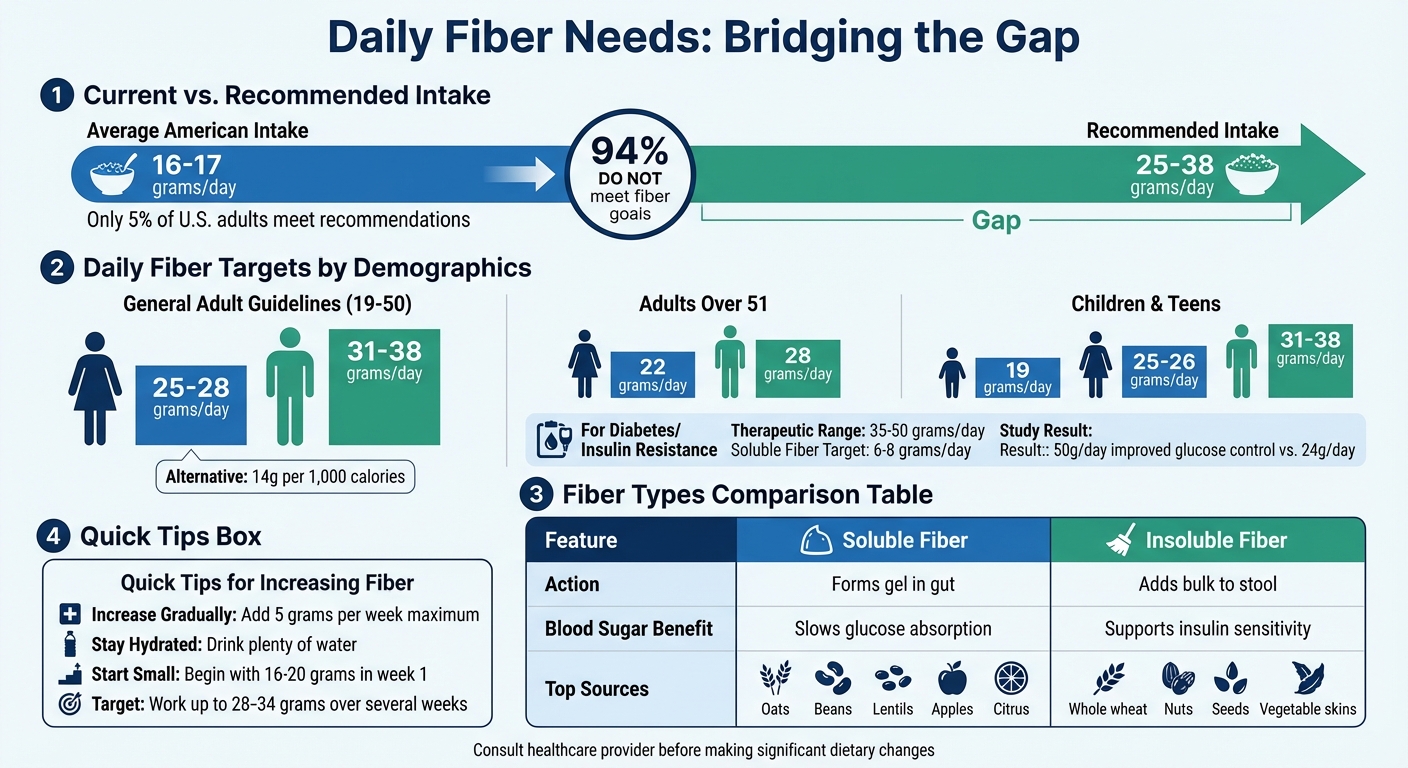
Health experts suggest daily fiber intake should be around 25 grams for women and 38 grams for men. Alternatively, you can calculate your needs as 14 grams of fiber per 1,000 calories consumed. However, most Americans fall short of these recommendations. On average, adults in the U.S. consume only about 17 grams of fiber daily, with an estimated 94% of children and adults failing to meet the suggested intake. This gap highlights an important opportunity to improve blood sugar control and reduce the risk of chronic diseases, especially for those managing conditions like diabetes or insulin resistance.
Daily Fiber Recommendations by Age and Gender
Your fiber needs shift as you age, and understanding these changes can help you manage blood sugar more effectively. A general guideline suggests consuming 14 grams of fiber per 1,000 calories, but specific recommendations depend on factors like age and gender.
Adult Fiber Requirements
For adults aged 19 to 50, the daily fiber recommendation varies: 31 to 38 grams for men and 25 to 28 grams for women. These amounts are essential for maintaining metabolic health and steady blood sugar levels. However, most adults in the U.S. consume only 16–17 grams of fiber daily, falling short of these targets. This gap can disrupt blood sugar balance and potentially increase the risk of insulin resistance over time.
Fiber Needs for Different Age Groups
Fiber requirements also change across life stages. For example:
Young children: About 19 grams daily
Older children and teens: 25 to 26 grams for girls; 31 to 38 grams for boys
Adults over 51: 22 grams for women; 28 grams for men
Fiber remains essential for digestive health and blood pressure management, yet only 5% of U.S. adults meet these recommendations.
Fiber Targets for Diabetes and Insulin Resistance
For those managing diabetes or insulin resistance, higher fiber intake can significantly improve blood sugar control. Studies suggest consuming 35 to 50 grams of fiber daily to enhance insulin sensitivity and stabilize glucose levels. A study published in the New England Journal of Medicine revealed that individuals with type 2 diabetes who consumed 50 grams of fiber per day (compared to 24 grams) experienced notable improvements in pre- and post-meal glucose levels, along with better insulin function. Soluble fiber, in particular, was effective, with 6 to 8 grams daily helping to slow glucose absorption.
"Higher fiber diets may have additional benefits for individuals with diabetes, including reducing blood sugar, lowering insulin and lowering cholesterol."
When increasing fiber intake, add no more than 5 grams per week to allow your digestive system to adjust, and ensure you drink plenty of water to avoid constipation.
High-Fiber Foods for Blood Sugar Control
Adding high-fiber foods to your diet can help keep blood sugar levels steady and support daily nutritional goals. Anna Taylor, RD, LD, highlights the benefits:
"Fiber... keeps your blood sugar levels from spiking and makes you feel full longer, which can help you lose weight".
Here’s a breakdown of some top high-fiber foods that can help manage blood sugar effectively.
Whole Grains, Legumes, and Vegetables
Legumes are fiber powerhouses. For instance, a cup of boiled lentils contains 18 grams of fiber, while split peas and black beans offer 16 grams and 15 grams, respectively. Whole grains like oats are also essential. Anna Taylor explains:
"Oats... have a type of soluble fiber called beta-glucan, which may help with blood sugar control by slowing the rate at which your blood absorbs glucose, or sugars".
Rolled or steel-cut oats are better choices than instant varieties, with one cup of cooked oats delivering 5 grams of fiber. Other options like whole-wheat pasta and barley retain their fiber and nutrients, unlike refined versions. Vegetables also play a key role. For example, artichoke hearts provide 14 grams of fiber per cooked cup, along with vitamins K, C, and B9, which support metabolic health. Broccoli, leafy greens, and other high-fiber vegetables further contribute to glucose stabilization.
Fruits, Nuts, and Seeds
Fruits, nuts, and seeds are another excellent way to boost fiber intake. Blackberries and other berries not only offer substantial fiber but also help reduce inflammation and improve blood sugar levels. Pears are rich in soluble fiber, which slows digestion and glucose absorption. Chia seeds pack 10 grams of fiber into just two tablespoons, while a tablespoon of ground flaxseed adds an extra 2 grams, making it easy to incorporate into meals. Nuts like almonds provide both fiber and healthy fats, which further aid in maintaining stable blood sugar levels.
Prebiotic Fiber Sources
Prebiotic fiber is especially valuable because it nourishes beneficial gut bacteria, which play a role in improving metabolic health and insulin sensitivity. Ryan Bradley, ND, MPH, from the Diabetes Action Research and Education Foundation, explains:
"Fiber provides important nutrition for the bacteria to live and prosper, and so they are called pre-biotics".
Foods rich in inulin, such as jicama, onions, legumes, and Jerusalem artichokes, are excellent prebiotic sources. These foods help slow the absorption of sugar and fat from meals, reducing post-meal glucose spikes. Chickpeas, for example, provide 12 grams of fiber per cooked cup and serve as both a prebiotic and a protein source.
Incorporating these foods into your diet can make a meaningful difference in managing blood sugar while supporting overall health.
How to Meet Your Daily Fiber Goals
Hitting your daily fiber intake can feel tricky, especially since many Americans consume only about half the recommended amount. But with a bit of planning, you can close the gap and enjoy the health perks of a fiber-rich diet.
Meal Planning for Higher Fiber Intake
Adding fiber to every meal is a simple way to keep your levels consistent and support steady blood sugar control. Emily Lachtrupp, M.S., RD, highlights its importance:
"Fiber, a type of indigestible carbohydrate, has many health benefits, including improved blood sugar".
Start your day with options like berry-walnut baked oatmeal or Greek yogurt topped with high-fiber granola and fruit. For dinner, prep dishes that work as leftovers - lentil soup or a quinoa salad with chickpeas are excellent choices. These meals save time and make it easier to maintain your fiber intake.
Snacks are another opportunity to sneak in fiber. Reach for edamame, almonds, pistachios, or pair veggies with cottage cheese. Even small swaps, like choosing whole-wheat bread over white or eating fruit with the peel, can make a big difference. Aiming for at least 28 grams of fiber daily becomes manageable when you consistently make these choices. Plus, these habits not only boost fiber but also help stabilize blood sugar levels - a win-win.
Once you've built a solid foundation of fiber-rich meals, the next step is to gradually increase your intake.
Increasing Fiber Gradually
Adding too much fiber too quickly can lead to digestive discomfort, such as gas or bloating. Jessica Ball, M.S., RD, advises:
"Upping your intake too quickly can be challenging for the digestive system to manage".
To avoid this, start with 16–20 grams of fiber in the first week, then increase by about 4 grams each week until you reach 28–34 grams. This gradual approach allows your gut to adjust. For example, if you're used to refined grains, try mixing brown rice with white rice or adding half a cup of beans to your salad - just that small portion can provide 7–8 grams of fiber. You can also sprinkle oat bran or wheat germ on yogurt or soup for an easy boost.
If whole foods aren't enough to meet your goals, supplements and fortified foods can help fill the gap.
Fiber Supplements and Fortified Foods
Whole foods should always be your go-to for fiber, but supplements and fortified products can be useful when your diet falls short. Beth Czerwony, RD, LD, from Cleveland Clinic, explains:
"Food is your best source of fiber, but supplements can help if you're not able to get adequate amounts through diet".
Certain fibers, like psyllium, guar gum, and oat bran, are particularly effective for improving blood sugar and cholesterol levels in people with type 2 diabetes. The key is viscosity - fibers that form a thick gel in your digestive tract slow sugar absorption. Powdered supplements are often better than capsules since they’re more affordable and easier to mix into meals or drinks.
When choosing fortified foods, look for labels that say "excellent source" of fiber, which means they contain at least 5 grams per serving. As with dietary fiber, increase supplemental fiber slowly - no more than 5 grams per week - and stay hydrated to prevent constipation and keep things moving.
With these strategies, meeting your fiber goals becomes less of a challenge and more of a daily habit.
When whole foods aren’t an option, Resist Nutrition bars offer a simple way to maintain a high-fiber diet and steady blood sugar levels. These bars are an easy, portable solution for those moments when preparing or accessing whole foods just isn’t practical.
Nutrition Profile of Resist Bars
Each Resist Nutrition bar packs 14 grams of fiber, covering 37-56% of the daily fiber adults need. Along with fiber, you’ll get 12 grams of plant protein and prebiotic fiber, which work together to slow carbohydrate digestion and help keep blood sugar levels stable. The prebiotic fiber also supports gut health by nourishing beneficial bacteria, promoting better digestion and overall metabolic balance.
What’s inside? A clean ingredient list. Resist bars are free from sugar alcohols, gluten, soy, and added sugars - common culprits behind digestive discomfort and erratic glucose spikes. With only 4 grams of net carbs and 1-2 grams of sugar per bar, they’re designed to avoid the blood sugar surges often caused by traditional protein bars. Every ingredient has a purpose, from the plant-based protein to the superfood additions, making these bars a thoughtful choice for your nutritional needs.
Available Flavors and Their Benefits
Resist bars come in three distinct flavors, each packed with ingredients that provide targeted health benefits:
Flavor
Ingredients
Benefits
Cinnamon Chocolate Chip
Cinnamon, Maca, Cacao
Cinnamon improves insulin sensitivity and helps lower fasting blood sugar
Goji Cherry Chocolate Chip
Goji Berries, Chia Seeds
Antioxidants and polyphenols promote metabolic health and reduce inflammation
Peanut Butter Turmeric
Peanut Butter, Turmeric
Combines healthy fats with turmeric’s anti-inflammatory properties for blood sugar and hormone balance
The Cinnamon Chocolate Chip flavor uses cinnamon to enhance insulin function, while Goji Cherry Chocolate Chip brings antioxidant power from goji berries and omega-3s from chia seeds. Meanwhile, Peanut Butter Turmeric pairs the creamy richness of peanut butter with turmeric’s anti-inflammatory benefits. Each box of 12 bars costs $39.95, and there’s a sampler option for those who want to try all three flavors.
Why Choose Resist Nutrition
Resist bars are perfect for a mid-morning or afternoon snack, offering steady energy without the dreaded sugar crash. Their vegan and keto-friendly formulation means they work for a range of dietary needs, whether you’re plant-based, managing diabetes, or just looking to boost your fiber intake. Plus, they’re shelf-stable and don’t need refrigeration, making them ideal for busy lifestyles, travel, or anyone who struggles to meet their fiber goals through meals alone.
It’s important to note that these bars are meant to complement, not replace, whole foods like vegetables, legumes, and whole grains. Start with one bar every other day to let your system adjust, and pair it with water or unsweetened beverages to maximize the prebiotic fiber’s benefits. If you have insulin resistance, try eating a handful of nuts alongside the bar to further stabilize your blood sugar. Resist bars are a convenient way to support blood sugar control and metabolic health, aligning with the broader dietary recommendations outlined in this guide.
Conclusion
Getting enough fiber every day plays a major role in managing blood sugar and supporting long-term health. By slowing down carbohydrate absorption and promoting gut health, fiber helps maintain steady blood sugar levels. Despite its importance, only about 5% of U.S. adults meet the recommended daily intake, with most consuming just 16 grams per day instead of the suggested 25-38 grams.
Making small changes to your diet can lead to noticeable improvements. Swapping refined grains for whole-grain options, adding beans to your meals, or choosing high-fiber snacks are easy ways to boost your intake. Research published in the New England Journal of Medicine found that people with diabetes who ate 50 grams of fiber daily had better glucose control compared to those consuming less. Even modest increases, like an extra 7 grams of fiber daily, can lower fasting glucose by about 10 mg/dL.
It’s important to increase fiber gradually to avoid digestive discomfort. Beth Czerwony, RD, LD, from Cleveland Clinic, recommends:
"To avoid bloating and gas, add in no more than 5 grams of fiber per week until you reach your individual goal".
Staying hydrated and focusing on whole foods - like vegetables, legumes, fruits, and whole grains - can make the transition easier. Dr. Walter Willett from Harvard T.H. Chan School of Public Health also offers simple advice:
"Keep it simple, and just focus on eating a variety of fiber-rich foods and avoiding refined grains".
Whether you’re managing diabetes, dealing with insulin resistance, or just aiming for stable energy levels, fiber is a game-changer. Pair whole-food sources with options like Resist Nutrition bars, and you’ll be on track for better blood sugar control and overall metabolic health.
FAQs
How do I calculate my personal fiber goal?
To figure out your daily fiber goal, you should aim for 14 grams of fiber per 1,000 calories you consume each day.
First, figure out how many calories you need daily. This depends on factors like your age, sex, activity level, and health goals.
Then, multiply your daily calorie intake by 0.014. For instance, if you consume 2,000 calories a day, your fiber target would be around 28 grams (2,000 x 0.014).
What’s the easiest way to add more soluble fiber?
The easiest way to add more soluble fiber to your diet is by including foods like oats, barley, beans, apples, citrus fruits, chia seeds, and psyllium. These foods dissolve in water, forming a gel-like substance in your gut. This gel helps slow down the absorption of sugar, keeping your blood sugar levels steady. Incorporating them into your meals or snacks is a simple and effective way to increase your soluble fiber intake.
How can I increase fiber without bloating?
To help prevent bloating, slowly introduce fiber-rich foods into your meals. Include options like whole grains, fruits, vegetables, legumes, and nuts. This gradual approach gives your body time to adapt. Make sure to drink plenty of water too - it helps fiber pass through your system more easily. If you’re looking for a convenient option, consider fiber-packed snacks like Resist Nutrition bars. Each bar contains 13-15 grams of fiber, offering a manageable way to boost your intake without overloading your digestion.