We're reformulating our bars with an even better recipe. Sign up for early access and get an exclusive re-launch discount.
Ultimate Guide to Prebiotic Fiber and Blood Sugar
By Resist Team
Prebiotic fiber can help steady blood sugar, but the effect is usually small and builds with time. If I want the short version, it’s this: beta-glucan can help lower post-meal spikes, while inulin, resistant starch, and GOS may help with fasting glucose and insulin response over weeks.
Here’s what matters most:
Not all fiber works the same way
Prebiotic fiber feeds gut bacteria
Some fibers slow how fast glucose enters the blood
Whole foods should come first
Packaged fiber products can help, but ingredient type matters
Adding too much too fast can cause gas and bloating
If I take diabetes medication, I should track blood sugar when I increase fiber
A few key facts from the article:
In one trial, 20 g/day of mixed prebiotic fiber improved insulin sensitivity and lowered inflammation
In a meta-analysis, about 10 g/day for 8 weeks lowered HbA1c and fasting insulin in people with type 2 diabetes
IMO is not counted as dietary fiber by the FDA and may increase blood sugar
10 g/day of inulin for 2 months lowered fasting plasma glucose and HbA1c in women with type 2 diabetes
My main takeaway: if I want help with blood sugar, I should focus less on the word “fiber” and more on the type of fiber.
Prebiotic Fiber Types for Blood Sugar: Which One Is Right for You?
The Research Backs This Blood Sugar Regulating Supplement
sbb-itb-40fb9b7
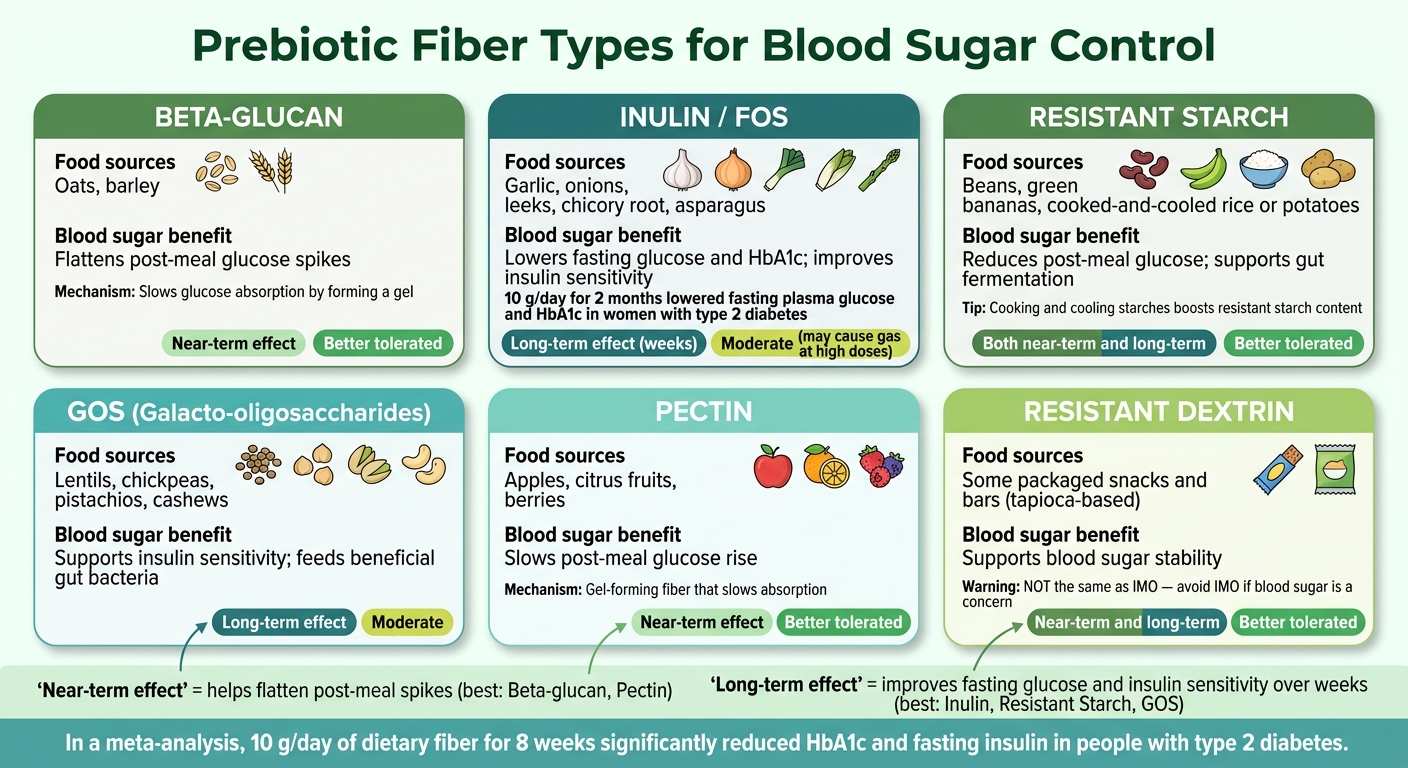
Quick comparison
Fiber type
Best-known food sources
Main use for blood sugar
Notes
Beta-glucan
Oats, barley
Helps flatten post-meal spikes
Works by slowing absorption
Inulin / FOS
Garlic, onions, leeks, chicory root
Helps with fasting glucose and insulin response over time
Can cause gas at higher amounts
Resistant starch
Beans, green bananas, cooked-and-cooled rice or potatoes
Helps with post-meal glucose and gut fermentation
Often easier on digestion
GOS
Lentils, chickpeas, pistachios, cashews
May support insulin response
Feeds gut bacteria tied to metabolic health
Pectin
Apples, citrus, berries
Helps slow post-meal glucose rise
Gel-forming fiber
Resistant dextrin
Some packaged snacks and bars
Can support steadier blood sugar
Check labels; not the same as IMO
If I’m keeping it simple, a smart daily plan looks like this:
Oats or barley for breakfast
Beans or lentils at lunch or dinner
Garlic, onions, or leeks in meals
Cooked-and-cooled starches like rice or potatoes now and then
Start low, add more over 2–3 weeks, and drink enough water
Bottom line: prebiotic fiber is a support tool, not a fix on its own. It works best as part of a full eating pattern and medical plan.
What Prebiotic Fiber Is and Which Types Matter Most
Prebiotic fiber is a nondigestible carbohydrate that makes it to the colon, where gut microbes ferment it. But not every fiber makes the cut. For a fiber to count as a true prebiotic, it needs to selectively feed beneficial gut bacteria.
That point matters more than it may seem at first glance. Different fiber types can affect glucose response in different ways. And when the goal is blood sugar support, only some fibers have the strongest evidence behind them.
Prebiotic Fiber vs. Dietary Fiber vs. Probiotics
People often lump these terms together, but they mean different things.
Dietary fiber is the big umbrella category. Prebiotic fiber is one part of that category, and its job is to feed specific gut microbes. Probiotics, on the other hand, are live microbes. Prebiotics are what those microbes eat.
In the United States, the FDA has also tightened labeling rules. Some ingredients, including isomalto-oligosaccharides (IMO), are no longer counted as "dietary fiber" on labels because they may raise blood sugar and don't meet the FDA's fiber standards.
The Main Prebiotic Fibers Linked to Blood Sugar Support
May improve insulin sensitivity and lower fasting glucose and HbA1c
Resistant Starch
Cooked and cooled potatoes and rice, legumes, green bananas
Resists digestion in the small intestine and can reduce postprandial glucose
Beta-glucan
Oats, barley, mushrooms
Forms a gel that slows glucose absorption after meals
GOS
Legumes, cashews, pistachios, milk
May help reduce inflammatory markers linked to insulin resistance
These fibers don't all work the same way. Inulin and FOS ferment into short-chain fatty acids. Beta-glucan slows absorption. Resistant starch reaches the colon and feeds bacteria that produce SCFAs.
So when someone says "fiber helps blood sugar", that's only part of the story. The type of fiber plays a big role in what happens next.
How Prebiotic Fiber Can Support Steadier Glucose Levels
Prebiotic fiber can help with blood sugar in two main ways: it feeds gut microbes, and it slows digestion. That matters for fasting glucose, post-meal spikes, and longer-term A1c.
The Gut-Blood Sugar Connection
When prebiotic fiber reaches the colon, gut bacteria ferment it into short-chain fatty acids (SCFAs) - mainly acetate, propionate, and butyrate. These compounds don't just sit there. They send signals that affect how the body deals with glucose.
SCFAs bind to receptors on enteroendocrine L-cells and can trigger the release of GLP-1, a hormone that helps the body release insulin and slows gastric emptying. In plain English, that means food leaves the stomach more slowly, so glucose enters the bloodstream at a gentler pace after a meal. Butyrate also helps support the gut barrier, which may lower gut-driven inflammation that gets in the way of insulin signaling.
Viscous fibers like beta-glucan can also slow gastric emptying and reduce how fast glucose is absorbed.
What the Research Shows and Where Results Vary
That helps explain why some studies find faster post-meal effects, while others show slower changes in insulin and metabolism over time. Some fibers work more like a brake on digestion. Others need time because they depend on fermentation in the gut.
In a 66-person trial, 20 g/day of a mixed prebiotic fiber blend improved insulin sensitivity and lowered inflammation. In a separate meta-analysis, dietary fiber at a median dose of 10 g/day for 8 weeks significantly reduced HbA1c and fasting insulin in people with type 2 diabetes.
Results don't look the same for everyone. A few things shape the response:
The type of fiber
The dose and how long it's used
A person's gut microbiome
Baseline metabolic health
If someone's microbiome doesn't ferment a given fiber well, they may not get much from it. And people earlier in the disease process often see larger gains than those with advanced type 2 diabetes. Fermentable fibers usually take more time to show an effect, while viscous fibers can cut post-meal spikes sooner.
Next: which foods deliver these fibers most efficiently.
Best Food Sources of Prebiotic Fiber and How to Compare Them
Foods That Naturally Provide Prebiotic Fiber
Prebiotic fibers don’t all do the same job. Some help blunt the blood sugar bump that happens after you eat. Others do more for insulin sensitivity and fasting glucose over time. So the “best” food depends on what you want help with.
Garlic, onions, and leeks are good sources of inulin and FOS. Asparagus and chicory root also provide a lot of these fibers.
If your goal is better post-meal glucose control, oats and barley are the standouts. Their beta-glucan slows glucose absorption after meals. And form matters here: steel-cut oats and whole barley keep more of that effect than finely milled versions.
Beans and lentils pull double duty. They provide resistant starch and soluble fiber, which can help with both short-term and longer-term blood sugar control.
There’s also a simple food-prep trick that can help: cooking potatoes, rice, or pasta and then cooling them boosts their resistant starch content.
Prebiotic Fiber Types and Food Sources: A Comparison Table
Sometimes the fiber type matters more than the food name on your plate. Here’s a side-by-side look at the main options and what they do.
Fiber Type
Common Food Sources
Main Mechanism
Digestive Tolerance
Blood Sugar Relevance
Inulin / FOS
Chicory root, garlic, onions, leeks, asparagus
Fermentation; SCFA production
Moderate (may cause gas at high doses)
Improves fasting glucose and insulin sensitivity
Resistant Starch
Cooked-and-cooled potatoes/rice, green bananas, beans
Ferments in the colon
Better tolerated
Reduces post-meal glucose
Beta-Glucan
Oats, barley
Slows glucose absorption
Better tolerated
Flattens post-meal spikes
GOS
Lentils, chickpeas, cashews, pistachios
Stimulates Bifidobacterium and Lactobacillus
Moderate
Supports insulin sensitivity
Pectin
Apples, citrus fruits, berries
Gel-forming; slows absorption
Better tolerated
Reduces post-meal glucose rise
Resistant Dextrin
Packaged snacks (tapioca-based)
Fermentation; feeds beneficial bacteria
Better tolerated
Supports blood sugar stability without a rapid glucose rise
Here’s the plain-English version: if you want to flatten blood sugar spikes after meals, beta-glucan and pectin are your best near-term tools. If you’re thinking more about insulin sensitivity over weeks, inulin, resistant starch, and GOS are better fits.
You can also mix both approaches without turning your diet upside down. Oats in the morning, beans or lentils at lunch, and garlic or onions in regular meals gives you coverage from more than one angle.
When a Packaged Prebiotic Fiber Snack May Help
Whole foods should do most of the work. But life happens. Travel days, busy afternoons, and missed meal prep can make packaged options useful.
The main thing to check is the fiber type. Resistant dextrin resists digestion and can help support blood sugar stability. Isomalto-oligosaccharides (IMO) are a different story: they can spike blood sugar and are no longer classified as dietary fiber by the FDA.
Resist Nutrition protein bars use resistant dextrin, 14 g of fiber, 12 g of plant protein, and 0 g of added sugar, which makes them a practical option when whole-food fiber isn’t convenient.
Packaged fiber works best as a backup plan, not the center of your routine.
How to Add Prebiotic Fiber Safely and Use It in Daily Meals
Start Low, Increase Gradually, and Watch Digestion
Once you know which fibers can help, the next step is using them in a way your gut can handle. The aim is steadier blood sugar without a bunch of stomach trouble.
The mistake people make most often is simple: they add too much prebiotic fiber too fast. A better move is to add one new prebiotic food every 3–4 days, then increase every few days over 2–3 weeks to help limit gas and bloating. If you're using a supplement, start at the low end of the suggested range - for example, 2 g of inulin - and build up slowly. With viscous fibers like beta-glucan and psyllium, drink enough water. They tend to work better and feel easier on digestion that way. It also helps to spread fiber across your meals instead of taking one big hit all at once.
How to Read Labels and Choose Products Wisely
Packaged foods can help, but only if the fiber source is the right one. Front-of-pack claims can sound great and still tell you very little. Not every ingredient sold as "fiber" acts the same way in the body, so the type of fiber matters more than the big number on the package.
When you read a label, look for ingredients like inulin, chicory root fiber, resistant starch, resistant dextrin, or soluble tapioca fiber. These fibers resist digestion and help feed gut bacteria. Skip products with IMO if blood sugar is your concern; it is not a reliable fiber for that purpose. The ingredient list matters more than the front label.
It also helps to look at the whole product, not just the fiber claim:
Check fiber, protein, and added sugar together
Choose bars with fiber, protein, and little or no added sugar
Who Should Monitor More Closely
People working on blood sugar or digestive symptoms should take an even slower approach. As fiber intake goes up, glucose patterns can shift, so tracking matters most for anyone managing diabetes or prediabetes.
People with type 2 diabetes or prediabetes should monitor blood sugar when making bigger changes to fiber intake. Research shows that 10 g of inulin daily for two months can significantly reduce fasting plasma glucose and HbA1c levels in women with type 2 diabetes. If you're taking glucose-lowering medication, that change may mean it's time to talk with your clinician about dose adjustments. Fiber can work alongside diabetes medication, but it does not replace it.
People with IBS or other digestive conditions should increase fiber more slowly. It's smart to check with a healthcare professional before making major diet changes. If you're taking oral diabetes medication, separate large fiber doses from that medication by a few hours. And if you're unsure how much fiber makes sense for you, a short check-in with a healthcare professional is a smart move.
Conclusion: The Role of Prebiotic Fiber in Blood Sugar Management
Taken together, the evidence points to a clear pattern: prebiotic fiber helps with blood sugar mostly by feeding gut bacteria and increasing short-chain fatty acid production. Those compounds help support gut health and glucose control. The effect builds over time, not all at once.
The main takeaway is timing and consistency. The effects are modest but meaningful. Viscous fibers like beta-glucan can help blunt post-meal glucose spikes fairly soon, while fermentable fibers like inulin and resistant starch tend to build metabolic effects over weeks and months. So the goal is simple: get it in daily, expect modest shifts, and match the type of fiber to what you want help with.
Whole-food sources like oats, barley, legumes, garlic, and chicory should still be the default. If convenience is the problem, a packaged option like Resist Nutrition bars - with prebiotic fiber, plant protein, and no added sugar - can help fill the gap. Think of that as a backup, not the base.
Prebiotic fiber is a support tool, not a cure. When you use it steadily alongside a balanced diet and prescribed treatment, it can help support steadier glucose and better metabolic health.
FAQs
Which prebiotic fiber is best for blood sugar?
It depends on your goal.
For post-meal blood sugar control, viscous, soluble fibers like beta-glucan from oats and barley tend to work best. They slow carbohydrate absorption, which can help blunt the spike after you eat.
For long-term insulin sensitivity and hormone support, fermentable fibers like chicory inulin, resistant starch, and resistant dextrin are a better fit. These fibers feed gut bacteria, and that can support metabolic health over time.
In many cases, a mix of fibers works best instead of putting all your chips on one type. Resist Nutrition bars include prebiotic resistant dextrin to help support stable glucose levels.
How long does prebiotic fiber take to work?
Most people notice better blood sugar control within 2 to 4 weeks of taking prebiotic fiber every day. Broader metabolic changes often become more noticeable over 8 to 16 weeks.
Your gut needs time to adjust, so it helps to start with 3 to 5 grams per day and work up over the next several weeks. The big thing here is consistency: daily intake matters.
How much prebiotic fiber should I start with?
Start small: 3 to 5 grams per day is a good place to begin. That can help cut down on digestive discomfort while your body gets used to more fiber.
Then increase your intake little by little over a few weeks until you reach 5 to 20 grams per day.
As you add more fiber, drink plenty of water. Fiber needs water to form the gel that can slow glucose absorption.