

10 Vegan Iodine Sources for Plant-Based Diets
If you eat vegan, iodine is one nutrient you need to plan for. Adults need 150 mcg a day, and pregnancy or lactation needs are higher at about 200 mcg. Here’s the short version: Iodized...

My starting point: pair 1 tablespoon of ground flax or chia with protein and fiber - not just extra fat. That serving provides about 1.6–2.1 grams of plant omega-3s, but it won’t treat diabetes or PCOS.
Here’s the approach I’d use:
My bottom line: the whole eating pattern matters more than one ingredient. <u>Food choices support care; they don’t replace treatment.</u> If you have diabetes or PCOS, take glucose-lowering medication, or are pregnant, discuss major diet changes with your care team.
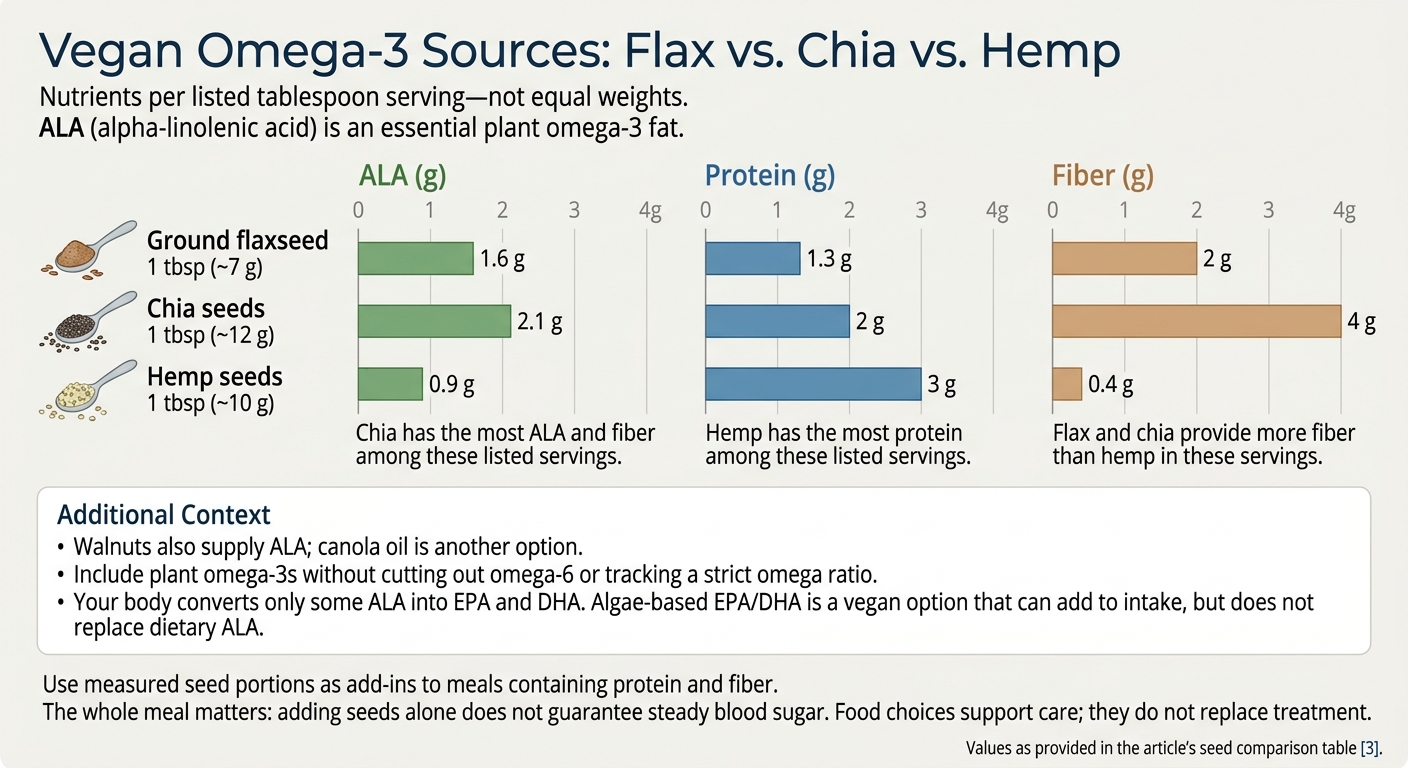
Vegan Omega-3 Sources: Flax vs. Chia vs. Hemp
You don’t need to cut out omega-6 or strictly track your omega-3:omega-6 ratio. Instead, work whole-food ALA sources into balanced meals using measured portions.
ALA, or alpha-linolenic acid, is an essential omega-3 fat found in plant foods. These vegan sources make it easy to add ALA to meals:
| Food | Household serving | ALA | Protein | Fiber |
|---|---|---|---|---|
| Ground flaxseed | 1 tbsp (~7 g) | 1.6 g | 1.3 g | 2 g |
| Chia seeds | 1 tbsp (~12 g) | 2.1 g | 2 g | 4 g |
| Hemp seeds | 1 tbsp (~10 g) | 0.9 g | 3 g | 0.4 g |
Walnuts supply ALA, too, while canola oil offers a neutral option for cooking. Among the seed servings above, flax and chia provide the most fiber.
For long-chain omega-3s, algae-based EPA/DHA is the vegan option. Your body converts only some ALA into EPA and DHA. Algae-derived EPA/DHA can add to your intake, but it doesn’t replace dietary ALA.
Use seeds as meal add-ins rather than stand-alone snacks. If you have insulin resistance or PCOS, pairing fats with protein and fiber can help moderate post-meal glucose spikes.
Instead of… Try… Purpose Fruit alone Fruit with a measured portion of walnuts Adds fat, protein, and fiber A carbohydrate-heavy bowl A protein-and-vegetable bowl topped with hemp seeds Adds ALA while keeping protein and fiber central Adding seeds without a plan Measuring ground flax or chia into a protein-containing meal Supports portion awareness and balanced meals
The whole meal matters: adding seeds alone doesn’t guarantee steady blood sugar.
After measuring your omega-3 source, round out your plate with protein and fiber. Pair an omega-3 source with vegan protein and fiber-rich carbs or nonstarchy vegetables to help reduce post-meal glucose spikes.
Give tofu, tempeh, lentils, beans, edamame, or unsweetened soy yogurt a place at breakfast, lunch, and dinner. Aim for a solid serving of protein at each main meal. Nuts and seeds can add protein, but they usually don’t provide enough on their own.
Check plant-based milk and yogurt labels for protein per serving and added sugars. The amounts can vary, so don’t assume every option offers the same nutrition.
Breakfast: Overnight oats or chia pudding with chia or flax, unsweetened soy yogurt, and berries. Keep the berry portion modest and the protein base unsweetened. Prep it the night before.
Lunch: Quinoa or farro with lentils or chickpeas, walnuts, and nonstarchy vegetables. Keep the grain portion moderate and let vegetables fill most of the bowl. Lentils or chickpeas supply protein; walnuts add omega-3s.
Dinner: Tofu or tempeh with roasted broccoli or Brussels sprouts and hemp seeds or tahini. Make tofu or tempeh the anchor, with vegetables as the largest side.
For snacks, use the same mix: protein, fiber, and a measured omega-3 source.
Plan meals around your work, sleep, exercise, and medication schedule. Use snacks when a long gap between meals leaves you overly hungry or craving carbs alone. If meal times get irregular, a planned snack beats grazing.
Pair walnuts with berries and unsweetened soy yogurt, or make chia pudding with unsweetened fortified plant milk and added protein.
Measure portions of nuts and seeds, and choose unsweetened ingredients. Packaged bars can work, too - just check that the label fits your goal.
Resist Nutrition offers vegan, keto-friendly bars with plant protein, prebiotic fiber, no added sugars, and no sugar alcohols. Look at the serving size, protein, fiber, total carbohydrate, and allergens rather than relying on “keto” or “net carbs” claims.
Prebiotic fiber may cause gas or bloating for some people. Treat the bar as part of a planned eating pattern, not a stand-alone blood sugar fix.
Choose an eating schedule you can stick with, and include enough protein, fiber-rich carbohydrates, and unsaturated fats. If you monitor glucose, review repeated patterns in your readings after meals with your care team.
Get clinical guidance before making major dietary changes if you have diabetes, take glucose-lowering medication, are pregnant, or have diagnosed PCOS. High-fat or high-fiber snacks do not replace prescribed rapid-acting carbohydrates for hypoglycemia.
Put the meal formula to work each day: eat ALA-rich foods such as ground flaxseed, chia seeds, or walnuts, and measure your portions.
Build each main meal around protein and fiber, and work with your care team to tailor your intake. Add protein-and-fiber snacks when they help you stay steady between meals.
Consistency matters more than a strict omega ratio. Use this checklist to support steady blood sugar and care tailored to your insulin resistance or PCOS - not to replace treatment.
Pay attention to how you feel after eating, including your energy level and any symptoms. Meals with omega-3 fatty acids, protein, and fiber should help keep your energy steady rather than cause spikes and crashes. Feeling satisfied for 2 to 3 hours is one sign that your meal is well-balanced.
Shakiness, dizziness, or irritability between meals may point to reactive hypoglycemia, though these symptoms can have other causes. Over time, regularly eating these healthy fats may help improve insulin sensitivity and ease intense food cravings.
Aim for a balanced snack every 3 to 4 hours, and adjust the timing around exercise to stay fueled without large blood sugar spikes or crashes. Combine protein, fiber, and healthy fats to slow digestion and release energy gradually. Resist Nutrition bars offer a convenient way to get this mix on the go.
Omega-3s may help support insulin sensitivity and reduce inflammation in PCOS. Take a look at your meals: Are omega-3 sources missing, or do you often notice blood sugar swings after snacks?
Try adding walnuts, chia, ground flax, or hemp seeds, paired with protein and fiber to help limit glucose spikes. If you’re thinking about taking algae-based omega-3 supplements, talk with a clinician first.

