We're reformulating our bars with an even better recipe. Sign up for early access and get an exclusive re-launch discount.
Pre-Meal Protein Strategies for Diabetes Management
By Resist Team
Eating protein before meals can significantly help manage blood sugar levels, especially for people with diabetes. Here's why:
Protein slows digestion: It delays stomach emptying, leading to a gradual glucose release and fewer blood sugar spikes.
Triggers key hormones: Pre-meal protein stimulates GLP-1, a hormone that enhances insulin release and reduces glucagon, which helps control blood sugar.
Proven results: Studies show protein before meals can reduce post-meal glucose spikes by up to 37% and insulin response by 40%.
How to apply this:
Consume 15–30g of protein 10–30 minutes before eating carbs.
Options include whey protein, almonds, tofu, or lean meat.
Pair protein with fiber for even better results.
This simple adjustment can improve blood sugar stability and reduce long-term health risks. Always consult your doctor for personalized advice.
I Told My Diabetic Patients to Eat This Before Carbs - Here’s What Happened
sbb-itb-40fb9b7
The Problem: Post-Meal Blood Sugar Spikes
After eating, blood sugar levels naturally rise. But for people with diabetes, this increase can be excessive and prolonged - a condition called postprandial hyperglycemia (PPHG). This refers to a sharp spike in blood glucose after meals, especially those high in carbohydrates. In a healthy body, insulin works efficiently to move glucose into cells. However, in diabetes - whether due to a complete absence of insulin (Type 1) or reduced insulin sensitivity and secretion (Type 2) - glucose remains in the bloodstream, causing levels to soar. These uncontrolled spikes not only strain the body's systems but also contribute to serious long-term health issues.
Why Post-Meal Blood Sugar Spikes Are a Health Concern
Frequent blood sugar spikes can cause significant harm by damaging endothelial cells, which line blood vessels. This accelerates complications affecting the heart, kidneys, and nerves.
"Glucose variability can have particularly harmful effects, specifically triggering apoptosis of endothelial cells and contributing to significant endothelial cell damage." - Seema Gulati and Anoop Misra, Diabetes Foundation (India)
Even after blood sugar levels improve, the damage from past spikes can persist, a phenomenon known as metabolic memory. Studies have also shown that post-meal hyperglycemia is linked to a twofold increase in cardiovascular-related mortality risk for individuals with impaired glucose tolerance. Because of these risks, many healthcare providers now recommend keeping blood sugar levels within a tighter range of 70–140 mg/dL (a strategy called "Tight Time in Range" or TITR), compared to the broader standard of 70–180 mg/dL.
What Causes Post-Meal Blood Sugar Spikes
The composition of a meal plays a key role in determining blood sugar levels. Meals rich in carbohydrates, especially those containing refined carbs, cause sharp increases in blood glucose. Additionally, eating carbohydrates first, rather than starting with protein or vegetables, leads to even larger spikes.
For individuals with Type 2 diabetes, two specific issues worsen the problem. First, the loss of first-phase insulin secretion leaves the body unable to respond quickly to the surge of glucose after eating. Second, excess glucagon - a hormone that raises blood sugar by prompting the liver to release glucose - further amplifies the spike. Timing also matters: due to circadian rhythms, insulin sensitivity tends to be lower in the evening. As a result, the same meal eaten at dinner causes a larger blood sugar spike than if consumed at breakfast. Recognizing these factors highlights the importance of strategies, such as incorporating pre-meal protein, to help reduce these harmful spikes.
How Pre-Meal Protein Reduces Blood Sugar Spikes
Eating protein before a carb-heavy meal sets off several processes in your body that help control blood sugar levels. This approach encourages slower glucose absorption and triggers an early hormonal response to manage blood sugar effectively.
How Protein Triggers Insulin Secretion
When you eat protein, the amino acids it contains stimulate an early release of insulin, preparing your body to handle the carbs that follow. A study from the University of Pisa, published in the European Journal of Nutrition, showed that consuming 50g of Parmesan cheese and one boiled egg before a meal increased plasma amino acid levels by 24%. This boost directly improved beta-cell function, thanks to amino acids like glutamine and leucine. Glutamine supports beta-cell activity, while leucine is tied to higher GLP-1 hormone responses.
"The elevation of circulating AA [amino acids] that occurs after a high-protein nutrient preload is associated with an enhancement of beta cell function and GLP-1 secretion in T2D." - Domenico Tricò, MD, PhD, University of Pisa
This early insulin response is just one part of protein's role in managing blood sugar - it also affects digestion.
How Protein Slows Digestion and Curbs Appetite
Protein slows down how quickly food leaves your stomach, which helps glucose enter the bloodstream more gradually. This results in a smaller, steadier rise in blood sugar. A 2009 study led by Dr. Jing Ma at the University of Adelaide tested this by giving eight participants with Type 2 diabetes a 55g whey protein preload 30 minutes before a mashed potato meal. The results? Gastric emptying time nearly doubled, and the blood glucose incremental area under the curve dropped by 51%. Protein also triggers the release of cholecystokinin (CCK), a hormone that promotes feelings of fullness.
"Whey protein consumed before a carbohydrate meal can stimulate insulin and incretin hormone secretion and slow gastric emptying, leading to marked reduction in postprandial glycemia in type 2 diabetes." - Jing Ma, MBBS, University of Adelaide
This combination of slower digestion and hormonal effects creates a powerful tool for stabilizing blood sugar levels.
The Role of Hormones Like GLP-1 in Glucose Control
Beyond early insulin release, amino acids in protein activate incretin hormones like GLP-1 and GIP. These hormones amplify insulin secretion when glucose levels rise, reduce glucagon release, and further slow digestion. GLP-1, in particular, plays a key role in blood sugar management and is even the target of several diabetes medications. A 2025 randomized crossover trial led by Lijuan Sun at A*STAR in Singapore found that soya tofu preloads triggered significantly higher GLP-1 and GIP responses than chicken-based preloads. This led to a lower glucose peak, showing that the type of protein consumed can influence these hormonal effects.
Pre-Meal Protein Options That Work
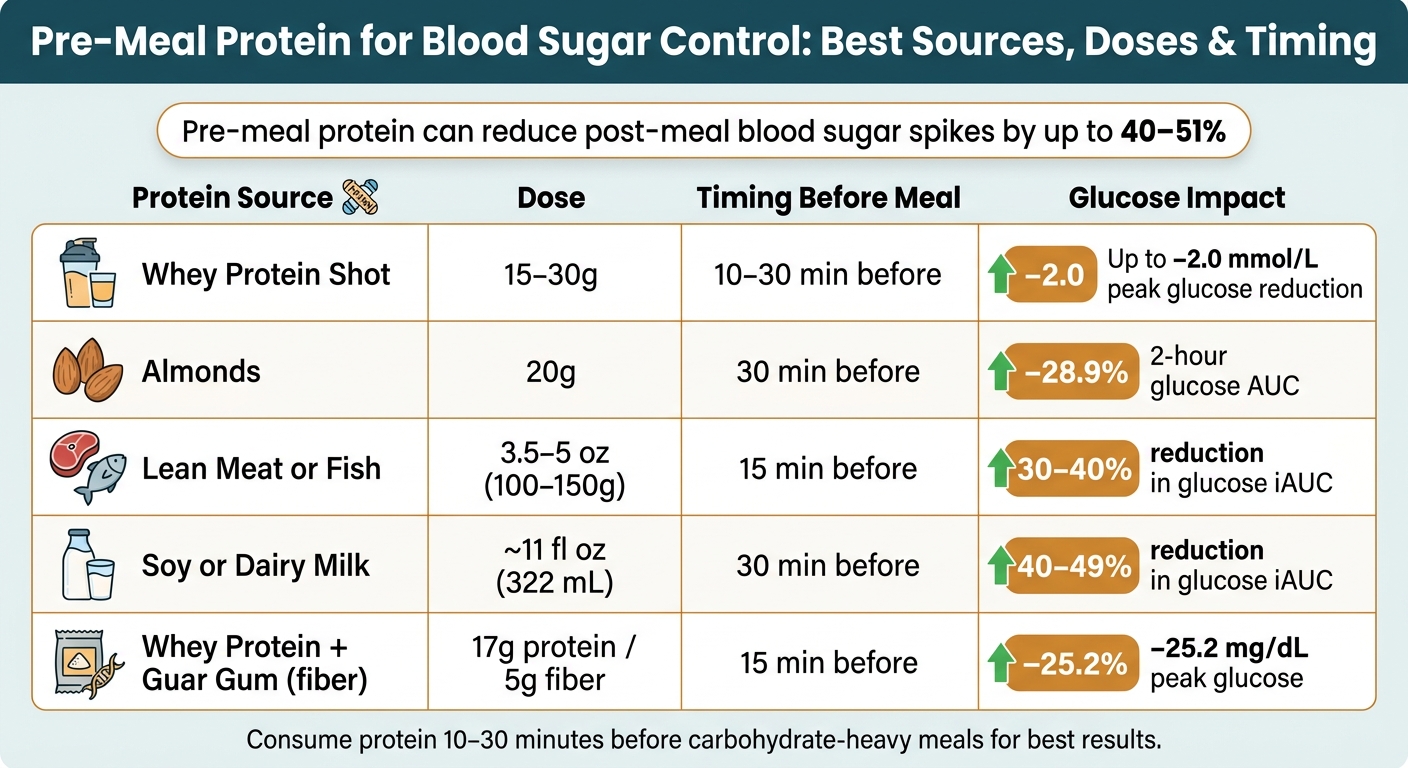
Pre-Meal Protein for Blood Sugar Control: Best Sources, Doses & Timing
Not all proteins are created equal. Research highlights several options that can help manage blood sugar levels, each offering unique benefits depending on your dietary preferences and needs.
Whey Protein: A Dairy-Based Choice
Whey protein stands out as one of the most researched options for controlling blood sugar before meals. Packed with branched-chain amino acids like leucine, it stimulates an early insulin response and promotes the release of GLP-1. For instance, consuming a 15g whey protein shot (in a 100 mL ready-to-drink format) about 10 minutes before a meal has been shown to reduce daily hyperglycemia by 8%. This approach also allowed participants to spend an extra 2 hours per day within a healthy blood sugar range.
"The provision of premeal whey protein supplementation may offer an effective non-pharmaceutical approach to regulate glycemia." - BMJ Open Diabetes Research & Care
For women dealing with gestational diabetes, a 30g dose of whey protein taken 30 minutes before eating reduced glucose spikes by up to 2.0 mmol/L, all without increasing the risk of hypoglycemia. If dairy isn’t an option, plant-based proteins can deliver similar results.
Plant-Based Protein Options
For those avoiding animal products, plant-based proteins like soya provide a solid alternative. Research shows that soya protein, such as tofu, can reduce glucose peaks and incremental areas under the curve (iAUC) when compared to animal-based proteins like chicken.
Another practical option is protein bars made with plant protein and prebiotic fiber. Resist Nutrition offers vegan, keto-friendly bars specifically designed to stabilize blood sugar and support hormone health. These bars pack 12g of plant protein, 14g of fiber, and only 4g of net carbs, with no added sugars. Flavors include Cinnamon Chocolate Chip, Goji Cherry Chocolate Chip, and Peanut Butter Turmeric. Pairing plant protein with fiber is a smart way to further enhance blood sugar control.
Pairing Protein with Fiber for Better Results
Combining protein with fiber can improve blood sugar management even more effectively than using either nutrient alone. Soluble fibers, like guar gum, slow gastric emptying, which helps regulate glucose levels. In one study, a pre-meal mix of 17g whey protein and 5g guar gum taken 15 minutes before eating reduced peak glucose levels by 25.2 mg/dL. Another study found that consuming a 30g protein-and-fiber bar 30 minutes before a meal reduced the glucose iAUC by 25% in individuals with Type 2 diabetes.
Protein Source
Dose
Timing
Key Benefit
Whey protein shot
15g
10 min before
−8% daily hyperglycemia; +2 hrs/day in healthy range
Whey protein (gestational diabetes)
30g
30 min before
Up to −2.0 mmol/L peak glucose reduction
Soya tofu
Preload serving
Before meal
Lower glucose peak and iAUC compared to chicken
Whey protein + guar gum
17g protein / 5g fiber
15 min before
−25.2 mg/dL peak glucose
Protein & fiber bar
30g
30 min before
−25% reduction in glucose iAUC in T2D
When and How Much Protein to Eat Before Meals
The Best Time to Eat Protein Before a Meal
Eating protein 15–30 minutes before a meal (or 10 minutes if it’s in liquid form) can help stimulate GLP-1 release and slow gastric emptying. This timing is key for managing blood sugar levels. A study from Newcastle found that taking a 15.6g whey protein shot just 10 minutes before meals for a week increased euglycemic time by 9%, which translates to about 2 extra hours daily of stable blood sugar levels.
"Consuming a small amount of whey protein before each main meal reduced the daily time spent in hyperglycemia in adults with type 2 diabetes... enabling a 2-hour increase in time spent within euglycemia per day." - BMJ Open Diabetes Research & Care
Once you’ve nailed down the timing, the next step is figuring out how much protein works best for you.
How Much Protein You Need
For most people, consuming 15–30g of protein before a meal is effective. Studies show that higher amounts (25–55g) can deliver even stronger glucose-lowering effects. For example, eating 20g of almonds 30 minutes before a meal reduced post-meal glucose levels by 28.9% and lowered HbA1c by 0.4% over time.
That said, individual protein needs depend on factors like activity level, gender, muscle mass, and any existing health conditions. As the American Diabetes Association explains, "the amount of protein you should eat depends on your activity level, gender, muscle mass, and any health conditions, such as kidney disease". A general guideline is 0.8 grams of protein per kilogram of body weight per day. For someone weighing 150 pounds (68 kg), this adds up to about 55g of protein daily. People with kidney issues may need to limit protein intake to 0.6g per kilogram to avoid extra stress on their kidneys.
Here’s a quick breakdown of protein sources, amounts, and their effects on blood sugar:
Protein Source
Amount
Timing Before Meal
Glucose Impact
Whey protein shot
15–30g
10–30 min
Up to −2.0 mmol/L peak reduction
Almonds
20g
30 min
−28.9% 2-hour glucose AUC
Lean meat or fish
3.5–5 oz (100–150g)
15 min
30–40% reduction in glucose iAUC
Soy or dairy milk
~11 fl oz (322 mL)
30 min
40–49% reduction in glucose iAUC
These strategies combine protein’s ability to trigger insulin and incretin hormones, offering a practical way to manage post-meal blood sugar spikes effectively.
How to Build a Pre-Meal Protein Routine That Lasts
Creating a consistent pre-meal protein routine can help maintain steady blood sugar levels, whether you're eating at home, dining out, or grabbing something on the go. The key is to make it simple and sustainable.
How to Choose a Quality Protein Source
For effective blood sugar management, go for lean and plain protein sources. If you're opting for packaged protein products like bars, powders, or shakes, always check the labels for unwanted ingredients such as fillers, artificial sweeteners, heavy metals, or BPA.
When it comes to whole foods, reliable options include lean poultry, fish, eggs, lentils, and plain Greek yogurt. For a portable and convenient choice, Resist Nutrition protein bars stand out. These bars are doctor-formulated and provide 12g of plant protein along with 14g of fiber. With just 4g of net carbs, no added sugars, sugar alcohols, gluten, or soy, they’re a smart pre-meal snack that won’t cause a blood sugar spike. Plus, flavors like Cinnamon Chocolate Chip, Goji Cherry Chocolate Chip, and Peanut Butter Turmeric make sticking to your routine a little tastier.
If grabbing a separate pre-meal snack isn’t always feasible, you can still support blood sugar control by adjusting the order in which you eat your food.
Eating Order and Food Pairing Tips
Research suggests that the sequence in which you eat your food matters. Consuming protein and vegetables before carbohydrates can reduce post-meal glucose spikes by 29% to 37%, compared to eating carbs first.
The recommended sequence is: start with vegetables, follow with protein, and finish with carbohydrates. This approach slows down glucose absorption in the body. Dr. Louis Aronne from Weill Cornell Medical College explains it well: instead of telling patients "don't eat that," a more practical and lasting strategy is "eat this before that". It’s a small tweak that doesn’t require cutting out any foods - just a shift in how you approach your plate.
Safety Considerations and Limitations
Pre-meal protein can be a helpful strategy for managing blood sugar, but it's important to recognize its boundaries. Several factors play a role in its effectiveness and safety.
Pre-Meal Protein Does Not Replace Medical Care
While pre-meal protein can aid in blood sugar control, it’s not a substitute for prescribed medications or personalized medical care. The American Diabetes Association emphasizes that there isn’t a universal protein amount that guarantees better blood glucose management or lowers heart disease risk for everyone.
Consuming more than 75 grams of protein in a single meal may lead to a delayed blood sugar increase 3–5 hours later. This means that eating more protein isn’t always better. Checking your blood sugar levels a few hours after a high-protein meal can help you spot any unexpected changes. This practice allows for safer, more tailored adjustments to your protein intake.
Protein Needs Vary by Individual
The amount of protein you need depends on several personal factors. For most people with diabetes, the general recommendation is 0.8 grams of protein per kilogram of body weight per day. For example, someone weighing 150 pounds would aim for about 55 grams of protein daily. However, those with diabetic kidney disease may need to reduce their intake to around 0.6 grams per kilogram of body weight, under medical supervision. Additionally, adults over 50 often require more - about 40–50 grams per meal - to counteract anabolic resistance.
These differences highlight how individual needs affect kidney health, muscle maintenance, and how well pre-meal protein works to manage blood sugar. Since responses vary from person to person, it’s essential to consult your care plan to find the best approach for you.
Conclusion: Key Steps for Using Pre-Meal Protein to Control Blood Sugar
When it comes to managing blood sugar, timing and portion control are game-changers. The concept is straightforward: eat protein before carbohydrates, not alongside or after them. This simple adjustment can have a big impact on post-meal glucose levels.
Research from Weill Cornell Medical College highlights this point. Their study showed that eating protein and vegetables just 15 minutes before carbs reduced post-meal glucose by 29% at 30 minutes and 37% at 60 minutes. Dr. Louis Aronne summed it up perfectly:
"Based on this finding, instead of saying 'don't eat that' to their patients, clinicians might instead say, 'eat this before that.'"
To make this work in your daily routine, follow a meal sequence: start with vegetables, move to protein, and finish with carbohydrates. A practical example? Drinking a 25g whey protein shake 20–30 minutes before a carb-heavy meal. This stimulates GLP-1, a hormone that slows digestion and helps regulate glucose. For plant-based eaters, combining protein sources like soy and seeds can help hit the leucine threshold for similar benefits.
Portion size also matters. Aim for 25–55g of protein before meals, and try using the Diabetes Plate Method - fill one-quarter of your plate with lean protein. Tools like continuous glucose monitors (CGMs) or finger-prick tests can help track how your body responds and fine-tune your approach.
Be cautious about overdoing it, though. Eating more than 75g of protein in one sitting could lead to a delayed glucose spike 3–5 hours later. And if you have kidney disease or other health issues, consult your doctor before making significant dietary changes.
For a convenient option, Resist Nutrition offers vegan protein bars designed with blood sugar control in mind. Made with plant protein and prebiotic fiber, these bars have no added sugars, sugar alcohols, or gluten. Flavors like Peanut Butter Turmeric and Cinnamon Chocolate Chip make it easy to stick to your pre-meal protein plan while supporting long-term diabetes management.
FAQs
Will pre-meal protein work for both Type 1 and Type 2 diabetes?
Pre-meal protein can play a role in managing blood sugar for both Type 1 and Type 2 diabetes by affecting the secretion of insulin and glucagon. This process helps regulate glucose levels. While much of the research focuses on its impact on Type 2 diabetes, there’s potential for it to aid in glucose control for individuals with Type 1 diabetes as well.
How do I adjust pre-meal protein if I take insulin or other diabetes meds?
When managing insulin or diabetes medications, tweaking your pre-meal protein intake involves understanding how protein impacts blood sugar and insulin requirements. Protein can affect glucose levels, so keeping an eye on your body's response is key. You might also need to adjust your insulin doses accordingly. It's important to collaborate with your healthcare provider or diabetes educator to tailor these adjustments. They can help you align your blood sugar patterns, medication routine, and meal composition to achieve better glucose management.
What’s the easiest pre-meal protein option when I’m eating out or traveling?
Whey protein is a handy option for a quick protein boost before meals, especially when you're eating out or traveling. Taking around 55g of whey protein about 30 minutes before a meal high in carbohydrates can help keep post-meal blood sugar levels in check. It's an easy and practical way to manage glucose levels while on the move.