

Low Glycemic Recipe Converter
Make Recipes More Blood Sugar Friendly A Low Glycemic Recipe Converter helps you take familiar meals and make smarter ingredient choices without losing the spirit of the dish. If a recipe relies on white rice,...

If you want to stay full longer on a plant-based diet, focus on foods that combine protein, fiber, and slow-digesting carbs. That’s the short answer.
Here’s the big picture in plain English:
A few numbers stand out. Eating 1/2 cup of beans or peas per day may increase fullness by 30%. And studies on pulses, like chickpeas and lentils, found satiety gains of about 31%. In satiety testing, boiled potatoes ranked at the top.
If I had to boil the whole article down to one rule, it would be this: pair protein with fiber at each meal. That usually does more for hunger control than chasing one “best” food.
| Food | What it does best | Best use |
|---|---|---|
| Pea protein | High protein with low carbs | Smoothies, oatmeal, shakes |
| Chickpeas | Protein + fiber + low glycemic impact | Bowls, salads, hummus |
| Lentils | High fiber and steady blood sugar | Soups, bowls, side dishes |
| Chia seeds | Gel-forming fiber that slows digestion | Pudding, yogurt, oats, smoothies |
| Nuts and seeds | Fat + protein for staying power | Toppings, snacks, nut butter |
| Tofu and tempeh | Meal-size complete protein | Stir-fries, tacos, curries |
| Resistant starch foods | Slow digestion and gut support | Oats, beans, potatoes |
Bottom line: if you want plant-based meals that keep you satisfied, build them around these seven foods and mix them instead of using them one at a time.
Plant foods tend to keep you full longer when protein, fiber, and blood sugar control all work at the same time.
Protein helps turn on fullness hormones like PYY, GLP-1, and CCK. It also takes more energy for your body to digest, which can help with appetite control. That extra digestion cost is called the thermic effect of food (TEF). It's one reason higher-protein meals can help with fat loss while also helping you hold on to lean muscle.
Fiber matters too. It slows stomach emptying, so food sticks around longer and you stay satisfied for more time. And here's where many plant proteins shine: they often bring protein and fiber in the same package. That gives you a double hit for fullness from one food.
Resistant starch adds another layer. It's found in legumes like lentils and chickpeas, and it feeds gut bacteria that then produce short-chain fatty acids. Those compounds support metabolic health and satiety.
Blood sugar plays a big part as well. When glucose rises and falls less sharply, you're less likely to deal with that familiar rebound hunger a little later. High-fiber, high-protein plant foods often have a low glycemic index, which leads to a steadier release of glucose and helps keep appetite-related hormones on a more even keel. That's why pea protein comes first on the list.
Pea protein powder is one of the most concentrated plant-based protein options you can buy. A 22-gram scoop gives you about 19 to 24 grams of protein while keeping calories low. It also has only about 1 gram of carbs per serving.
Because it packs so much protein into a small serving, pea protein does a good job of helping you feel full. It helps trigger satiety hormones and lowers ghrelin. Protein also takes more energy to digest than carbs or fat, so your body burns a few more calories processing it, which can modestly support weight loss.
Pea protein is very low in carbs, so it causes only small blood sugar changes after you have it. That can help keep hunger steadier between meals.
Pea protein isolate doesn’t give you much fiber. Most servings contain just 0 to 2 grams. Whole split peas are a different story. One cooked cup has 16 grams of fiber and 16 grams of protein.
That difference matters. Pea protein powder is best when you pair it with foods that add fiber and slow digestion. Good picks include vegetables, seeds, or healthy fats like avocado or tahini.
| Pea Source | Serving Size | Protein | Fiber |
|---|---|---|---|
| Pea Protein Powder | 22g scoop | 19–24g | 0–2g |
| Split Peas (Cooked) | 1 cup | 16g | 16g |
| Green Peas (Cooked) | 1 cup | 8.6g | 8.8g |
If you want more fullness from a whole food, the next option gives you protein plus a lot more fiber.
One cup of cooked chickpeas gives you about 15 grams of protein and 12.5 grams of fiber. That mix matters. Protein helps, but protein plus fiber tends to keep you full for longer.
Chickpeas also have resistant starch. This type of starch feeds gut bacteria and may help with blood sugar control and hormonal balance. And here's a handy detail: cooling cooked chickpeas can increase resistant starch, which makes them a smart pick for salads and meal-prep bowls.
Chickpeas pack protein, fiber, and resistant starch into one food. That's a big reason they work so well for satiety. The protein and fiber help send fullness signals and slow stomach emptying, so you're less likely to feel hungry again soon after eating.
A meta-analysis of nine clinical trials found that pulses like chickpeas increase subjective satiety by 31%.
Chickpeas also have a low glycemic index, which helps avoid sharp blood sugar spikes that can lead to energy crashes and sudden hunger. In one test, hummus produced a post-meal glucose response four times lower than white bread. Observational data also links regular chickpea and hummus intake with lower obesity rates and lower rates of elevated glucose.
If you want those same satiety perks in an even softer, higher-fiber form, lentils are up next.
Lentils bring many of the same stay-full perks as chickpeas, but they cook in less time and have a very low effect on blood sugar.
One cooked cup of lentils has about 18 grams of protein and 15 to 16 grams of fiber. That’s a lot of protein for the calories. They also cook faster than most dried beans, which makes them a practical plant protein to keep in the pantry.
Lentils contain fiber and resistant starch. Whole lentils keep more of both than lentil flour.
The mix of protein and fiber slows digestion, which helps you stay full for longer. Even half a cup of pulses like lentils per day can increase feelings of fullness by 30%.
Lentils have a very low glycemic index of 16. In plain English, they digest slowly, which can help keep hunger more even between meals.
Next up: chia seeds, another compact source of fiber that helps slow digestion.
Chia seeds pack a lot into a small serving. Just 2 tablespoons give you 4 grams of protein, 8 grams of fiber, and 7 grams of heart-healthy fats. That mix helps meals stick with you longer, which is a big part of why chia shows up so often in filling breakfasts and snacks.
Chia seeds are a complete protein, which means they contain all nine essential amino acids.
Once soaked, chia seeds absorb 10 to 12 times their weight in water and turn into a gel. That gel slows digestion, so food moves through your system at a steadier pace. One ounce, or about 2 to 3 tablespoons, provides 9.8 grams of fiber - 35% of the recommended daily value. That's a lot from such a small amount.
This gel-like texture is also a big reason chia helps with satiety. It adds bulk, slows things down, and helps you feel full for longer.
Chia's mix of protein and fiber supports fullness. In one randomized trial, adding chia to a yogurt snack cut lunch intake by about 25%. Hunger and sugar cravings also went down.
Chia's gel-forming fiber slows carbohydrate absorption. In plain English, that means blood sugar tends to rise more slowly, which can help reduce the cravings that often come after a spike.
Soak chia for at least 20 minutes so it forms a gel and digests more comfortably.
Next: nuts and seeds, another compact source of fiber and fat.
Like chia, nuts and seeds pack fiber and fat into small servings, so portion size matters. Calories can climb fast. These foods are small, dense, and filling, which is why they tend to work best as add-ons instead of your main calorie source.
Most nuts and seeds give you a good hit of protein in a small serving. Hemp seeds lead with 10 grams of protein per 3-tablespoon serving. Pumpkin seeds provide about 8 to 9 grams per ounce, while almonds and pistachios each offer around 6 grams per ounce.
Fiber also does a lot of the heavy lifting here. It adds bulk and slows stomach emptying, which can help you stay full for longer. Almonds stand out because their mix of healthy fats, fiber, and magnesium may help support blood sugar control.
The mix of protein and fat helps support fullness and can make meals feel more satisfying. That’s a big reason a small handful can go a long way.
Their healthy fats, fiber, and low glycemic impact can help keep energy more steady between meals instead of giving you a sharp rise and crash.
Plain, unsalted nuts and seeds are usually the better pick, especially in small portions. A few easy ways to use them:
Next up: tofu and tempeh, another filling plant protein with a different calorie profile.
If you want a meal-size protein instead of a snack, tofu and tempeh are two of the most filling picks on this list. Both are soy-based complete proteins, which means they contain all nine essential amino acids your body needs.
Extra-firm tofu packs 24 grams of protein per cup (240g). Tempeh gives you about 20 grams per 3.5 oz (100g), plus a bit more fiber: 4 grams per 100g versus tofu’s 3 grams per cup.
That gives tempeh a slight edge for fullness. It’s denser, chewier, and a little higher in fiber. Put simply, the protein-and-fiber mix in both foods helps with appetite control.
Soy protein can support fullness by increasing PYY and GLP-1 while lowering ghrelin. That matters because these hormones help shape how hungry - or satisfied - you feel after a meal.
Texture plays a part too. Since tofu and tempeh are firm, they often take longer to eat. And that extra time can help your body catch up and register fullness signals. Tempeh’s fermentation may also support gut health, which can help with appetite regulation.
Both foods are low in net carbs, so they fit well into blood-sugar-friendly meals. Tofu has just 2 grams per cup, while tempeh has about 7 grams per 100g.
Their protein also slows carbohydrate absorption, which can help prevent sharp post-meal blood sugar spikes. That’s one reason they work so well in balanced meals.
Tempeh works well in tacos or chili. Tofu pairs nicely with non-starchy vegetables in stir-fries for a high-volume, low-calorie meal.
For one more satiety lever, focus on resistant starch. It works through digestion speed and gut health. Protein matters a lot, but resistant starch adds another layer of fullness.
It slows digestion, feeds gut bacteria, and helps you stay full longer. In plain English: plant foods with resistant starch can stick with you without adding many calories. The best-known examples are boiled potatoes, beans, and oats.
Many foods with resistant starch also bring protein and fiber to the table. That helps explain why they do such a good job with fullness.
| Food | Serving Size | Protein | Fiber | Key Benefit |
|---|---|---|---|---|
| Oats | 1 cup (85g) | 11g | High (beta-glucan soluble fiber) | Forms a thick gel via beta-glucan; slows nutrient absorption |
| Beans | 1/2 cup | 7–9g | High | Blunts blood sugar swings |
| Potatoes | 1 medium | 2–4g | High (with skin) | Highest Satiety Index score of any food tested |
Resistant starch affects hunger signals in a few ways at once. It increases PYY, GLP-1, and CCK while lowering ghrelin, which leads to a meaningful drop in hunger after meals.
Boiled potatoes stand out here. In satiety tests, they ranked highest, beating foods like white bread and croissants.
Resistant starch also helps smooth out blood sugar after meals. It slows stomach emptying, which flattens the post-meal glucose curve and can help prevent the energy dips that often bring hunger right back.
A couple of food choices make this effect stronger:
Pair protein with fiber and healthy fats to help you stay full. A simple way to do that is to build each meal around two of those pieces. Then repeat that same setup at breakfast, lunch, and dinner.
For breakfast, pair protein with fiber. Stir a scoop of pea protein powder and 2 tablespoons of chia seeds into oatmeal or a smoothie. Chia forms a gel, which adds volume and can help you feel full. If you want something savory, make a tofu scramble with turmeric and vegetables. It gives you high-volume protein and doesn’t take much work.
For lunch, build around legumes. Canned chickpeas or pre-cooked lentils are the fastest way to do it - no soaking needed. Toss them into a grain bowl with quinoa, add half an avocado for healthy fat, and finish with a tahini dressing. Add lemon juice to lentils to help iron absorption.
For dinner, use tofu or tempeh as the anchor. Their firm texture can slow eating and help with fullness. They work well in stir-fries or curries because they absorb marinades well and don’t need much cooking time.
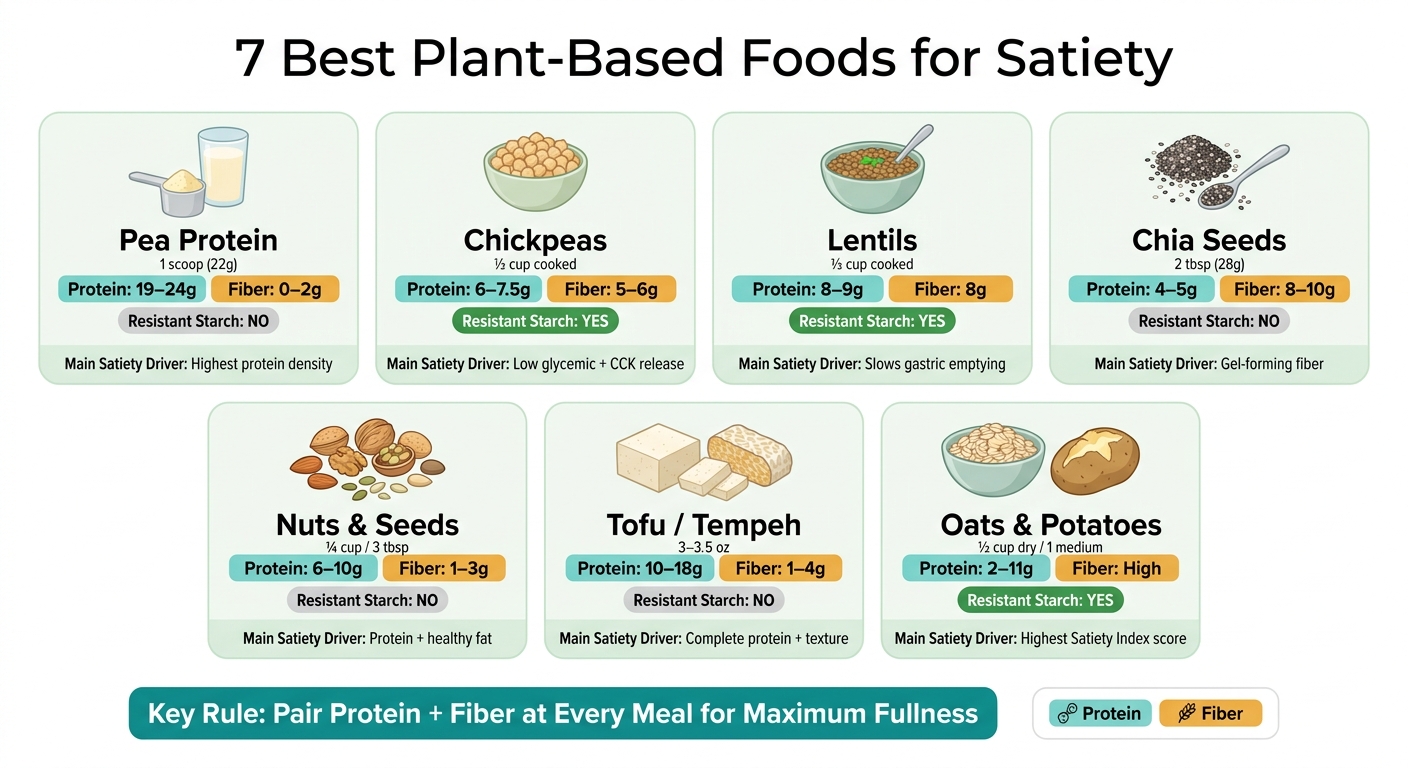
7 Best Plant-Based Foods for Satiety: Protein, Fiber & Key Benefits
These foods support fullness in different ways. The table below gives you a fast side-by-side look at the seven foods and what does the heavy lifting for each one.
| Food | Common Serving | Protein | Fiber | Resistant Starch | Main satiety driver |
|---|---|---|---|---|---|
| Pea Protein | 1 scoop (22g) | 19–24g | 0–2g | No | Highest protein density; triggers PYY and GLP-1 |
| Chickpeas | ½ cup, cooked | 6–7.5g | 5–6g | Yes | Low glycemic index; promotes CCK release |
| Lentils | ½ cup, cooked | 8–9g | 8g | Yes | Protein + fiber slows gastric emptying |
| Chia Seeds | 2 tbsp (28g) | 4–5g | 8–10g | No | Forms a gel in water; high fiber density |
| Nuts & Seeds | ¼ cup / 3 tbsp | 6–10g | 1–3g | No | Protein and healthy fat slow digestion |
| Tofu / Tempeh | 3–3.5 oz (85–100g) | 10–18g | 1–4g | No | Complete protein; dense texture increases fullness cues |
| Oats | ½ cup, dry | 5–11g | 4g | Yes | Beta-glucan and slow-digesting starch extend fullness |
| Potatoes | 1 medium, cooked | 2–4g | High (with skin) | Yes | Highest Satiety Index score of any food tested |
A few patterns jump out right away. Lentils give you one of the best protein-plus-fiber combos per serving. Pea protein comes out on top for pure protein, but it works better when you pair it with a high-fiber food if fullness is the goal. And chia seeds pack a lot of fiber into a tiny serving, which is why they punch above their weight here.
These seven foods make one thing clear: staying full usually comes down to the right mix of plant-based basics. No single food can handle hunger by itself. The plant foods that tend to keep you satisfied longer usually bring together protein, fiber, and slow-digesting carbs.
A simple way to use that idea is to spread those foods through the day. Think oats and chia seeds at breakfast, lentils or chickpeas at lunch, and tempeh or tofu at dinner. On busy days, a plant-based protein bar with protein and prebiotic fiber can follow that same pattern.
What matters most is using them often. Go for whole textures instead of more processed options, and try to pair protein with fiber at each meal.
According to the satiety index, boiled or baked white potatoes are the most filling plant-based food overall.
When it comes to high-protein plant foods, lentils stand out. Their mix of protein and fiber slows digestion, which helps you stay full for longer. And fiber-rich legumes like lentils and chickpeas can help manage hunger and support long-term weight management.
Build a bowl that keeps you full and tastes good, too. Start with a fiber-rich base like quinoa or brown rice. Then add protein, such as lentils, chickpeas, tofu, or tempeh, along with plenty of vegetables.
To make the meal more filling, add fats like avocado, nuts, seeds, or a tahini-based dressing. These can help slow digestion and support satiety. If you want extra protein without much effort, pair your meal with a Resist Nutrition protein bar.
Yes. Many high-protein plant-based foods are also high in fiber. That matters because fiber slows digestion and the absorption of glucose into the bloodstream, which can help reduce sharp spikes and the crash that often follows.
When you pair that protein and fiber with healthy fats, you may also get better insulin sensitivity and more even energy through the day.
A simple example: Resist Nutrition’s doctor-formulated vegan, keto-friendly protein bars provide 12 grams of plant protein and 14 grams of fiber to help support stable blood sugar.
