Looking for a healthier protein bar? Clean label protein bars are made with simple, recognizable ingredients, avoiding artificial additives and focusing on whole foods like nuts, seeds, and hormone-balancing proteins. Here’s what you need to know:
Ingredients to prioritize: Whole foods like nut butters, dates, and plant-based proteins (pea, hemp, brown rice).
Avoid these: Artificial sweeteners (sucralose, aspartame), sugar alcohols (maltitol, xylitol), refined seed oils, and vague terms like "natural flavors."
Nutritional balance: Aim for 10–20g of protein, 3–5g of fiber, and minimal added sugars (under 8g).
Sweeteners to choose: Monk fruit, allulose, or dates for a lower glycemic impact.
Extra benefits: Look for superfoods (turmeric, goji berries) and prebiotic fibers for gut health and blood sugar stability.
Pro tip: If you can’t pronounce the ingredients or wouldn’t find them in your pantry, skip it. Check for certifications like USDA Organic or Non-GMO for better transparency.
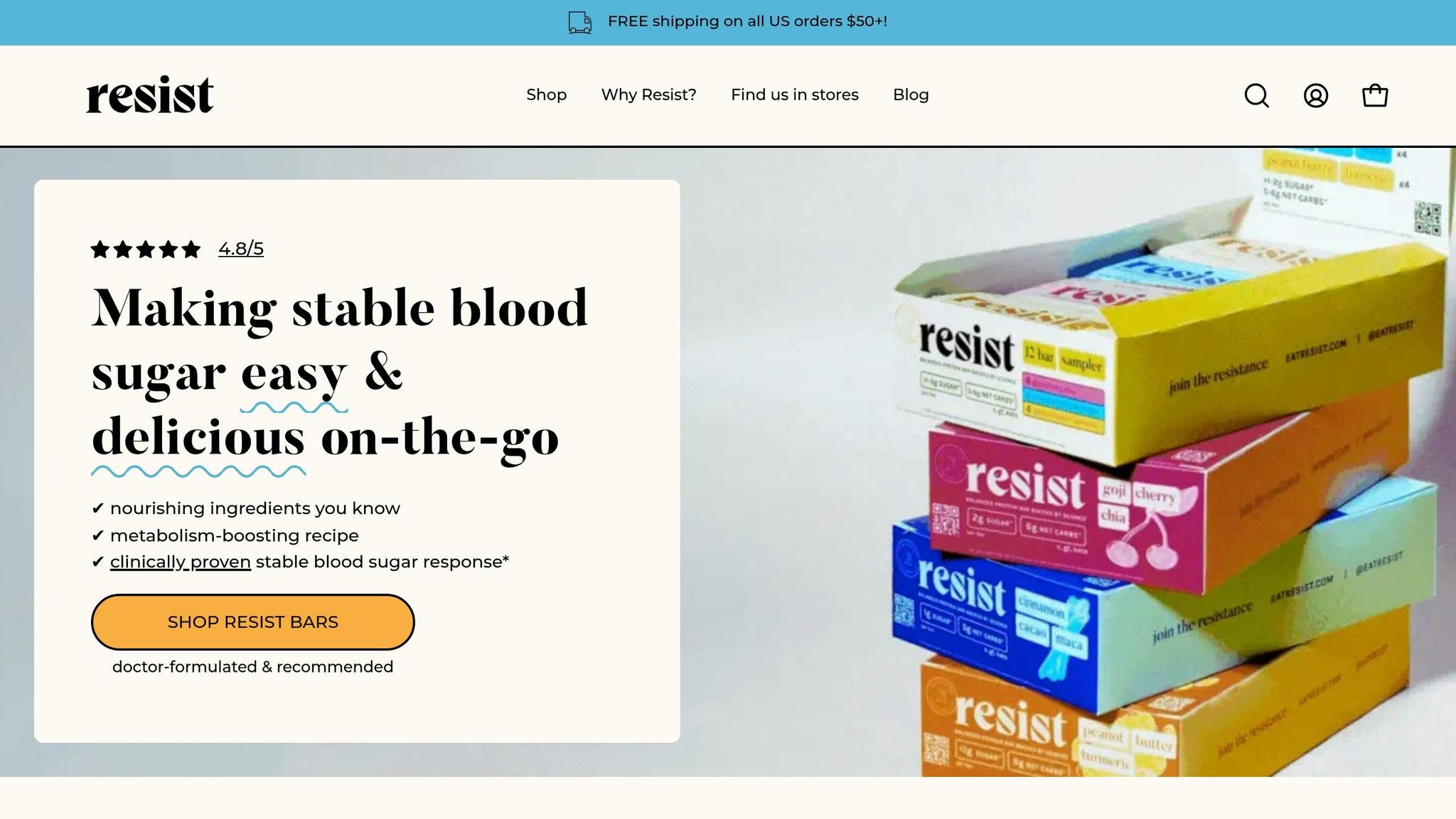
Resist Nutrition bars are a great example, offering 12g of protein, 14g of fiber, and clean, plant-based ingredients without artificial additives. They’re designed to support blood sugar and hormone health while avoiding common digestive irritants.
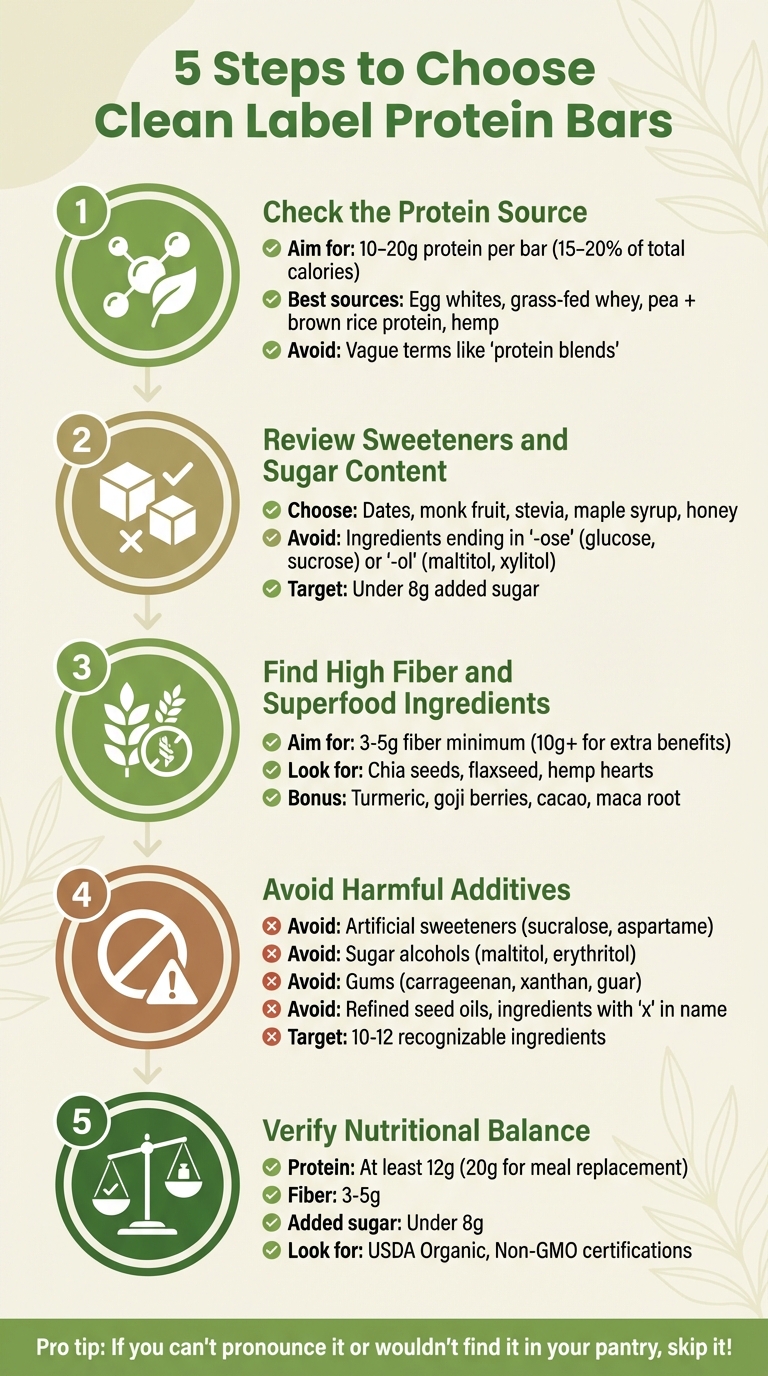
5-Step Guide to Choosing Clean Label Protein Bars
What Makes a Protein Bar Clean Label?
When it comes to clean label protein bars, the focus is on transparency and simplicity. These bars should have short ingredient lists - ideally 10 to 12 items - and include whole, recognizable foods like nuts, seeds, oats, dates, and plant-based proteins such as pea, hemp, or brown rice.
What sets clean label bars apart is what they don’t include. They avoid artificial sweeteners, sugar alcohols like maltitol and sorbitol, artificial flavors, and chemical preservatives. Additionally, they steer clear of highly processed protein isolates and refined seed oils, which are often staples in conventional protein bars.
Whole Food Ingredients You Can Recognize
A good rule of thumb? If you wouldn’t find an ingredient in your own pantry, it probably doesn’t belong in a clean label protein bar. These bars rely on minimally processed ingredients like nut butters, fruit pastes, real cocoa powder, vanilla extract, and cinnamon for flavor. They also avoid vague terms like "natural flavors." Plant-based proteins are often preferred because they’re easier on digestion compared to some animal-based alternatives.
No Artificial Additives
Artificial additives are a no-go, especially when it comes to protecting your gut health. Sugar alcohols such as maltitol and xylitol, for instance, can lead to bloating, gas, and other digestive discomforts. Avoiding these types of ingredients is key to maintaining a healthy gut.
"Artificial sweeteners do not satisfy what the brain needs to function optimally and that's when cravings and sugar urges peek their ugly head." – Tracy Lockwood Beckerman, MS, RDN
Here’s a simple tip: steer clear of ingredients with the letter "x", like polydextrose, xylitol, or titanium dioxide. These are almost always synthetic. Gums and fillers such as xanthan gum and guar gum can also contribute to gut inflammation.
By prioritizing ingredient purity and clear sourcing, clean label bars ensure they deliver on their promise of clean nutrition.
Clear Labeling and Sustainable Sourcing
Transparency isn’t just about what’s inside the bar - it’s also about how those ingredients are sourced and processed. Reputable brands clearly disclose this information and often carry certifications like USDA Organic, Non-GMO Project Verified, or Certified Gluten-Free. Some go a step further by using BPA-free, phthalate-free, or paper-based packaging to reduce exposure to harmful chemicals and minimize environmental impact.
Always check the full ingredient list and nutrition facts panel instead of relying on front-of-package claims. This extra effort ensures you’re getting a product that supports both health and sustainability.
"A clean label should read like a grocery list, not a chemistry experiment." – Kate's Real Food
For nutritional balance, look for bars that provide 10–20 grams of protein and 3–5 grams of fiber per serving. This combination helps with satiety and blood sugar stability. Ideally, 15–20% of the bar’s total calories should come from protein.
sbb-itb-40fb9b7
How to Choose Clean Label Protein Bars: 5 Steps
Now that you know what makes a protein bar "clean label", here's a simple guide to help you evaluate your options. These five steps will help you identify bars that genuinely meet clean standards and avoid those that just look healthy at first glance.
Step 1: Check the Protein Source
Start by looking at the protein source. A good protein bar should include complete proteins that provide all essential amino acids. Some excellent choices are egg whites, grass-fed whey, or plant-based combinations like pea protein and brown rice.
"The best sources are whey, casein, soy, pea [paired with brown rice protein], egg or hemp, because these provide all of the essential amino acids the body needs." – Ariah Fish, M.S., RD, CPT
For clean label options, lean toward whole-food sources like nuts, seeds, or egg whites rather than heavily processed isolates. If you prefer plant-based proteins, pea or hemp is easier on digestion. Be cautious of vague terms like "protein blends" that don’t specify the source.
To ensure you're getting enough protein, aim for 10–20 grams per bar, which should make up about 15–20% of the total calories. You can calculate this by dividing the grams of protein by the total calories and multiplying by 100.
Step 2: Review Sweeteners and Sugar Content
Pay close attention to the sweeteners used. Look for natural options like dates, monk fruit, stevia, maple syrup, or honey. These tend to have a lower glycemic index, helping maintain stable blood sugar levels.
Avoid sweeteners with names ending in "-ose" (like glucose or sucrose) or "-ol" (such as maltitol or xylitol). These refined sugars and sugar alcohols are often linked to digestive issues like bloating and cramping.
"Common sugar alcohols include maltitol, sorbitol, erythritol and xylitol... they can draw water into the gut and cause bloating, cramping or gas - especially if eaten right before exercise." – Brooke Snyder, M.S., RD, LMNT
Check the ingredient list to ensure sweeteners aren’t among the first three ingredients. Ideally, the bar should have no more than 8 grams of added sugar, with even less if possible, coming from natural sources.
Step 3: Find High Fiber and Superfood Ingredients
A clean protein bar should include natural sources of fiber, which helps regulate blood sugar and supports digestion. Look for bars with at least 3–5 grams of fiber per serving. Ingredients like chia seeds, flaxseed, or hemp hearts are excellent prebiotic sources. Bars with 10 grams of fiber or more can provide additional benefits, such as improved satiety and hormone balance.
Superfood ingredients like turmeric, goji berries, cacao, or maca root can also enhance the bar's nutritional value by adding antioxidants and anti-inflammatory properties.
Step 4: Avoid Harmful Additives
Steer clear of bars containing artificial sweeteners (like sucralose or aspartame) or sugar alcohols (such as maltitol or erythritol). These additives can disrupt gut health and may lead to digestive discomfort.
Also, avoid bars with thickening agents or gums like carrageenan, xanthan, or guar. Carrageenan, for example, has been linked to intestinal inflammation and is flagged as "possibly carcinogenic" by the International Agency for Research on Cancer.
Be especially wary of refined seed oils (such as soybean or canola oil) and synthetic fibers like polydextrose. Ingredients labeled as "natural flavors" or containing the letter "x" (e.g., xylitol or titanium dioxide) are often far from natural. Stick to bars with a short ingredient list of around 10–12 recognizable, whole-food components.
Step 5: Verify Nutritional Balance
Finally, examine the bar’s overall nutritional profile. A good bar should have at least 12 grams of protein to keep you full and support muscle recovery. For blood sugar control, look for a balance of carbohydrates and dietary fiber, with minimal added sugar. Ideally, the bar should provide 3–5 grams of fiber and no more than 8 grams of added sugar.
If you’re using the bar as a meal replacement or post-workout snack, aim for closer to 20 grams of protein from clean, high-quality sources.
Resist Nutrition bars are thoughtfully crafted with a doctor-formulated recipe that prioritizes science-backed, plant-based ingredients. The bars use pea protein and hemp protein as their protein sources, delivering all nine essential amino acids necessary for muscle repair. Each bar packs 12 grams of protein and 14 grams of fiber, covering 57% of your daily fiber needs. They also include prebiotic fibers like chicory root (inulin) and resistant dextrin from tapioca, which support gut health and improve insulin sensitivity. For healthy fats, the bars feature MCT oil and sunflower lecithin, which aid in nutrient absorption and provide a steady energy boost.
To further enhance their nutritional profile, the bars are enriched with a mix of superfoods such as cinnamon, maca, turmeric (paired with black pepper), and goji berries. These ingredients bring antioxidants, help regulate blood sugar levels, and promote hormonal balance.
For sweetness, Resist Nutrition relies on monk fruit and allulose - natural sweeteners derived from dates and figs - offering a pleasant taste without spiking blood sugar or causing digestive discomfort. Importantly, the bars avoid sugar alcohols like erythritol and xylitol, as well as gums, soy, gluten, dairy, and both natural and artificial flavors. Even the packaging is designed with care, free from potentially harmful chemicals like BPA and phthalates. Every detail of the formulation reflects a commitment to quality and clean label standards.
Blood Sugar and Hormone Support
Resist Nutrition bars go beyond clean ingredients - they’re designed to actively support metabolic health. Thanks to their balanced mix of plant protein, fiber, and healthy fats, these bars are clinically shown to stabilize blood sugar levels. Each bar contains just 4 grams of net carbs, 2 grams of sugar, and no added sugars, helping to minimize blood sugar spikes. Research even highlights that 10 grams of resistant dextrin can lower cortisol levels in women with Type 2 Diabetes.
The vegan, keto-friendly formulation avoids hormone-disrupting ingredients like whey or soy, supporting natural hormonal balance. The high fiber content also promotes healthy digestion, aiding in the elimination of excess estrogen from the body.
Available Flavors and Nutrition Facts
Resist Nutrition bars come in three clean label flavors, each offering 12 grams of protein, 14 grams of fiber, 4 grams of net carbs, and approximately 200 calories:
Cinnamon Chocolate Chip: Features cinnamon, maca, and chia seeds for sustained energy.
Goji Cherry Chocolate Chip: Combines goji berries, acerola cherry, and cacao for antioxidant support and a boost of Vitamin C.
Peanut Butter Turmeric: Blends turmeric, black pepper, and peanut butter for anti-inflammatory benefits and long-lasting energy.
Each flavor is available in individual boxes priced at $39.95, with a sampler pack featuring all three flavors also offered for $39.95. Customers have rated these bars an impressive 4.8 out of 5 stars (based on 66 reviews), frequently praising their rich, brownie-like texture and lack of any chalky aftertaste.
Conclusion
Picking a clean label protein bar doesn’t have to be complicated. Stick to the five key steps: examine the protein source, check sweeteners and sugar levels, look for high fiber and superfood ingredients, steer clear of harmful additives, and ensure overall nutritional balance. These steps help you navigate past flashy marketing and focus on bars made with real, wholesome ingredients that genuinely support your health. A true clean label bar isn’t just about what’s included - it’s also about what’s left out, like additives that can mess with digestion or metabolic health.
For example, Resist Nutrition bars embody these principles. Crafted with a doctor-designed formula, they combine functional superfoods like cinnamon and maca with proven benefits for stabilizing blood sugar. With a 4.8-star rating from 66 reviews, these bars are a trusted option for managing conditions like diabetes, PCOS, and insulin resistance.
FAQs
How can I tell if a protein bar is truly 'clean label'?
When searching for a protein bar that fits the "clean label" standard, focus on simplicity. Look for a short ingredient list - ideally, no more than 8 ingredients made up of recognizable, whole foods like nuts or seeds. Steer clear of artificial sweeteners, sugar alcohols, or overly processed additives. Aim for bars with low sugar content (under 8 grams), and make sure any sweetness comes from natural sources like fruit. Certifications such as USDA Organic or Non-GMO can offer additional reassurance, though they aren't strictly necessary.
Which sweeteners are best for blood sugar stability?
If you're looking for sweeteners that won't throw your blood sugar out of balance, natural options like monk fruit and stevia are excellent choices. Both have a low glycemic index, meaning they don't cause spikes in blood sugar or insulin levels. This makes them ideal for maintaining steady energy throughout the day.
These sweeteners are especially helpful for people managing conditions like insulin resistance, PCOS, or diabetes, as they allow you to enjoy sweetness without compromising your health.
Why do sugar alcohols and gums upset digestion?
Sugar alcohols - like erythritol, xylitol, and maltitol - can sometimes lead to bloating, gas, or even diarrhea. This happens because they aren’t completely absorbed in the small intestine and instead get fermented by gut bacteria. Similarly, gums such as xanthan gum and guar gum may cause digestive discomfort for some people, as they also ferment in the gut. These reactions are more likely to occur in those with sensitive digestion or when these ingredients are consumed in large amounts.